

Rénovation énergétique à Tourcoing
À Tourcoing, la rénovation énergétique concerne plusieurs types de logements : maisons de ville mitoyennes en brique, grandes maisons bourgeoises, appartements et petits collectifs anciens. Chaque construction possède ses propres contraintes, depuis les menuiseries vieillissantes jusqu’au chauffage individuel gaz, en passant par les volumes profonds où la ventilation joue un rôle important. Un projet doit donc partir de l’existant avant de déterminer les travaux utiles. GRAM Énergie vous accompagne pour organiser votre rénovation en tenant compte de la qualité de l’enveloppe, des équipements, des usages et de l’architecture du bien. Cet accompagnement permet de construire un parcours cohérent entre audit, travaux thermiques, ventilation et évolution des installations.
Astuce : ajoutez votre DPE et vos factures d’énergie pour un chiffrage plus précis.
Pourquoi rénover son logement à Tourcoing
Une partie importante du tissu résidentiel de Tourcoing est constituée de maisons mitoyennes en brique construites notamment pendant l’entre-deux-guerres. Ces maisons présentent souvent une façade relativement étroite, plusieurs niveaux et une profondeur importante. Les pertes énergétiques peuvent alors être concentrées sur différents points : toiture, murs donnant sur l’extérieur, fenêtres, planchers ou défauts d’étanchéité. Les types de travaux pertinents ne sont donc pas identiques d’une maison à l’autre. Une rénovation énergétique doit examiner la construction dans son ensemble avant de privilégier un poste. L’état des matériaux, la présence éventuelle de parois froides et le fonctionnement de la ventilation comptent autant que l’âge du système de chauffage.
Les maisons profondes de Tourcoing soulèvent une autre question : celle de la circulation de l’air entre les pièces. Les espaces centraux peuvent être moins lumineux et bénéficier de moins d’aération naturelle que les pièces placées en façade ou sur l’arrière. Lorsque les menuiseries anciennes sont remplacées par des modèles plus étanches, la qualité du renouvellement d’air doit être réévaluée. Les travaux de rénovation ne doivent pas aboutir à enfermer davantage l’humidité intérieure. Selon les types de logements et la configuration des pièces, il faut donc coordonner amélioration thermique, ventilation et éventuel réaménagement. Cette approche limite les interventions isolées et permet de conserver une logique énergétique durable.
La ville compte également des maisons bourgeoises plus vastes. Leur architecture peut associer plusieurs étages, des volumes élevés, des menuiseries anciennes et des distributions intérieures éloignées de celles d’une petite maison mitoyenne. Les projets de rénovation peuvent alors concerner plusieurs postes simultanément et nécessiter une préparation plus poussée. Lorsqu’une réhabilitation comprend des transformations importantes, un architecte ou une mission de maîtrise d’œuvre peut intervenir selon la nature de l’opération. Ce recours n’est pas systématique : il dépend de l’architecture, de l’ampleur des modifications et des responsabilités du maître d’ouvrage.
Les appartements et petits collectifs anciens présents à Tourcoing présentent encore d’autres contraintes. Certains travaux sont privatifs, tandis que d’autres touchent aux parties communes, aux façades, aux toitures ou à des équipements collectifs. Avant tout chantier, il est donc utile d’identifier précisément le périmètre du projet. Cette distinction aide à choisir les solutions adaptées et à organiser les échanges avec les artisans ou professionnels concernés. À l’échelle de la Métropole européenne de Lille, Amélio constitue un service public de la rénovation pouvant informer les particuliers. Ce service s’inscrit dans un territoire du Nord et des Hauts-de-France où les situations constructives restent très diverses.
Dans les maisons profondes de Tourcoing, la ventilation doit évoluer avec les travaux qui modifient l’étanchéité de l’enveloppe.
Nos prestations à Tourcoing
Rénovation énergétique globale
Une rénovation énergétique globale permet de coordonner différents travaux dans un même projet : isolation, chauffage, ventilation, eau chaude et régulation. Elle est particulièrement utile lorsqu’une maison ancienne présente plusieurs faiblesses en même temps. Cette approche aide à comparer les types de travaux, à prévoir leur ordre et à éviter qu’un chantier sur un poste complique ensuite une autre intervention. Elle offre également une vision plus claire de la future performance énergétique.

Pompe à chaleur
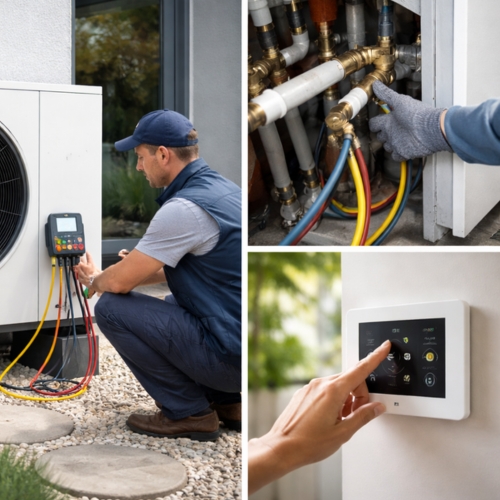
Le remplacement d’un chauffage individuel gaz vieillissant peut conduire à étudier une pompe à chaleur. À Tourcoing, la faisabilité dépend notamment de la maison, de son niveau de protection thermique, des émetteurs existants et de la place disponible. Les contraintes d’implantation sont différentes entre une maison en bande et un appartement. Avant toute installation, le projet doit donc être dimensionné à partir des besoins réels et de la configuration du bien.
Isolation
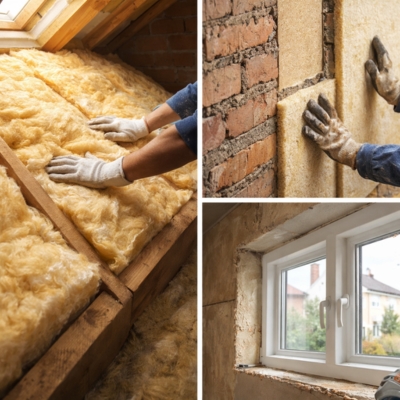
Les travaux d’isolation peuvent concerner les murs, la toiture, les combles ou certains planchers. Sur une maison en brique ancienne, les matériaux et les techniques doivent être compatibles avec le support existant. Une solution intérieure peut aussi influencer la surface des pièces et les réseaux. Le choix doit donc tenir compte de la construction, de la qualité des parois et des autres travaux prévus dans le cadre de la rénovation énergétique.
Ballon thermodynamique
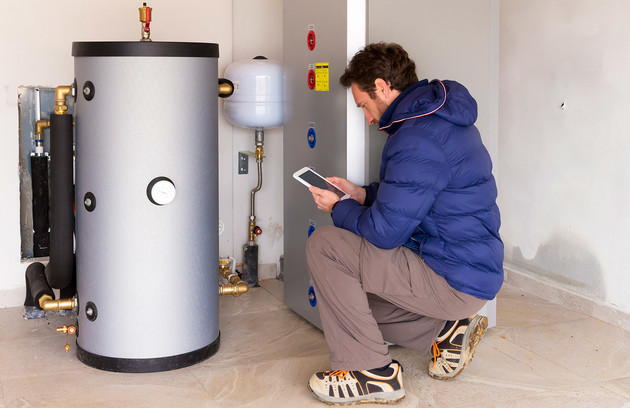
Le ballon thermodynamique peut être étudié pour la production d’eau chaude sanitaire. Son installation nécessite un emplacement adapté ainsi que des conditions compatibles avec son fonctionnement. Dans une maison étroite ou un appartement, il faut anticiper son volume, les raccordements et son intégration au reste des équipements. Ces éléments doivent être prévus avant le chantier afin que l’appareil ne gêne pas la circulation ou l’usage des pièces.
Audit énergétique
Un audit énergétique apporte une lecture structurée des déperditions et des consommations. Il permet de comparer plusieurs scénarios de rénovation, de distinguer les types de travaux envisageables et de hiérarchiser les priorités. Dans un bien ancien ayant connu plusieurs modifications, l’audit aide aussi à comprendre les interactions entre les matériaux, les équipements et la ventilation. Il constitue ainsi un outil utile pour préparer un projet avant son lancement.

VMC
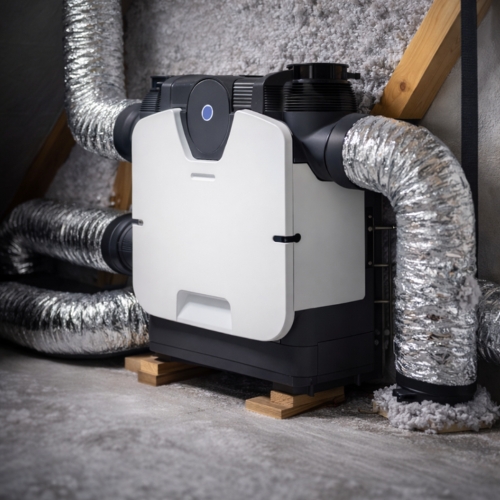
Une VMC peut être particulièrement importante dans les logements profonds de Tourcoing. Lorsque les fenêtres deviennent plus étanches, le renouvellement de l’air doit rester maîtrisé. La conception de la ventilation dépend des pièces humides, des entrées d’air, des passages possibles et de l’organisation générale du logement. Elle doit donc accompagner les autres travaux énergétiques afin de maintenir une qualité d’air adaptée et un fonctionnement cohérent de l’ensemble.
Thermostat connecté
Le thermostat connecté permet d’adapter les périodes de chauffe aux usages réels. Il peut compléter un équipement existant ou une installation récente, à condition d’être compatible avec le système en place. Dans les maisons réparties sur plusieurs niveaux comme dans les appartements, son intérêt dépend de la distribution des pièces et des habitudes d’occupation. Il constitue un outil de régulation, mais ne remplace ni l’audit ni les travaux sur l’enveloppe.
Chantiers types à Tourcoing
Maison mitoyenne en brique de l’entre-deux-guerres
Ce type de maison peut présenter des combles peu performants, des menuiseries anciennes et un chauffage individuel au gaz. Le projet peut commencer par un audit des déperditions, puis par une comparaison entre plusieurs types de travaux. La toiture, les façades exposées, la ventilation et les équipements sont alors étudiés ensemble. Cette préparation évite de remplacer trop tôt le générateur de chaleur avant d’avoir clarifié les besoins énergétiques futurs de la maison.
Grande maison bourgeoise avec plusieurs niveaux
Une demeure de ce type peut associer grands volumes, architecture plus complexe, matériaux anciens et nombreuses ouvertures. La rénovation demande alors une lecture plus détaillée des différentes zones. Selon les transformations prévues, le chantier peut réunir plusieurs artisans et professionnels. Une mission d’architecte ou de maîtrise d’œuvre peut être pertinente pour certains projets de réhabilitation comprenant également des modifications de distribution, sans que cette organisation soit nécessaire pour tous les travaux.
Appartement dans un petit collectif ancien
Le projet doit distinguer ce qui relève de l’appartement et ce qui dépend du collectif. Certains travaux énergétiques peuvent concerner le chauffage individuel, la régulation ou l’amélioration intérieure, tandis que la toiture ou certaines façades relèvent d’une décision plus large. Dans ces collectifs, l’accompagnement consiste notamment à identifier les limites du périmètre avant le chantier. Cette clarification réduit les risques de prévoir des interventions qui dépendent en réalité d’autres décisions.
Logement profond avec faible renouvellement d’air
Dans certains types de logements à Tourcoing, les pièces centrales peuvent être éloignées des ouvertures. Le projet peut alors combiner rénovation thermique, examen de la ventilation et traitement des menuiseries. L’objectif est de ne pas augmenter l’étanchéité sans prévoir une circulation d’air cohérente. L’audit et les conseils techniques servent ici à définir un ordre d’intervention adapté avant le démarrage des travaux.
Les aides pour vos travaux à Tourcoing
Les projets de rénovation énergétique peuvent, selon leur contenu et la situation du demandeur, relever de dispositifs tels que MaPrimeRénov’, les CEE, la TVA réduite et l’éco-PTZ. Pour certaines aides, le recours à des artisans ou à un professionnel RGE est requis. L’Anah intervient également dans différents parcours de rénovation de l’habitat. Les conditions doivent toujours être vérifiées avant d’engager les travaux, car elles varient selon le projet et les critères applicables.
Amélio, service public de la rénovation de la Métropole européenne de Lille, peut aussi apporter des informations sur les parcours disponibles. Cet accompagnement public complète les conseils techniques nécessaires pour structurer un projet. Pour présenter vos besoins à GRAM Énergie, vous pouvez utiliser la page contact. Les informations nationales concernant les aides et l’accompagnement sont également disponibles auprès de France Rénov’. Cette étape contribue à préparer le financement sans laisser les aides dicter seules les choix de travaux.
Les dispositifs d’aide doivent être vérifiés en fonction du projet de rénovation et des travaux retenus.
Comment nous intervenons

Écoute de votre demande
Nous recensons le type de maison ou d’appartement, les équipements existants, les difficultés rencontrées et les objectifs du projet.

Analyse technique
L’enveloppe, les matériaux, la ventilation, les menuiseries et les systèmes énergétiques sont examinés afin de préciser les priorités.

Construction du plan
Les différents types de travaux sont comparés selon la configuration du bien, les contraintes techniques et les objectifs de rénovation.
Préparation du chantier
Les interventions sont ordonnées et les besoins éventuels en artisans ou professionnels sont identifiés afin de faciliter leur coordination.

Accompagnement de la mise en œuvre
Le suivi vise à maintenir une continuité entre les décisions initiales, le plan prévu et les travaux réalisés dans le périmètre défini.
Nous intervenons aussi dans le reste du Nord
GRAM Énergie accompagne également des projets de rénovation à Lille, Roubaix et Dunkerque. Lille constitue un autre secteur de la Métropole européenne de Lille où les types de logements anciens sont variés. Pour parcourir les autres secteurs, consultez la page consacrée à la rénovation énergétique dans le Nord et la page dédiée à la rénovation énergétique en Hauts-de-France. Ce maillage permet aussi de replacer Tourcoing dans le contexte plus large du Nord et des Hauts-de-France.
Questions fréquentes
Quels travaux sont à étudier dans une maison en brique à Tourcoing ?
Il faut examiner la toiture, les murs extérieurs, les ouvertures, la ventilation et le chauffage avant d’établir les priorités. Selon l’état de la maison, plusieurs types de travaux peuvent être combinés ou programmés par étapes. Un audit énergétique aide à comprendre quels postes influencent le plus le comportement thermique avant de lancer la rénovation.
Pourquoi une maison profonde demande-t-elle une attention particulière à la ventilation ?
Les pièces éloignées des façades peuvent bénéficier de moins d’aération naturelle. Après des travaux sur les fenêtres ou l’enveloppe, cette situation peut devenir plus sensible. À Tourcoing, les projets concernant ce type de maison doivent donc intégrer la circulation de l’air dès la conception, afin que la rénovation énergétique reste cohérente avec la qualité des espaces intérieurs.
Comment préparer la réhabilitation d’une grande demeure ancienne ?
Il est utile de commencer par l’état de la construction, l’architecture, les matériaux, les équipements et les transformations déjà réalisées. Si le projet associe rénovation énergétique et modifications importantes, plusieurs artisans peuvent intervenir. Un architecte peut aussi avoir un rôle selon la nature des travaux. Cette préparation facilite la coordination du chantier et la définition des responsabilités de chacun.
Que faut-il vérifier avant des travaux dans un appartement en collectif ancien ?
Il faut identifier les éléments privatifs et ceux qui relèvent du collectif. Les travaux dans l’appartement peuvent parfois être engagés indépendamment, alors que les façades, la toiture ou certains réseaux nécessitent une décision commune. Cette distinction est essentielle dans les petits collectifs de Tourcoing pour construire un projet réaliste et éviter de prévoir des interventions hors du périmètre disponible.
Comment choisir un accompagnement pour un projet énergétique à Tourcoing ?
Un accompagnement utile commence par l’écoute de vos besoins, l’analyse du bien et des conseils adaptés à sa configuration. L’expérience du professionnel doit surtout se traduire par une méthode claire, une définition précise du périmètre et une relation de confiance sur ce qui est réellement prévu. Pour présenter votre projet de rénovation et vos attentes, utilisez la page contact.
Parlons de votre projet
Décrivez votre logement et vos objectifs : nous vous aidons à prioriser les travaux et à identifier les aides à étudier.