

Energy Renovation in Reims
In Reims, energy renovation concerns a very varied residential heritage: buildings and houses rebuilt in the 1920s and 1930s, brick or stone façades, homes with Art Deco features, detached houses, flats and large residential developments. In the Marne (51), cold winters increase the value of a structured approach centred on the building envelope, heating, ventilation and energy consumption. GRAM Énergie supports you in identifying interventions that are consistent with the building, whether it is a house, a flat or collective housing. An audit can help organise priorities before beginning an energy renovation or upgrading an old boiler.
Tip: have your energy performance certificate (DPE) and energy bills to hand for a more accurate estimate.
Why renovate your home in Reims
The centre of Reims was extensively rebuilt after the First World War. Many buildings and houses therefore date from the 1920s and 1930s, with architecture featuring brick, stone and numerous Art Deco elements. In this type of property, works should not be decided solely on the basis of the DPE. The condition of the walls, loft, windows and doors, heating system and ventilation must also be examined. A townhouse may have a poorly insulated roof and an old gas boiler, while a flat may depend partly on decisions taken at co-ownership level.
The semi-continental climate also makes heating a particularly important consideration in Reims. When temperatures remain low for extended periods in winter, a poorly insulated building envelope increases heating requirements. Work on the loft may therefore form part of the priorities, but it should be incorporated into a broader approach including the walls, openings and controls. In properties equipped with an old gas or oil boiler, its replacement should be considered after analysing future requirements. This method avoids sizing new equipment for a house whose heat losses may subsequently be reduced.
Large residential developments and co-owned buildings in Reims require a different approach. Some interventions concern private areas, while the roof, façades or certain installations are collective. An individual DPE is therefore not always sufficient to organise renovation at building level. An audit or broader assessment can help distinguish communal areas from improvements specific to each flat. The regional Oktave service can also be cited among the support schemes for energy renovation in Grand Est, particularly to help structure the process more effectively at an early stage.
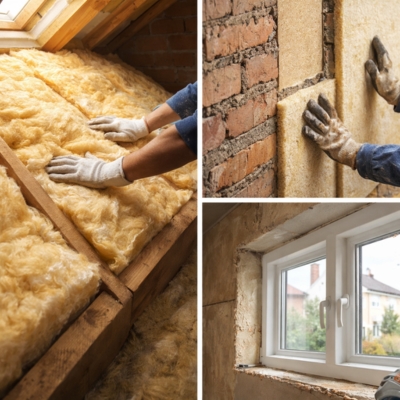
In homes in Reims, the loft, walls and openings are among the areas to examine before defining the works.
Our services in Reims
Global energy renovation
A global energy renovation makes it possible to coordinate several works within the same approach: insulation, heating, ventilation, hot water and controls. In Reims, this approach may be relevant when a house combines a poorly performing loft, an old boiler and ageing windows and doors. It helps establish a logical order between the different areas, prepare financing and avoid an isolated intervention making the rest of the renovation more difficult.

Heat pump
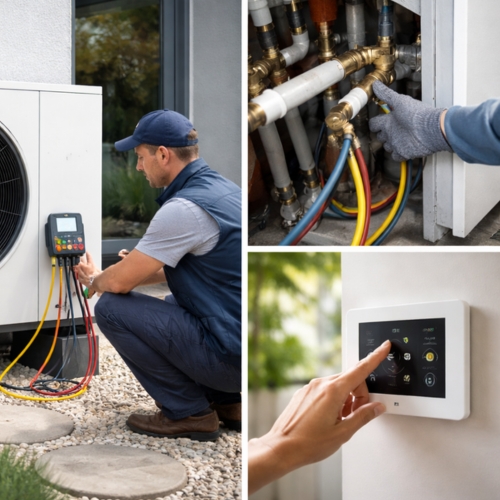
Upgrading an old boiler may lead to consideration of a heat pump. The solution depends on heating requirements, existing insulation, the heat emitters and the available space. Before any installation, it is useful to understand the heat losses of the property and the temperatures required by the current system. The choice should therefore be linked to the energy renovation as a whole rather than solely to replacing the heat generator.
Insulation
Insulation works may concern the loft, walls, roof or certain floors. In a Reims property dating from the 1920s or 1930s, treatment must take account of the wall construction and existing architecture. In a more recent building, the priorities may be different. The aim is to improve thermal performance without applying the same solution to every type of property.
Thermodynamic water heater
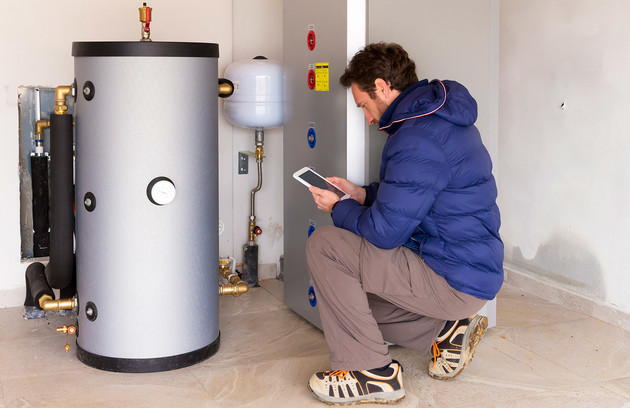
A thermodynamic water heater can be considered for domestic hot water production. Its installation requires sufficient available space, suitable connections and conditions compatible with its operation. In a house as well as in certain flats, its location should be considered alongside the other equipment in order to maintain a coherent organisation of the property and the renovation.
Energy audit
An energy audit goes further than simply reading the DPE. It examines heat losses, equipment and different scenarios in order to prioritise the works. The audit can be particularly useful before a major renovation, for an older house or when an owner is hesitating between several areas: the loft, boiler, insulation, ventilation or replacement of windows.

Mechanical ventilation
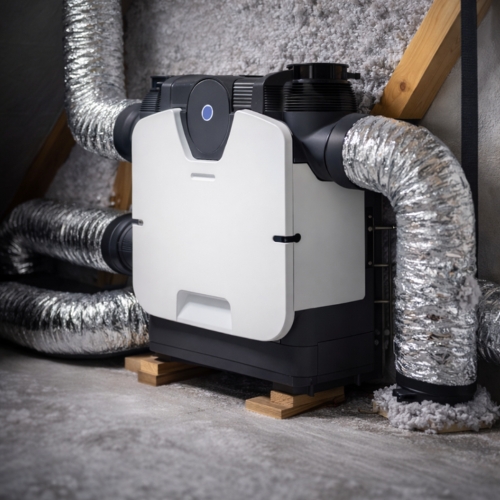
Ventilation must remain consistent with the interventions carried out on the building envelope. When windows and walls become more airtight, air renewal must be checked. Mechanical ventilation can help organise this circulation, particularly in homes where the existing ventilation is insufficient. Its sizing depends on the layout of the rooms and the other improvements planned as part of the renovation.
Smart thermostat
A smart thermostat can complement a heating installation by adapting settings to schedules and usage. It replaces neither a high-performing building envelope nor a correctly sized heat generator, but it can improve heat control. Its usefulness depends on the type of equipment in place, the layout of the property and the occupants’ habits.
Typical projects in Reims
1920s-1930s townhouse with an accessible loft
The renovation may combine treatment of the loft, examination of brick or stone walls, older windows and doors, and upgrading a boiler. The architecture of the façade must be taken into account before certain external interventions. An audit helps determine whether the priority lies with the building envelope, heating or several combined areas.
Flat in a Reconstruction-period co-owned building
In this configuration, the owner must distinguish between works that can be carried out within the flat and those that fall under the co-ownership. Individual heating, controls or certain internal interventions may be private, while the façade, roof or a communal installation require a collective decision. The renovation must therefore incorporate this distinction from the outset.
Detached house with an ageing gas or oil boiler
A house in a residential neighbourhood may have partial insulation, a loft that could be improved and an old heating system. Upgrading the boiler should not be considered in isolation: future heating requirements also depend on improvements to the building envelope. A coordinated approach makes it possible to establish a more coherent scenario for the property.
Grants for your works in Reims
Several grants can be considered as part of an energy renovation: MaPrimeRénov’, the CEE (energy savings certificates) scheme, reduced VAT and the éco-PTZ (zero-interest eco-loan). Anah is also involved in various housing-related schemes. Certain grants require the use of an RGE-certified professional. Households on modest incomes may qualify for specific pathways depending on their situation, but the criteria, thresholds, rates, grants, eligible costs and eligibility conditions must always be checked when the application is made, without assuming any amount.
Oktave, the regional support service for energy renovation in Grand Est, can also be cited among the available resources. Grants and financing should nevertheless follow the technical logic of the project, not the other way round. The CEE scheme can form part of the mechanisms to consider alongside MaPrimeRénov’ and the other available grants. To present your property and requirements to GRAM Énergie, use the contact page. National information concerning MaPrimeRénov’, Anah, the CEE scheme and support pathways is also available on France Rénov’. Oktave can complement this information at regional level.
MaPrimeRénov’, the CEE scheme, the éco-PTZ and reduced VAT can form part of a financing plan depending on the household’s situation and the selected interventions.
How we work

Understanding your situation
We collect information about the property, the DPE, consumption, equipment and works already carried out.

Analysis of priorities
The loft, walls, openings, ventilation and heating are examined in order to identify the main energy-related areas.

Building the approach
The solutions are compared according to the type of property, the condition of the building envelope, thermal requirements and any co-ownership constraints.
Organisation of the works
The interventions are ordered in order to maintain consistency between insulation, boiler upgrades, ventilation and controls.

Support with the project
The renovation is followed while maintaining the link between the audit, selected solutions, planned financing and implementation.
We also work across Grand Est
GRAM Énergie also supports renovation projects in Troyes, Charleville-Mézières and Metz. To explore the other areas of the département, view the page dedicated to energy renovation in the Marne. The page dedicated to energy renovation in Grand Est provides access at regional level.
Frequently asked questions
Is a DPE enough to decide which works to carry out in a house in Reims?
The DPE provides a useful indication of energy performance, but it does not replace a detailed assessment of the building. To determine how to renovate, the loft, walls, windows and doors, ventilation and heating must also be examined. An audit can complement this initial information when a more extensive renovation is being considered.
How can a Reims property with an Art Deco façade be renovated?
A façade with distinctive architectural features requires particular attention before any external intervention. Treatment of the walls can sometimes be considered from the inside or adapted to the characteristics of the property. The renovation must preserve the existing architecture while seeking an energy improvement that remains coherent with the other areas of the property.
Should the loft be insulated before replacing an old boiler?
The order depends on the actual condition of the house, but it is useful to assess heat losses before sizing a new heating system. Work on the loft can reduce future heating requirements. Upgrading the boiler can then be considered on the basis of a property whose requirements are better understood.
How should an energy renovation be organised in a co-owned building in Reims?
Private interventions must be distinguished from collective works. A flat may undergo certain individual improvements, while the roof, façades or communal installations fall under the co-ownership. An audit or building-wide assessment can help coordinate decisions when several areas are involved.
What information should you prepare before requesting support in Reims?
Gather the available DPE, energy bills, information about the boiler, previous interventions and any useful documents relating to the building. These elements make it easier to assess the renovation and prepare the next stages. Households on modest incomes can also check which grants may apply to their situation. To send your request to GRAM Énergie, go to the contact page.
Let’s talk about your project
Tell us about your home and your goals: we help you prioritise the works and identify the grants worth looking into.