Whole-home energy renovation
A whole-home renovation is the “smart” way to upgrade your home: we treat it as a system. Insulation, heating, ventilation, audit… to improve comfort, boost thermal performance, and achieve real savings.
Purpose: informational. Goal: guide you clearly, then help you request a quote tailored to your project.

Why choose a whole-home approach?
Because a home is a complete system: insulating without ventilation is like wearing a coat in a sauna. A whole-home renovation optimizes the order of works, reduces energy use and improves your energy rating.
What is a whole-home energy renovation?
A whole-home renovation combines coordinated works to improve a home’s performance: insulation (walls, attic), heating (e.g. heat pump), ventilation, sometimes windows, hot water systems and solar panels depending on your project.
Key benefits
✔ Better comfort in winter / summer
✔ Lower bills (energy savings)
✔ Improved energy rating
✔ Increased property value
Key point
A successful renovation follows a clear path: Audit → Scenario → Quote → RGE-certified contractors → Grants (MaPrimeRénov’, CEE) → Installation → Checks.
Key works in a whole-home renovation
These solutions adapt to your home, energy rating, income and project scope. The goal: solid thermal performance—not a patchwork of quick fixes.
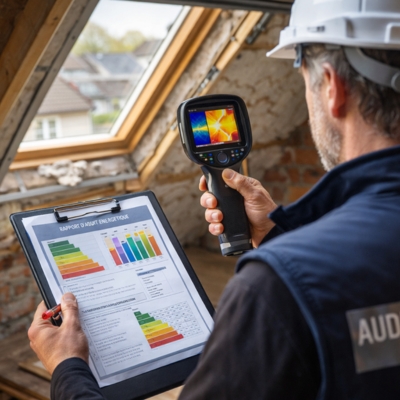
Energy audit
The audit measures performance, identifies losses (walls, attic, windows) and proposes work scenarios for a controlled renovation scope.
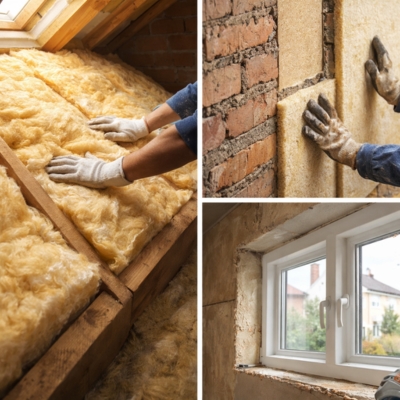
Insulation (attic, walls, windows)
Insulation is often the best lever: it reduces consumption, stabilizes comfort and prepares for more efficient heating. Attic, walls and sometimes windows depending on needs.
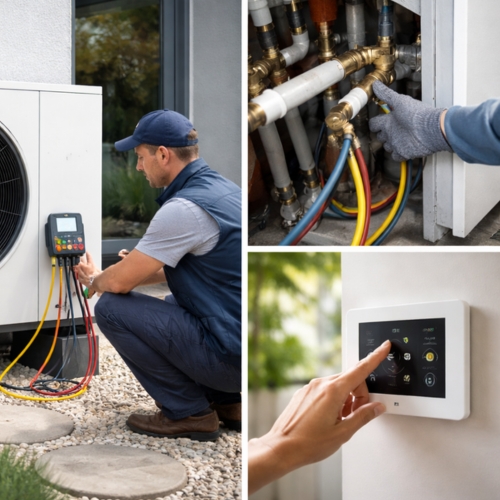
Heating: heat pump & high-performance systems
A heat pump (or another solution) must match the insulation level. That’s where a whole-home approach prevents unpleasant surprises on your bills.
Ventilation & indoor air quality
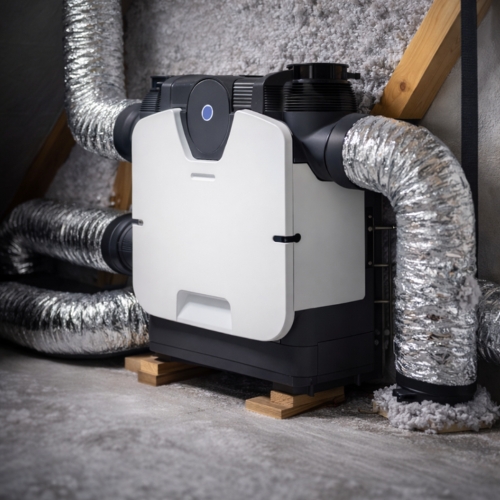
Ventilation is essential after insulation: it protects the building, limits humidity and improves daily comfort. (Yes, air deserves a renovation plan too.)
Grants: MaPrimeRénov’, CEE, etc.
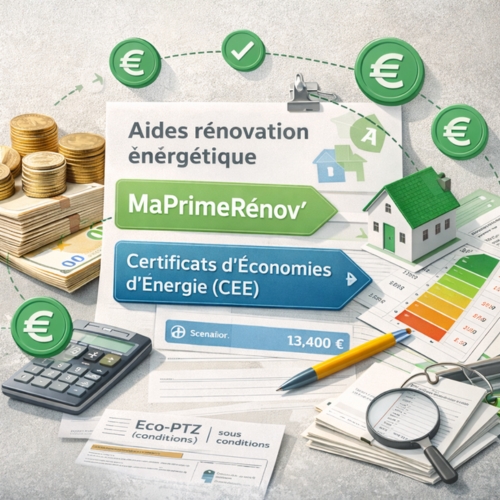
Depending on household income, your energy rating and the works, you may be eligible for MaPrimeRénov’, CEE incentives and sometimes an eco-PTZ loan (conditions apply). The safest path: clear costing + support with the grant application.
Steps of a whole-home renovation
A clear pathway: audit → quote → RGE contractors → grants → works → checks. Goal: measurable savings and comfort.

Audit
Measurements, scenarios, performance.

Project
Scope and solution choices.

Quote
Compare cost / works.
RGE
Certified contractors & grants.

Works
Installation, ventilation, checks.
FAQ — whole-home energy renovation
What is a whole-home renovation and why is it important?
Because it improves energy performance coherently: insulation + heating + ventilation. It’s often more effective than a single “one-off” upgrade—especially for inefficient homes.
What grants can be available for my home?
MaPrimeRénov’, CEE incentives, sometimes eco-PTZ and reduced VAT (conditions apply). Amounts depend on income, energy rating, works and targeted performance.
How do I choose an RGE-certified professional?
Check RGE qualifications by trade (insulation, heat pump, ventilation…), compare quotes, request references and favor a coordinated whole-home approach.
What budget should I expect?
Cost depends on scope, size, the building condition and chosen solutions. The most reliable: an audit + detailed quotes + a clear estimate of grants.
Story — The home that was tired of paying to stay cold
A simple, practical story to understand whole-home energy renovation and take action with Gram Énergie.
It was a lovely home—full of character… and drafts. Every winter: heating up, bills climbing, and energy use doing gymnastics. The energy rating wasn’t flattering, and comfort was far from ideal.
The owner had tried a few small fixes, but nothing truly coherent. Then the idea clicked: treat the building as a system and run a real project—a whole-home renovation plan.
It started with an audit: clear findings, where heat is lost, what to prioritize (attic, walls, windows), and the best sequence of works.
Next came insulation—attic first, then walls and windows where needed. Comfort improved, thermal performance became more stable, and proper ventilation kept indoor air healthy.
Then the key decision: heating. A heat pump works best when matched to insulation. The whole-home approach prevents unpleasant surprises and keeps bills under control.
Gram Énergie structured everything: a detailed quote, cost/works comparison, planning, certified RGE contractors, and support through the grant process.
Depending on eligibility, you may access MaPrimeRénov’ and CEE incentives (and sometimes eco-PTZ—conditions apply). The safest route is clear costing + proper paperwork.
Clear pathway: audit → quote → RGE contractors → grants → works → checks.
Goal: measurable comfort and savings.
In short: success comes from a coherent whole-home plan—not a collection of isolated upgrades.