


Heat pump in Marne (51)
A heat pump installation must be suited to the actual needs of the home and its thermal characteristics. In Marne (51), cold winters, the length of the heating season and the diversity of the housing stock mean that the appliance itself cannot be considered in isolation. An older house built from brick or chalk, a reconstruction-era home or a property that has already been partially renovated will not lead to the same choices. Insulation, existing emitters, required output and unit positioning must therefore be assessed together before defining the system.
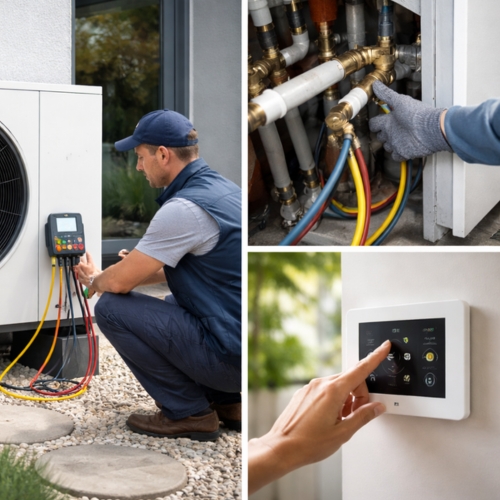
Tip: have your energy performance certificate (DPE) and energy bills to hand for a more accurate estimate.
Why install a heat pump in Marne
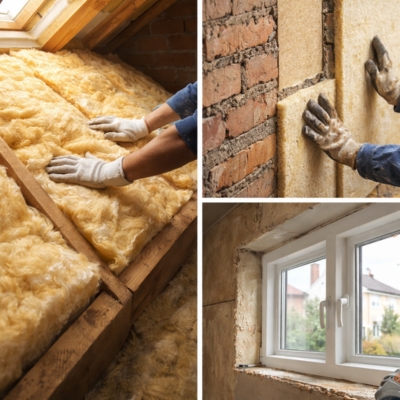
The housing stock in Marne includes many buildings whose envelopes were designed at a time when limiting heat loss was not a priority. Poorly insulated lofts, relatively thin walls or thermal bridges around floors and openings can significantly increase heating needs. In this context, choosing a heat pump cannot be separated from checking the existing insulation.
Winter temperatures in Marne also make correct sizing particularly important. Equipment selected solely on the basis of floor area may be poorly matched to the actual behaviour of the building. The heated volume, level of thermal protection, water temperature required by radiators or underfloor heating and the way the property is used must all be taken into account.
What a heat pump installation includes
Choosing the type of system
The first step is to determine which technology is compatible with the home and its existing installation. A heat pump can be assessed according to the existing heat distribution system, installation options and identified needs. The choice is therefore not based solely on the nominal output of the appliance, but on how it will integrate with the system as a whole.

Assessing heating requirements
Sizing takes account of the floor area, volumes, building fabric and heat losses. A property with poorly insulated loft space will not have the same requirements as a home whose envelope has already been comprehensively improved. This assessment helps avoid trying to compensate for significant losses simply by selecting more powerful equipment.
Compatibility with existing emitters
Radiators and underfloor heating operate at different water temperatures depending on their design. Their condition and ability to deliver sufficient heat must therefore be checked. In some older homes, existing radiators can be retained; in other situations, their operation must be reassessed so that the new heat generator can work under suitable conditions.
Positioning the units
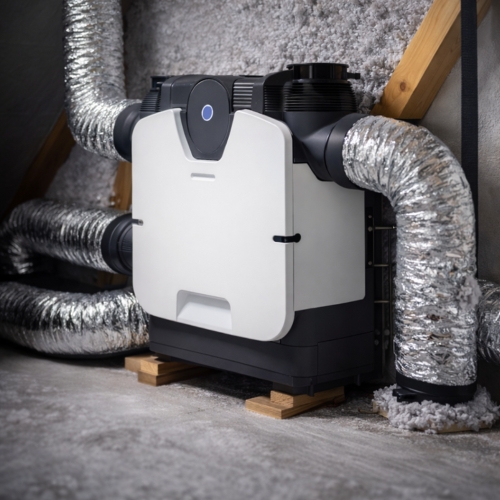
The location of the outdoor unit and indoor components depends on the building layout. Accessibility, airflow, connections and the organisation of technical spaces must all be considered. In urban housing or on compact plots, these constraints should be anticipated before a solution is selected definitively.
Settings and controls
Once the system has been defined, the controls contribute to the coherent operation of the installation. Flow temperature, programming and settings must be adapted to the emitters and the way the home is used. Adjustments should also take account of any improvements made to the building envelope so that the system does not continue to operate according to the property’s previous needs.

Typical situations in Marne
Reconstruction-era house with existing radiators
A home may have a heating network that remains usable while still having poorly insulated lofts and lightly protected walls. Before choosing the heat pump, it is useful to identify the main heat losses and check the water temperature actually required by the radiators.
Older brick house with large internal volumes
In towns and rural areas, some homes combine high ceilings, substantial walls and large rooms. The project must then consider the volume to be heated, the quality of the envelope and the installation options rather than relying solely on the floor area of the property.
Home in Reims that has already been partially renovated
Recent windows or roof insulation may have reduced part of the heating demand without the existing system having been reassessed. An evaluation can then start from the property’s current condition, identify what has already been improved and determine the characteristics of the new equipment accordingly.
Grants and funding
Depending on the technology selected and the conditions applying to the property, a heat pump installation may fall within the scope of MaPrimeRénov’, CEE (energy savings certificates), reduced VAT or éco-PTZ (zero-interest eco-loan). The rules vary according to the scheme and the exact type of equipment. Where required for funding, the relevant work must be carried out by an RGE-certified professional meeting the applicable conditions.
To present your project and provide details of your current installation, you can use the GRAM Énergie contact page. The official conditions of public schemes should also be checked on France Rénov’ before making any commitment, particularly to confirm the technical criteria and required procedures.
How we work

Assessment of the home
We examine the layout, insulation level, heated volumes and equipment already in place.

Assessment of the emitters
The existing network, radiators or underfloor heating are taken into account to check their compatibility with the project.

Defining the system
The technology, sizing and installation options are assessed on the basis of the identified needs.

Checking available grants
Potential funding is reviewed according to the type of equipment and the project criteria.

System coordination and settings
The installation is considered together with the controls, emitters and thermal characteristics of the home so that the overall system operates appropriately.
Our other services in Marne
To address the home as a whole, you can also consult our pages on global energy renovation, insulation, thermodynamic water heaters and energy audits. You can also visit our main page on energy renovation in Marne, our coverage of Grand Est and the page dedicated to Reims.
Frequently asked questions
Is a heat pump suitable for a poorly insulated house?
It may technically be considered in some situations, but the condition of the building envelope directly affects heating requirements and sizing. Where heat losses are significant, it is useful to assess possible improvements to the loft, walls or openings first so that the entire heating demand does not have to be addressed by the heat generator alone.
Can existing radiators be retained?
That depends on their sizing, condition and the water temperature required to heat the rooms properly. Checking the existing network helps determine whether the radiators can operate with the proposed system or whether certain emitters need to be adapted.
Does the climate in Marne affect the choice of equipment?
Yes, because heating requirements must be assessed with winter conditions and the length of the heating season in mind. These factors are considered alongside the characteristics of the building, its insulation and its emitters to avoid making a choice based solely on floor area.
Is an energy audit required before installing a heat pump?
An audit is not systematically required for every project, but it can provide a useful overview when a home has several weaknesses or when a wider renovation is being considered. In particular, it helps place the heating replacement among the other possible interventions and assess its order of priority.
Let’s talk about your project
Tell us about your home and your goals: we help you prioritise the works and identify the grants worth looking into.