


Energy Renovation in Île-de-France
Bringing down a heating bill that has become hard to sustain, moving up from a poor energy rating, replacing a boiler on its last legs: in Île-de-France the reasons for renovating are many, and the situations differ greatly from one home to the next. GRAM Énergie supports homeowners across the region along the whole chain of works: audit, insulation, heating, domestic hot water, ventilation and controls. A single point of contact follows the project from the first conversation through to handover. Whether your home is a detached house in the outer suburbs or a flat in a co-owned block, the approach is the same: understand the building fabric, rank the works in order of priority, then commit to those that deliver the clearest gain.

Tip: have your energy performance certificate (DPE) and energy bills to hand for a more accurate estimate.
A housing stock with two very different faces
In Paris and the inner suburbs, most of the stock is multi-occupancy. Period buildings, co-owned blocks from the post-war boom years, heating that is sometimes communal: works to the common parts are decided at the general meeting of owners, and within an individual home they are often limited to internal wall insulation, replacing the heat emitters, ventilation and controls. Constraints on the façade, on access and on noise weigh as heavily on the technical choice as performance itself.
In the outer suburbs the logic is reversed. Detached family housing built between the 1960s and the 1990s dominates, with large roof areas, lofts that are often poorly insulated or not insulated at all, walls with no original insulation and ageing gas or oil boilers. The owner decides alone, external wall insulation becomes a realistic option, and the plot leaves room for the outdoor unit of a heat pump. The potential gains are generally wider here, provided the envelope is dealt with before the equipment.
In both cases, the order of operations matters more than the equipment chosen. First reduce heat loss, then make sure the air is properly renewed, and finally size the heating for a home that has become less demanding. A high-performance system fitted to a leaky envelope is expensive and disappointing.
The order of the works — envelope, ventilation, then heating — determines the final result.
Our energy renovation services in Île-de-France
Whole-house energy renovation
Rather than stringing together isolated jobs over several years, a whole-house renovation tackles the envelope, the ventilation and the heating within a single coherent project. It is the most effective route to moving a home up several energy ratings, and the one that opens the most complete funding pathways. We coordinate the trades and the schedule. Discover whole-house energy renovation.

Heat pump
Air-to-water on a radiator circuit or underfloor heating, air-to-air for reversible heating, ground source where the plot allows: the choice depends on the building, on the existing emitters and on the space available. Sizing follows the heat-loss survey, never the floor area alone. Find out more about the heat pump.

Insulation
Cold lofts, sloping ceilings, walls insulated internally or externally, ground floors: insulation remains the single biggest source of savings in most homes across the region. The choice of material and of installation method depends on the substrate, on the thickness available and on how moisture is managed. See our insulation solutions.

Thermodynamic water heater
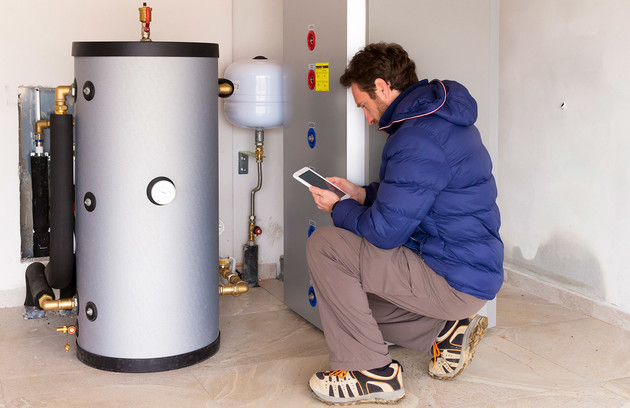
Domestic hot water accounts for a significant share of consumption, particularly in homes that are already well insulated. A thermodynamic water heater draws heat from the air to produce that hot water using far less electricity than a conventional cylinder. Monobloc or split model, depending on the space available. Discover the thermodynamic water heater.
Energy audit
The audit sets out the condition of the building fabric, identifies thermal bridges, examines the equipment and puts forward several ranked works scenarios. It is the document that stops you spending in the wrong place, and it forms the basis of both the grant application and the quotations. We recommend it before any substantial project. Find out more about the energy audit.
Mechanical ventilation
A home made airtight without suitable ventilation deteriorates: damp, condensation, declining air quality. Mechanical ventilation, single-flow or heat-recovery, therefore goes hand in hand with any serious insulation project. It is sized according to the layout of the home and the number of wet rooms. Discover our ventilation solutions.

Smart thermostat
Controls are the least expensive item and often the most cost-effective: programming by time of day, room-by-room regulation, consumption monitoring. On an existing system as much as on a new heat pump, a well-set thermostat stops you heating an empty home. Find out more about the smart thermostat.
Our work across the eight départements of Île-de-France
Each département in Île-de-France has its own building types and its own site constraints. Our département pages set out the local issues and the towns covered.
- Paris (75) — period buildings and co-owned blocks, heating often communal, internal wall insulation and works carried out in occupied homes.
- Seine-et-Marne (77) — the largest département in the region, strongly dominated by detached housing, with large loft areas and ageing boilers.
- Yvelines (78) — houses with gardens, co-owned blocks from the 1960s-1980s and historic town centres subject to heritage constraints.
- Essonne (91) — outer-suburb detached housing, estates built between the 1950s and the 1980s and a number of large blocks needing deep renovation.
- Hauts-de-Seine (92) — dense inner suburbs, urban co-owned blocks and town houses, with works carried out in occupied homes.
- Seine-Saint-Denis (93) — older detached housing, garden cities and large estates, with many homes to be lifted out of the lowest energy ratings.
- Val-de-Marne (94) — extensive detached housing, co-owned blocks from the 1960s-1980s and period houses along the Marne.
- Val-d’Oise (95) — individual houses in the outer suburbs, roofs to insulate and the oil boilers that remain in rural areas.
The financial support available for your works
Several schemes can fund part of an energy renovation: MaPrimeRénov’ (the French state renovation grant), certificats d’économies d’énergie (CEE) (energy saving certificates funded by energy suppliers), TVA à taux réduit (a reduced rate of VAT) on works that improve performance and the éco-prêt à taux zéro (an interest-free renovation loan) to spread the remaining cost. Local grants may be added on top, depending on the town or the inter-communal authority. The French public service France Rénov’ lists the schemes currently in force.
Conditions, ceilings and application routes change regularly, and they depend on the nature of the works, on the home and on the household’s circumstances. Rather than quote a figure that would be wrong tomorrow, we review your eligibility at the time of the study. Most of these schemes require the work to be carried out by an RGE-certified company, the French quality label for energy renovation professionals.
The schemes can be combined, but each one has its own eligibility conditions.
How a project with GRAM Énergie unfolds

First conversation
you describe your home, your bills and what bothers you day to day. We identify the realistic options.

Technical visit
an on-site survey of the building fabric, the equipment and the installation constraints.

Study and quotation
costed scenarios, the recommended order of works, a review of the funding available.

Installation
the schedule shared in advance, the trades coordinated, the site organised to keep disruption down.

Handover and follow-up
checks that everything works, final adjustments, guidance on use and the documents you need for your applications.
Frequently asked questions
Which works should an energy renovation start with?
With the envelope, in the vast majority of cases. Insulating the loft and the walls reduces heat loss and then allows a smaller heating system to be specified, which costs less both to buy and to run. An energy audit beforehand lets the decision be made on your home rather than on a general rule.
Is an energy audit needed before starting the works?
It is not compulsory in every situation, but it is strongly recommended as soon as a project goes beyond a single item of work. The audit compares several scenarios, puts figures on the expected savings and serves as the reference document for grant applications and for comparing quotations.
Can a heat pump be installed in a co-owned building?
It is possible in some cases, but it depends on the building’s own rules, on the space available for the outdoor unit, on acoustic constraints and on the approval of the general meeting of owners for any change visible from outside. The technical study has to take these constraints into account from the start.
What is the difference between phased renovation and whole-house renovation?
Phased renovation spreads the works over time, at the pace the budget allows. A whole-house renovation handles them together, which guarantees technical consistency between insulation, ventilation and heating, and opens more favourable funding pathways. The choice depends on your financing capacity and on the condition of the home.
Is my home eligible for financial support?
Eligibility depends on the nature of the works, on the age of the home, on how it is used and on the household’s circumstances. The criteria change from one year to the next. We review each scheme in turn at the time of the study, before the works are committed to, because some applications have to be submitted beforehand.
Do you work everywhere in Île-de-France?
Our département pages list the towns covered for each of the eight départements of Île-de-France. If your town is not there yet, get in touch: we will tell you quickly whether your project falls within the area we cover.
Planning an energy renovation in Île-de-France? Tell us about your home and your objectives through our contact form: we will come back to you with the works that suit it and a review of the funding available.
Let’s talk about your project
Tell us about your home and your goals: we help you prioritise the works and identify the grants worth looking into.