

Energy renovation in Grand Est
Grand Est combines a pronounced continental climate with a highly varied building heritage. Winters there are cold and long, which bears directly on heating demand. Set against that, the housing stock runs from Alsatian half-timbered houses to the workers’ and steelworkers’ estates of Lorraine, by way of post-war reconstruction stock and the stone houses of rural and mountain areas. GRAM Énergie supports owners across the region through the whole process: reading the building fabric, ranking the works, coordinating the site and preparing the grant files.
Tip: have your energy performance certificate (DPE) and energy bills to hand for a more accurate estimate.
The regional building stock and its energy challenges
The climate dictates the method. Long winters mean an extended heating season, and therefore heat losses that accumulate over several months. Every weak point in the envelope costs more here than elsewhere: poorly insulated lofts, ground floors over a cellar or a crawl space, thermal bridges at intermediate floors, old joinery. In Grand Est, the order of the works therefore counts as much as their nature. Reducing demand before touching the generator remains the basic rule.
The diversity of the heritage then calls for differentiated solutions. Half-timbered houses require materials that let water vapour migrate and rule out impermeable insulation applied without care to the timber frames. Reconstruction stock, more regular, lends itself better to conventional insulation of lofts and walls. The workers’ and steelworkers’ estates, often terraced, concentrate their losses in the roof and on exposed gable walls. Stone houses in rural and mountain areas combine inertia, thick walls and sensitivity to damp.
Ventilation is the third challenge, and it is specific to the region. Strengthening the insulation and replacing the joinery makes the home markedly more airtight. Without correctly sized mechanical air renewal, the moisture produced day to day settles on the coldest surfaces, with a risk of condensation and of damage to older fabric. Insulation and ventilation are therefore handled together, never one without the other, right across Grand Est.
Our services in Grand Est
Global energy renovation
A global energy renovation handles insulation, ventilation and heating as a whole, in an order defined in advance. Under a continental climate, that coherence weighs heavily: the heating season is long and every defect repeats itself for months. We establish with you the priority work packages, those that can wait, and the way to sequence them without putting the home out of use.

Heat pump
The air-to-water heat pump replaces a gas or oil boiler and fits onto an existing radiator circuit where that circuit allows it. The region’s low temperatures make sizing decisive: we check the envelope, the emitters and the flow temperature required before any appliance is chosen, so as to avoid constant recourse to the electric back-up.

Insulation
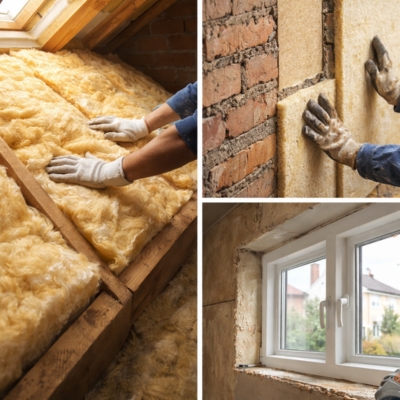
Loft insulation remains the first lever, followed by sloping ceilings, ground floors and walls. How the walls are treated depends on the fabric: internally or externally according to the look of the façade and planning rules. On half-timbering and stone walls, the choice of material and the management of water vapour count for more than the thickness installed.
Thermodynamic water heater
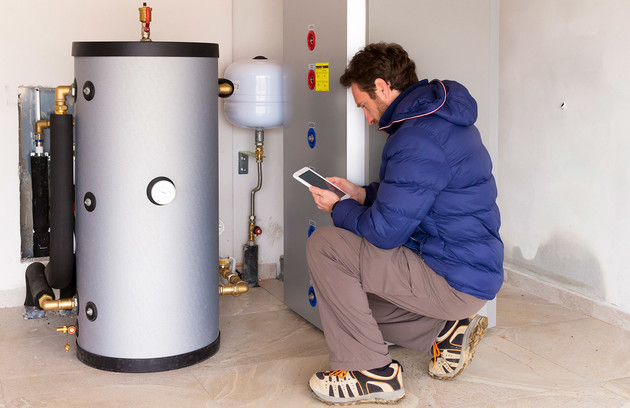
The thermodynamic water heater produces domestic hot water from the heat in the ambient air. It is a sound replacement for an old electric cylinder, above all in households where hot water accounts for a large share of the bill. The appliance needs a sufficiently ventilated space: a cellar, a store room, a utility room or an adjoining garage. We check the position and the condensate drain.
Energy audit
An energy audit describes the home as it stands: the make-up of the walls, the roof, the heating, the ventilation and the points of heat loss. It then proposes scenarios in order of priority. Faced with the variety of building types in Grand Est, whether half-timbering, reconstruction stock, workers’ estates or mountain houses, this stage avoids applying a standard recipe to fabric that will not take it.

VMC
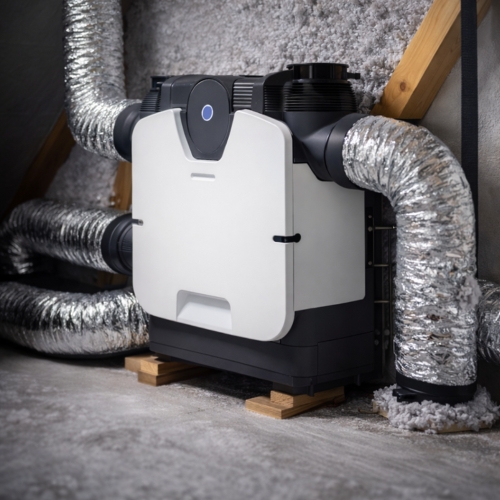
A VMC (French mechanical ventilation system) renews the air continuously, removes the moisture from wet rooms and limits condensation on cold surfaces. In a region where the difference between inside and outside temperatures stays wide for much of the year, this point is central. We size the system according to the number of wet rooms and the airtightness achieved after the works.
Smart thermostat
The smart thermostat matches the temperature to the real hours of occupation, and room by room where the installation allows it. Over a long heating season, this control avoids keeping little-used volumes up to temperature. It also makes consumption legible from day to day. We configure it with you once the heating has been commissioned.
The departments we cover
We work across the region’s ten departments, from the plains of Champagne to the valleys of the Vosges.
- Ardennes (08): Rural stone stock and former workers’ estates in the Meuse valley, where wall and roof insulation remains the priority on site.
- Aube (10): Timber-framed houses in the old centres and homes on the outskirts, with projects combining internal insulation, ventilation and a change of heating.
- Marne (51): Reconstruction stock, vineyard houses and apartment blocks, where overhauling the loft almost always precedes changing the generator.
- Haute-Marne (52): Scattered rural stone housing, harsh winters and wood or oil heating still common outside the areas served by mains gas.
- Meurthe-et-Moselle (54): Town houses, workers’ estates and peri-urban homes, with particularly marked issues of loft insulation and ventilation.
- Meuse (55): Rural communes and stock rebuilt after the wars, where large, poorly insulated houses weigh heavily on annual heating consumption.
- Moselle (57): Steelworking estates, miners’ houses and more recent construction: a very varied stock that calls for a prior survey before any proposal.
- Bas-Rhin (67): Half-timbered houses, traditional Alsatian fabric and recent construction, where breathable materials are the obvious choice on older timber-framed walls.
- Haut-Rhin (68): Half-timbered villages, foothill and mountain housing exposed to the cold, where the envelope is treated before any work on the heating.
- Vosges (88): Mountain houses and rural stone stock, with high heating demand and roofs to insulate first of all.
Grants and funding
Several national schemes support energy renovation work: MaPrimeRénov’ (the main French state renovation grant), the certificats d’économies d’énergie (CEE, the French energy saving certificate scheme), the reduced rate of TVA (French VAT) on energy improvement works and the éco-prêt à taux zéro (the interest-free eco-loan). The conditions depend on the home, on the household’s income and on the nature of the works undertaken. Local grants may be added depending on the authority concerned. We prepare the technical documents the files require and we point you to the public information service France Rénov’, which advises owners in Grand Est free of charge on the schemes in force.
Grant files rest on technical documents that we prepare with you.
How a project runs with GRAM Énergie

First conversation
You describe the home, your consumption and where you feel uncomfortable. We frame the need and the site constraints.

Technical visit
Survey of the walls, the roof, the heating and the ventilation, identifying sensitive points such as damp.

Costed proposal
Scenarios in order of priority, materials and equipment described, the order of the work packages and the expected impact on consumption.
Delivery
Coordination of the trades, site supervision, checks during the works and protection of the home while work is under way.

Commissioning and follow-up
Settings for the heating and the ventilation, guidance on use and handover of the documents useful for the files.
Frequently asked questions
Why does insulation count for more in Grand Est?
Because the heating season is long. A defect in the envelope does not cost just a few weeks of excess consumption; it weighs on a large part of the year. Treating the lofts, the ground floors and the joinery therefore produces a more visible effect than elsewhere, even before replacing the heating system is considered.
How can a half-timbered house be renovated without damaging it?
With materials that let water vapour migrate. Timber frames and their infill cope badly with impermeable insulation laid directly against the wall: the moisture is trapped and the timber degrades. We study each wall, favour suitable internal insulation and check the ventilation of the home.
Does a heat pump work in severe cold in the region?
Yes, provided it is correctly sized on an envelope that has already been treated. Performance falls as the outside temperature drops, which makes the demand calculation and the choice of emitters decisive. A poorly sized appliance switches constantly to its electric back-up and the bill shows it.
Is ventilation needed after insulation work?
Yes, always. Insulation and new joinery make the home more airtight. Without mechanical air renewal, the moisture produced by the occupants stays inside and settles on cold surfaces, with a risk of condensation and mould. Insulation and ventilation are handled together.
Which works should come first in a workers’ estate house?
The roof and the gable walls. These houses are often terraced: the losses are concentrated on the exposed faces and at high level. Insulating the loft, then treating the gable walls and the joinery, comes before changing the heating. That order avoids installing an oversized generator.
Planning an energy renovation in Grand Est? Tell us about your home through our contact form and we will come back to you with an initial reading of the building fabric and of the works to consider.
Let’s talk about your project
Tell us about your home and your goals: we help you prioritise the works and identify the grants worth looking into.