

Thermodynamic water heater in Ardennes (08)
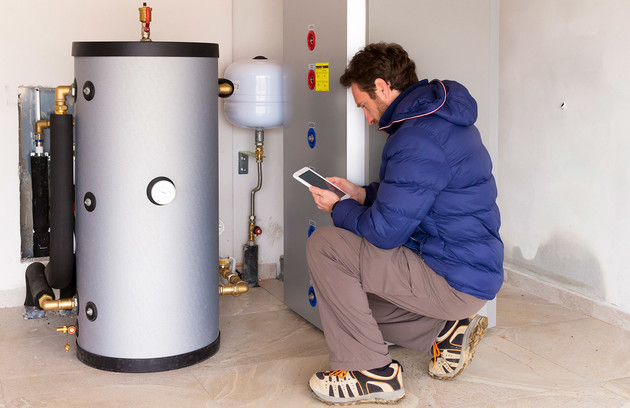
Installing a thermodynamic water heater in Ardennes (08) makes it possible to separate domestic hot water production from the main heating system. However, the project is not limited to choosing the capacity of the cylinder. The available location, the air source used, the temperature of the room and household habits must also be assessed. In homes in Ardennes where oil boilers, wood-burning appliances and large technical spaces are still common, this equipment can fit into different renovation scenarios. Its location must nevertheless be planned according to the building rather than simply according to the position of the old water heater.
Tip: have your energy performance certificate (DPE) and energy bills to hand for a more accurate estimate.
Why install a thermodynamic water heater in Ardennes
In many homes in the department, hot water production is still linked to a boiler that also provides heating. When a project involves changing the latter, separating the two functions can be relevant. The thermodynamic water heater then becomes an independent appliance whose operation can be assessed separately from the long heating season. This arrangement is particularly worth considering when replacing an old boiler or during a renovation in which the home’s heating requirements are going to change.
Homes in Ardennes sometimes include cellars, basements, utility rooms or adjoining spaces that may be suitable for the appliance. Their presence alone is not enough, however. A cold, very small room or one directly connected to a heated area does not provide the same operating conditions. The choice between ambient air, outdoor air or another configuration must therefore be assessed carefully, together with condensate drainage and the routes required for any ducting.
What thermodynamic water heater installation includes
Assessment of hot water requirements
The page dedicated to the thermodynamic water heater explains the general principle of this solution. For a specific project, the capacity must be selected according to the number of occupants and their usual habits. A cylinder is not sized solely according to the floor area of the house. Usage patterns, sanitary facilities and simultaneous hot water requirements all contribute to defining the solution.

Choosing the air source
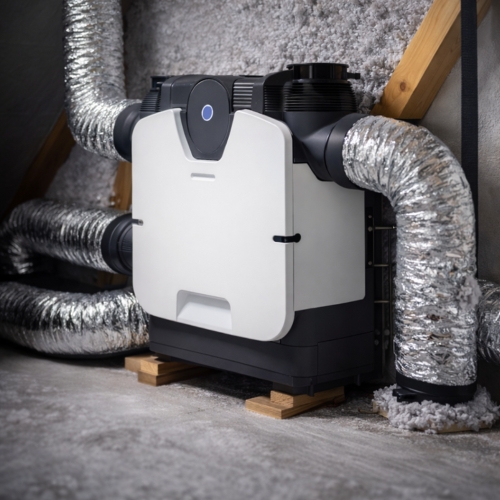
The system recovers heat from the air to warm the stored water. Depending on the model and configuration, this air may come from the room itself or be drawn through ducts. Each solution creates different constraints in terms of volume, temperature and air circulation. It is therefore necessary to check that operation of the appliance does not unnecessarily reduce the temperature of a room that is already heated.

Assessment of the installation location
The water heater must have enough space for installation and maintenance. Available height, the strength of the support, proximity to water and electrical connections and the possibility of draining condensate are assessed. Where ducts are required, their route must also be planned in order to limit constraints and maintain practical access to other technical equipment.
Hydraulic and electrical connections
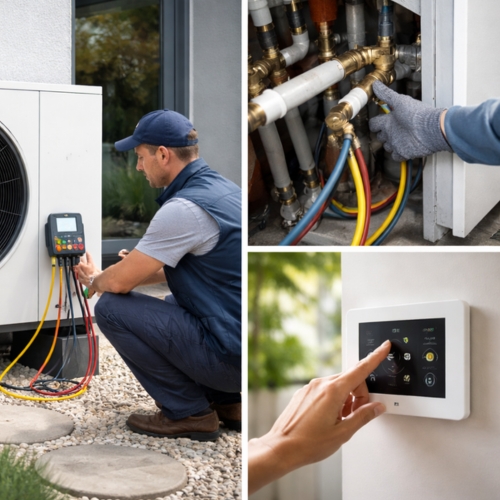
Replacing an existing appliance involves checking the water supply, drainage, safety devices and electrical supply. The installation must be integrated into the domestic water network rather than treating the cylinder as equipment independent of its surroundings. The condition and position of existing connections may influence the chosen location or require adaptation before commissioning.
Settings according to usage
Programming is adapted to household operation and the characteristics of the equipment. Production periods, set temperatures and any additional functions must remain consistent with daily needs. A permanently occupied house and a home used irregularly do not necessarily require the same settings. System management therefore helps ensure that the equipment is used in line with its intended purpose.

Typical situations in Ardennes
House with an oil boiler also producing hot water
In this generic situation, replacing the heating system may lead to domestic hot water production being reconsidered separately. A thermodynamic water heater can then be assessed so that this use no longer depends on the boiler. The available location and the configuration of existing networks nevertheless determine whether this separation is feasible.
Detached house with a basement or utility room
These spaces may appear suitable for installation, but their characteristics must be checked. The room temperature, its volume, ventilation and relationship with heated rooms influence the solution selected. Condensate drainage and the distance to connection points are also part of the assessment.
Older house undergoing a global renovation
When the building envelope and main heating system are being changed, domestic hot water production can be redefined at the same time. In Ardennes, this approach can make it possible to position the water heater before the other technical equipment is permanently installed and to anticipate the routes required for services.
Grants and funding
Depending on the characteristics of the equipment, the property and eligibility conditions, the installation may be covered by MaPrimeRénov’, CEE (energy savings certificates), reduced VAT or éco-PTZ (zero-interest eco-loan). These schemes do not automatically apply to every configuration. Some grants may also require the use of an RGE-certified professional for the relevant work. The criteria should therefore be checked before committing to the project.
To assess the location of the appliance and its place within your renovation, you can contact GRAM Énergie. The official criteria for funding schemes and technical conditions should be checked on France Rénov’. This verification makes it possible to build the project around the household’s actual needs before taking account of any grants that may be available.
How we work

Assessment of usage
We examine hot water requirements, the number of occupants and the operation of the current installation.

Identification of possible locations
Available rooms, their volumes, temperatures and technical access are assessed.

Selection of the configuration
The air source, cylinder capacity and ducting constraints are defined according to the building.
Preparation of connections
Water networks, condensate drainage and the electrical supply are checked before installation.

Equipment settings
Programming is adjusted according to household usage and the capabilities of the selected equipment.
Our other services in Ardennes
Domestic hot water production can be integrated into a global energy renovation in Ardennes, combined with a heat pump in Ardennes, complemented by insulation in Ardennes or preceded by an energy audit in Ardennes. You can also visit the page dedicated to energy renovation in Ardennes, our Grand Est page and the information dedicated to Charleville-Mézières.
Frequently asked questions
Can a thermodynamic water heater be installed in a cellar?
It is possible in some configurations, but the presence of a cellar alone is not enough to confirm suitability. Its volume, temperature, ventilation, any moisture and access to services must be assessed. The selected model and the way it draws in and discharges air also determine the conditions required.
Does a thermodynamic water heater cool the room where it is installed?
When an appliance draws heat directly from the air in the room, its operation can affect the temperature of that space. This effect must be taken into account before choosing the location. In a heated room, it is particularly important to avoid creating an unfavourable interaction between domestic hot water production and the system used to heat the home.
Can an existing electric water heater be replaced directly?
Replacement is possible if the location meets the constraints of the new appliance. A thermodynamic water heater requires more than a water connection and electrical supply: available space, air circulation, condensate drainage and maintenance access must also be checked. The previous location is therefore not automatically suitable for the new equipment.
Should the water heater be installed before replacing the boiler?
The order depends on the project. If the boiler currently produces hot water and is due to be replaced, it may be relevant to assess both operations together. This makes it possible to organise the networks and locations before modifying the heating system. In a broader renovation, coordination with other equipment avoids successive adaptations.
Let’s talk about your project
Tell us about your home and your goals: we help you prioritise the works and identify the grants worth looking into.