

Energy renovation in the Aisne (02)
The Aisne is a deeply rural department, where housing remains scattered across a great many communes. Its homes are often old, built of stone or brick, and sometimes rebuilt after the two world wars. They offer large volumes that are hard to heat, and lofts that are rarely well insulated. Outside the areas served by mains gas, oil and wood remain very common. GRAM Énergie supports owners through the whole process: reading the building fabric, choosing the priority works, coordinating the site and preparing the grant files. The aim is the same everywhere: to use less and to heat better.
Tip: have your energy performance certificate (DPE) and energy bills to hand for a more accurate estimate.
The Aisne building stock and its energy challenges
A large part of the older stock rests on thick walls of limestone or brick. This masonry has high thermal inertia: it warms up slowly, then gives that heat back over a long period. It remains sensitive to damp, with rising damp common in village houses. Renovation must therefore favour materials that let water vapour migrate, and deal with the damp before any insulation is added.
The department also counts many communes rebuilt after 1918 and again after 1945. These houses have thinner masonry, joinery often replaced once already a few decades ago, and converted lofts under sloping ceilings with very little insulation. Heat losses are then concentrated in the roof and around the openings. The quickest gains come from insulating the loft and restoring airtightness.
Low density, finally, changes the picture for heating. The gas network serves only part of the territory and many households run on oil or wood. Living areas are generous, with rooms that are little used yet heated out of habit. Replacing an oil boiler with a heat pump means first reducing demand, then checking the emitters already in place.
Our services in the 02
Global energy renovation
Treating the home as a whole avoids works that contradict one another. A global energy renovation combines insulation, ventilation and heating in a coherent order. On the large houses of the Aisne, this approach reduces the heating output needed before the generator is changed. We set out with you the priority work packages and the way to sequence them.

Heat pump
The air-to-water heat pump replaces an oil or gas boiler and fits onto an existing radiator circuit where that circuit allows it. We check the emitters, the flow temperatures and the envelope before sizing the unit. An oversized machine cycles too often; one that is too small calls constantly on the electric back-up.

Insulation
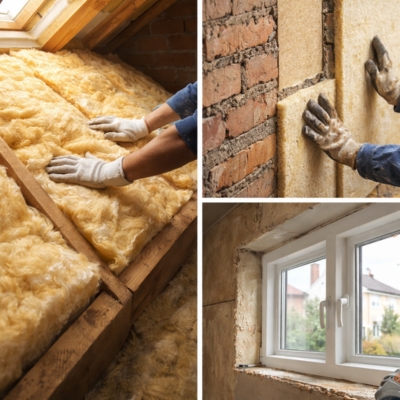
Loft insulation remains the first lever on the department’s older building stock. We also treat sloping ceilings, ground floors and walls, internally or externally depending on the look of the façade and on planning rules. On stone or brick walls, the choice of material counts as much as the thickness installed.
Thermodynamic water heater
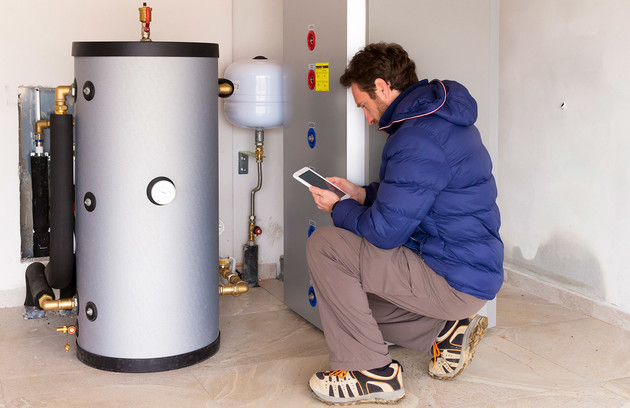
The thermodynamic water heater produces domestic hot water by drawing heat from the air. It is a sound replacement for an old electric cylinder, above all where hot water weighs heavily on the bill. The appliance needs a sufficient volume of air: a utility room, a store room or an adjoining garage. We check this point and the condensate drain before installation.
Energy audit
An energy audit describes the home as it stands: the make-up of the walls, the state of the heating, the ventilation, the points of heat loss. It then proposes work scenarios in order of priority. On the older houses of the Aisne, often altered over the decades, this stage avoids unpleasant surprises and serves as the basis for the grant files.

VMC
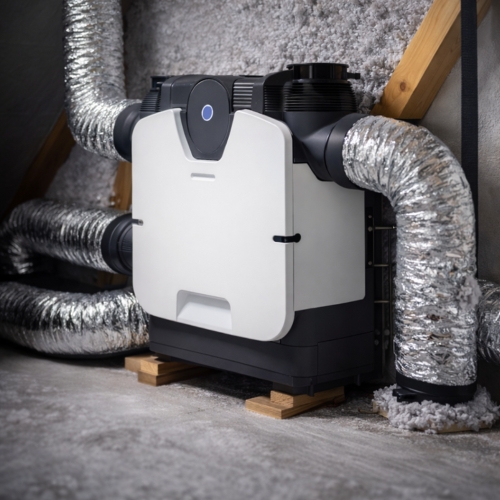
A well-insulated house must be ventilated. A VMC (French mechanical ventilation system) renews the air continuously, removes the moisture produced by the occupants and limits condensation on cold walls. On an older building made more airtight by new windows, the absence of ventilation shows quickly: persistent misting, odours, marks in the corners. We adapt the system to the home.
Smart thermostat
The smart thermostat sets the temperature according to the real hours of occupation, and room by room where the installation allows it. In the large houses of the department, where some rooms see little use, this control avoids heating whole volumes that serve no purpose. It also makes consumption legible from day to day. We configure it with you after commissioning.
The towns where we work in the 02
We work across the whole department, from the urban centres to the most scattered rural communes.
- Saint-Quentin: brick town houses and older apartment buildings, where lofts and joinery give the quickest gains.
- Soissons: reconstruction-era stock and post-war houses, with poorly insulated sloping ceilings and boilers near the end of their life.
- Laon: old stone houses in the upper town, where the look of the façades points towards internal insulation.
- Château-Thierry: hillside houses and estate properties, with frequent needs for a heat pump and for ventilation.
- Chauny: housing rebuilt after the wars, where the roof and airtightness account for most of the heat loss.
- Tergnier: workers’ estate houses and detached homes, heated by gas or electricity, with lofts to treat as a priority.
- Hirson: rural stone stock in the north of the department, exposed to the cold, where wall and roof insulation comes first.
- Villers-Cotterêts: old houses and recent builds on the outskirts, with projects combining insulation and a change of heating.
- Guise: older brick and stone homes, where damp in the walls must be dealt with before any insulation is fitted.
- Bohain-en-Vermandois: terraced town houses with exposed gable walls, for which insulation and ventilation go hand in hand.
This department belongs to the Hauts-de-France region: see our page on energy renovation in Hauts-de-France.
Grants and funding
Several national schemes support this work: MaPrimeRénov’ (the main French state renovation grant), the certificats d’économies d’énergie (CEE, the French energy saving certificate scheme), the reduced rate of TVA (French VAT) on energy improvement works and the éco-prêt à taux zéro (the interest-free eco-loan). The conditions depend on the home, on the household’s income and on the nature of the works. Local grants may be added depending on the authority. We prepare the technical documents the files require and we point you to the public information service France Rénov’, which advises owners in the Aisne free of charge on the schemes in force.
Grant files rest on technical documents that we prepare with you.
How a project runs with GRAM Énergie

First conversation
You describe the home, your consumption and where you feel uncomfortable. We frame the need.

Technical visit
Survey of the walls, the roof, the heating and the ventilation, with damp identified.

Costed proposal
Scenarios in order of priority, materials and equipment described, the order of the work packages and the expected impact.
Delivery
Coordination of the trades, site supervision, checks during the works and protection of the home.

Commissioning and follow-up
Settings, guidance on use and handover of the documents useful for the grant files.
Frequently asked questions
Which works should come first in a large old house in the Aisne?
The envelope. Insulating the loft, then the sloping ceilings and the ground floors, cuts heat losses straight away. Next comes the treatment of the walls and the joinery. Changing the heating first often leads to installing an oversized appliance, dearer to buy and to run, in a home that still loses a great deal of heat.
Is a heat pump suitable for replacing an oil boiler in the Aisne?
Yes, in many cases, provided the ground is prepared. We check the insulation, the flow temperature required and the condition of the radiators. If the emitters call for water that is too hot, some of them have to be replaced. The sizing is then based on the home’s real demand, not on the output of the old boiler.
Can a village house in the department be insulated externally?
Not everywhere. In old centres and near listed monuments, planning rules may forbid any change to the appearance of the façades. We check this point before making any proposal. Internal insulation, combined with the loft and the joinery, then gives a solid result without touching the outward appearance of the building.
What should be done when old walls show signs of damp?
Treat the cause before insulating. Rising damp, poor drainage, an impermeable cement render or absent ventilation: the origin is diagnosed during the technical visit. Fitting insulation on a damp wall makes the problem worse and degrades the wall. Once the damp is under control, we choose materials that let water vapour migrate.
Does wood heating still have a place in a renovation?
Yes, as back-up or alongside an efficient main system. Many households in the Aisne already have a stove or an insert. The essential thing is to reduce the home’s demand first, then to ensure proper ventilation and a sufficient air supply so that the appliance works in good conditions.
Planning an energy renovation in the Aisne? Tell us about your home through our contact form and we will come back to you with an initial reading of the building fabric and of the works to consider.
Let’s talk about your project
Tell us about your home and your goals: we help you prioritise the works and identify the grants worth looking into.