

Energy Renovation in Saint-Quentin
In Saint-Quentin, energy renovation concerns very different types of property: buildings reconstructed after the First World War, Art Deco façades, brick townhouses, former workers’ districts and detached houses across the Saint-Quentinois area. In Aisne (02), poorly performing roofs, older walls, moisture or certain gas boilers can affect household comfort and expenditure. GRAM Énergie supports you in structuring a project suited to the property and its actual condition. Insulation, the heating system, ventilation, hot water and controls are considered together in order to avoid a succession of uncoordinated interventions and prepare the available grants more clearly.
Tip: have your energy performance certificate (DPE) and energy bills to hand for a more accurate estimate.
Why renovate your home in Saint-Quentin
The centre of Saint-Quentin was extensively rebuilt after the First World War. Many Art Deco façades now give certain buildings and houses a distinctive identity. In this context, a renovation must take account of the external appearance before altering windows or other visible elements. The DPE provides initial information about energy performance, but it does not always describe the causes of heat loss precisely. A more detailed assessment can complement this information when several interventions need to be compared.
Brick townhouses and former workers’ districts have other characteristics. Party walls can limit certain lateral heat losses, but external walls, the roof or floors remain sensitive areas. Moisture must be identified before any insulation is installed in order to avoid trapping an existing problem within the wall. An older house may also contain windows replaced at different times and a heating system modernised without any real overall strategy.
Across the Saint-Quentinois urban area, detached houses may have a different configuration: partial thermal protection, an old gas boiler, ageing windows and doors or unsuitable ventilation. The project can then target certain areas rather than reworking the entire house. A survey, the DPE and a detailed assessment make it easier to prioritise interventions and avoid replacing equipment before future thermal requirements have been evaluated.
Households on modest incomes may be particularly concerned by renovation grants. Anah, MaPrimeRénov’ and France Rénov’ are among the schemes or services to consult depending on the situation. An OPAH (planned housing improvement programme) may also be set up by a local authority within a defined area; it is necessary to check locally whether such a scheme exists when the project is being prepared. Public support can provide a point of contact to help explain the conditions and procedures.
In older brick houses, the roof, walls and moisture must be examined before solutions are selected.
Our services in Saint-Quentin
Global energy renovation
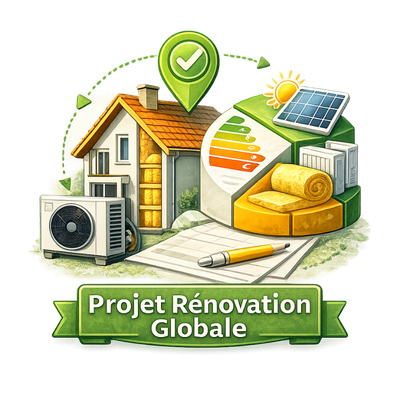
A global energy renovation makes it possible to coordinate several areas within the same project: insulation, heating, ventilation, hot water and controls. In Saint-Quentin, this approach is useful when a property has several weaknesses. It helps establish an order of intervention and avoid works started too early making the following stages more difficult.

Heat pump
A heat pump can be considered to replace an old boiler. Its suitability depends on the building envelope, thermal requirements, heat emitters and the space available. Before installation, it is preferable to assess the property’s future heat losses so that the new equipment is not sized solely according to past consumption.

Insulation
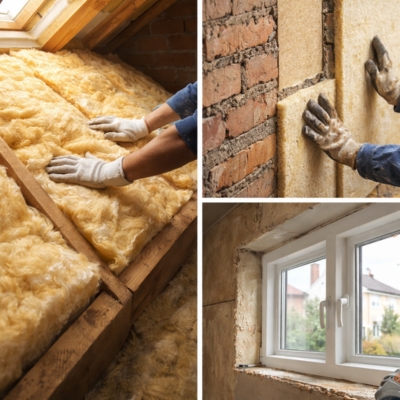
Insulation interventions may concern the roof, certain walls or certain floors. In a brick house, the condition of the substrate and the presence of moisture must be checked before a solution is selected. The materials and method depend on the type of construction, the available space and the behaviour of the building.
Thermodynamic water heater
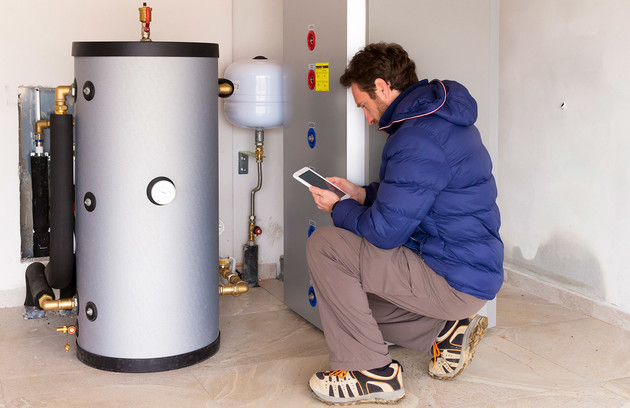
A thermodynamic water heater can be considered for domestic hot water production. Its installation requires a suitable location, compatible connections and sufficient space. In a compact home, the use of the rooms and the other equipment already present must also be taken into account.
Energy audit
An energy audit makes it possible to compare several scenarios before undertaking interventions. It examines consumption, the building envelope, heating equipment and usage. In the commune, this assessment can complement the DPE in determining whether the priority lies with the roof, windows and doors or heating system.

Mechanical ventilation
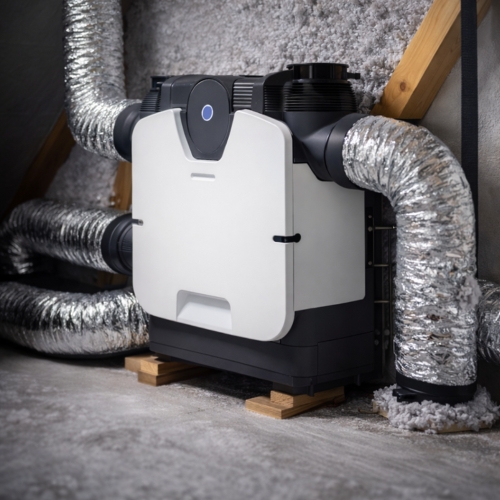
Ventilation must be taken into account when windows become more airtight or the building envelope is improved. Suitable mechanical ventilation contributes to air renewal and indoor moisture management. It must be considered at the same time as the other interventions, particularly in older housing.
Smart thermostat
A smart thermostat makes it possible to adapt heating to schedules and occupancy habits. It can help manage expenditure more effectively, but it does not replace necessary improvements to a poorly performing building envelope. Its usefulness depends on the installed system and the level of comfort being sought.
Typical projects in Saint-Quentin
Brick townhouse with a poorly performing roof
The works may combine treatment of the roof covering, replacement of certain windows and improvements to ventilation. Before treating the walls, any sources of moisture must be identified. The heating system can then be reassessed according to the property’s requirements after the interventions.
Flat in a Reconstruction-era building
Some elements fall under the owner, while the façade, roof or communal equipment depend on the co-ownership. The project must therefore distinguish private areas from collective decisions. This separation makes it easier to prepare quotations and identify suitable grants.
Detached house with an ageing gas boiler
A house may already have a partially improved building envelope but still retain an inadequately treated roof or an old system. Before replacing it, it is useful to examine heat losses and the other possible interventions in order to avoid installing oversized equipment.
Grants for your works in Saint-Quentin
Several grants can be considered: MaPrimeRénov’, the CEE (energy savings certificates) scheme, reduced VAT and the éco-PTZ (zero-interest eco-loan). Anah is also involved in various housing-related pathways. Certain grants require the use of an RGE-certified professional. For households on modest incomes, the conditions must be checked according to the situation, the property and the nature of the interventions before any grant is considered guaranteed.
France Rénov’ is a public information service for procedures and can help identify the appropriate point of contact. Anah is involved in several national schemes. An OPAH can complement these pathways where a local authority has introduced one within a specific area. To present your situation to GRAM Énergie, use the contact page. You can also consult France Rénov’ to check MaPrimeRénov’, eligibility conditions and the applicable pathways.
MaPrimeRénov’, the CEE scheme and other grants must be checked according to the applicant’s profile and the selected interventions.
How we work

Assessment of the existing property
We identify the property, available surveys, equipment and interventions already carried out.
Identifying priorities
The roof, walls, windows, ventilation and heating system are examined in order to identify sensitive areas.

Definition of the project
Solutions are compared according to the type of housing, building constraints and comfort objectives.
Preparation of the works
The stages are put into order and requirements for quotations, tradespeople or companies are identified.

Support with decisions
Monitoring aims to maintain consistency between technical choices, grants examined and the planned implementation.
We also work across Hauts-de-France
GRAM Énergie also supports renovation projects in Amiens, Beauvais and Lille. To view the other areas of the département, go to the page dedicated to energy renovation in Aisne. The page dedicated to energy renovation in Hauts-de-France provides access to the other areas of the region.
Frequently asked questions
How can a brick house be improved without making a moisture problem worse?
The source of the moisture must first be identified and the behaviour of the wall understood. Water ingress, indoor condensation and rising damp do not require the same response. Treatment must be selected after this assessment and coordinated with ventilation in order to preserve healthy behaviour within the wall.
Is the DPE enough to organise interventions for a property in Saint-Quentin?
The DPE provides an initial assessment of the property’s performance, but it does not always replace a more detailed study. When several scenarios need to be compared or a major programme is being planned, a more thorough analysis can provide additional information for prioritising interventions.
Why examine the roof before replacing a gas boiler?
Because effective treatment of this area can reduce heating requirements. Ideally, the new equipment should be sized according to the future condition of the house. This approach avoids automatically reproducing the output of the old installation after heat losses have been reduced.
Does a planned improvement programme automatically provide access to grants?
No. An OPAH is an operation defined by a local authority for a specific area and period. Even where one exists, the conditions depend on the scheme and the applicant’s profile. Its local existence and the applicable criteria must therefore be checked before taking any action.
What should you gather before requesting quotations in Saint-Quentin?
Prepare the DPE, available surveys, bills, information about the heating system, previous interventions and co-ownership documents where they exist. These elements make discussions with tradespeople and understanding of the works easier. To send your request to GRAM Énergie, use the contact page.
Let’s talk about your project
Tell us about your home and your goals: we help you prioritise the works and identify the grants worth looking into.