


Energy renovation in Haute-Marne (52)
Haute-Marne is a sparsely populated rural department where homes are heated hard and for a long time. Older houses here have thick stone walls, large living areas and lofts often left without insulation. Wood and oil remain common fuels, sometimes on installations at the end of their life. The harsh climate lengthens the heating season and amplifies every weakness in the envelope. Between Chaumont, Saint-Dizier, Langres and the villages of the plateau, GRAM Énergie reads the building before making a proposal, then follows the project through to commissioning.

Tip: have your energy performance certificate (DPE) and energy bills to hand for a more accurate estimate.
Haute-Marne buildings and their energy challenges
The traditional Haute-Marne house is recognisable by its thick walls, built of local stone. Such a wall offers high thermal mass but low thermal resistance: it stores heat without preventing it from escaping. In a home occupied continuously, that mass remains an asset. In a house heated intermittently, it becomes a constraint. The wall must also keep its ability to dry out, which guides the choice of insulation materials and renders.
The volumes to be heated are large. Old village houses often have high rooms, adjoining outbuildings and floor areas far beyond the real needs of their current occupants. The lofts, rarely insulated or treated to thicknesses that are no longer sufficient, let the first heat escape. Reworking the roof and the loft is therefore, in Haute-Marne, the almost systematic starting point of a renovation project.
Heating relies largely on wood and oil, in scattered housing where a gas connection is not always possible. Many appliances are old, poorly controlled and oversized to compensate for avoidable losses. The harsh climate of the Langres plateau accentuates the phenomenon further. Dealing with the envelope and organising the ventilation before replacing the heat source makes it possible to install correctly sized equipment.
Our services in the 52
Global energy renovation
In a large older house, the weaknesses rarely sit in a single area. Global energy renovation addresses them in order: envelope, ventilation, then the heat source. In Haute-Marne, this method avoids installing efficient equipment in a home that still loses a great deal of heat. We build a staged plan that fits your budget and your timetable.

Heat pump
Replacing an oil-fired boiler with a heat pump concerns a large share of the Haute-Marne housing stock. The climate calls for a rigorous study: insulation level, flow temperature, sizing and any back-up heating. We check the condition of the emitters, then examine the siting of the outdoor unit according to boundary distances and acoustic comfort.

Insulation
In Haute-Marne, loft insulation almost always comes first, ahead of the windows and the walls. On an old stone wall we choose breathable materials and treat the junctions and details with care, so as not to trap moisture inside the wall. The large areas to be treated warrant a clear phasing of the works.
Thermodynamic water heater
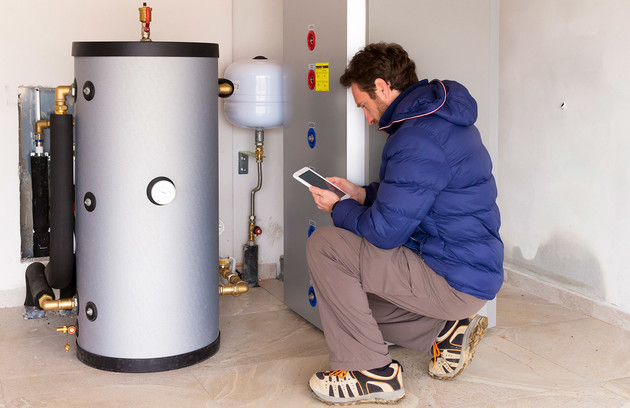
In a wood-heated house, the stove produces nothing during the warmer months and domestic hot water then weighs on the bill. A thermodynamic water heater replaces an old electric cylinder. It requires a ventilated room of sufficient volume, a condition we check on site before making any proposal.
See the page: Thermodynamic water heater in Haute-Marne (52)
Energy audit
An energy audit describes the condition of the home precisely: heat losses, thermal bridges, ventilation, heating system. It leads to costed and ranked scenarios. On the large Haute-Marne houses, this stage prevents mistakes in the order of works, guides the phasing and provides the basis for the grant applications.

Ventilation (VMC)
An older house whose envelope has been reworked loses the natural ventilation it drew from its own leaks. Moisture then builds up in the walls and in the indoor air. We install suitable systems: humidity-controlled single-flow VMC (French mechanical ventilation), or a heat-recovery double-flow unit when the airtightness justifies it. This item always goes with serious insulation work.

Smart thermostat
Over a heating season as long as the one in Haute-Marne, control matters. A smart thermostat adjusts temperatures to the rooms actually occupied and to the rhythm of the household, and avoids heating unused volumes. Fitting is light. We set the time schedules together at commissioning.
The towns where we work in the 52
- Chaumont: the departmental capital, with old stone buildings and more recent districts, where uninsulated lofts and ageing heating are often found together.
- Saint-Dizier: the most populous town in the department, with a stock mixing post-war flats and poorly insulated detached houses.
- Langres: a fortified town whose older buildings are constrained by heritage rules, where internal insulation is most often the necessary answer.
- Joinville: a small town in the Marne valley, with large older houses whose roofs deserve careful examination.
- Bourbonne-les-Bains: a spa town with a varied older building stock, where large homes call for a staged phasing of the works.
- Wassy: a rural town in the north of the department, with stone houses whose lofts are rarely treated and whose heating is often old.
- Nogent: a commune with an industrial tradition and a mixed residential stock, where replacing heating systems comes up frequently.
- Chalindrey: a commune close to Langres, with an old village building stock supplemented by more recent construction of uneven performance.
- Froncles: a village in the Marne valley, with old terraced houses whose thick walls call for breathable solutions.
- Fayl-Billot: a town in the south of Haute-Marne, with traditional rural buildings and large houses that are hard to heat in winter.
Grants and financing for your works
Several national schemes can support a project carried out in Haute-Marne: MaPrimeRénov’ (the French State renovation grant), the certificats d’économies d’énergie (CEE) (energy saving certificates funded by energy suppliers), the reduced rate of TVA (French VAT) on energy renovation works and the éco-prêt à taux zéro (the interest-free renovation loan, also called éco-PTZ). Access depends on the nature of the works, the characteristics of the home and the household’s circumstances, and requires the use of a company holding RGE certification (Reconnu Garant de l’Environnement, the French quality label for energy renovation firms). The rules change regularly: we review your eligibility during the personalised study. The public service France Rénov’ lists the schemes in force and their conditions.
The order in which applications are submitted is prepared before the quotation is signed.
How a project runs with GRAM Énergie

A first conversation about your enquiry
The home, the works you have in mind, the constraints of Haute-Marne buildings and your priorities.

Step 2
An on-site technical visit, with measurements, examination of the loft, inspection of the existing installation and checking of access.

Step 3
A detailed costed proposal, setting out the chosen scenario of works and the grants that can be claimed.

Carrying out the works
Schedule communicated in advance, coordination of the trades involved, protection of the property.

Step 5
Commissioning, an explanation of how to control the equipment and handover of the follow-up documents.
Frequently asked questions
Which item should come first in a large Haute-Marne house?
The loft, in the great majority of cases. It is the source of the greatest heat loss and the most accessible, at a contained cost. Ventilation, windows and doors, then the walls follow. Changing the heating comes at the end of the process, once the envelope allows accurate sizing.
Can an oil-fired boiler be replaced by a heat pump despite the cold?
Yes, provided the ground is prepared. Current models operate at low outdoor temperatures, but their efficiency depends on the insulation and on the flow temperature of the emitters. We therefore deal with the envelope first and provide, if necessary, back-up heating for the harshest spells of winter.
Does the whole volume of an over-large house need insulating?
Not necessarily. It is sometimes more coherent to refocus the heating on the rooms that are actually occupied and to insulate that perimeter carefully, with the outbuildings dealt with at a later stage. We examine that trade-off during the visit, taking account of how the home is really used and of your plans.
Is external wall insulation possible in Langres?
Rarely in the protected areas of the town, where planning rules govern the appearance of the façades. We systematically check the regulatory context before making any proposal. Breathable internal insulation, combined with work on the loft and the windows, then gives a solid result without touching the façade.
Do you work in the isolated villages of Haute-Marne?
Yes. The scattered housing of the department is part of our coverage area, from the north of Saint-Dizier to the Langres plateau and the south of Haute-Marne. The communes listed above are not exhaustive. Tell us yours in your enquiry: we will confirm that we can work there.
Let’s talk about your project
Are you planning energy renovation works in Haute-Marne? Describe your home, the works you have in mind and your constraints through our contact form. We then arrange a personalised study and propose a scenario suited to your building, the areas to be heated and your budget. You can also visit our energy renovation in Grand Est page to discover the other departments covered.