

Thermodynamic water heater in Haute-Marne (52)
Installing a thermodynamic water heater in Haute-Marne (52) requires looking at both hot water needs and the characteristics of the room where the equipment will be installed. In a département where older houses often have cellars, utility rooms, outbuildings or other ancillary spaces, positioning may appear straightforward, but it must remain compatible with the temperature of the room, its air volume, ventilation and household usage. The choice is therefore not based solely on the cylinder capacity: its surroundings and connection to the rest of the installation must also be assessed.
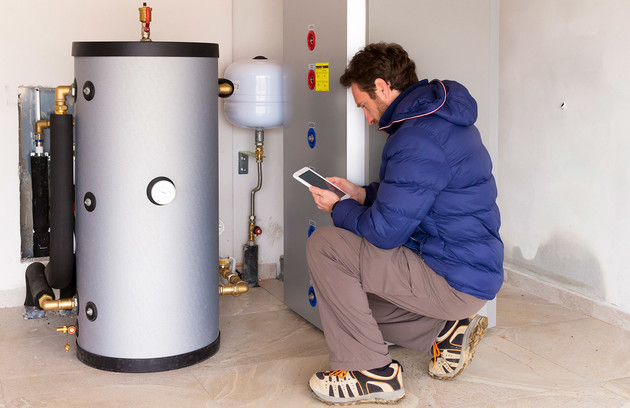
Tip: have your energy performance certificate (DPE) and energy bills to hand for a more accurate estimate.
Why install a thermodynamic water heater in Haute-Marne
In homes equipped with an older oil or wood boiler, hot water production may be directly linked to the heating system. During a renovation, separating the two functions can make it easier to organise their respective uses. A thermodynamic water heater uses calories present in the air to produce domestic hot water, but its operation depends heavily on where it is installed. In an older home, a large cellar or unheated room is not automatically a suitable location.
The climate of Haute-Marne also means that unheated spaces must be examined carefully. An outbuilding that becomes very cold in winter, a draughty garage or a damp cellar will not behave like a temperate room. The installation must therefore take account of the available temperature, air exchanges and the way the appliance draws in and discharges air. This point is particularly important in homes on the Langres plateau, where winter conditions can be more demanding.
What a thermodynamic water heater installation includes
Assessment of domestic hot water needs
The national page dedicated to the thermodynamic water heater explains the principle of this equipment. For a specific home, the capacity must be chosen according to actual usage: number of occupants, frequency of showers, presence of a bath and consumption habits. An appliance that is too large takes up unnecessary space, while one that is too small may not match the household’s daily routine.

Choosing the installation room
The location must be accessible, sufficiently clear and compatible with the selected air intake method. The volume of the room, its usual temperature and the possible presence of other equipment must be checked. In some homes, a cellar or utility room may be suitable; in others, a different air intake arrangement should be considered to avoid cooling a useful space excessively.

Managing intake and exhaust air
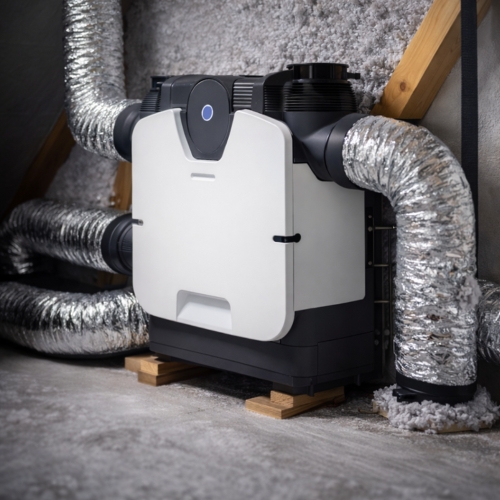
When operating on ambient air, a thermodynamic water heater changes the air conditions in the room. Depending on the model and configuration, it can also be connected to ducts. These routes must then be organised without creating unnecessary constraints on walls or circulation areas. It is also important to avoid positioning that interferes with the property’s general ventilation or draws air from an unsuitable area.

Hydraulic connection and drainage
The installation includes connection to the cold water supply and domestic hot water distribution, as well as management of the condensate produced during operation. The location must therefore allow suitable drainage. The length of pipework to the draw-off points also matters, because a water heater installed too far from the kitchen or bathrooms can make distribution unnecessarily complicated.
Settings and maintenance of the equipment
The water heater must remain accessible for inspections and maintenance operations. Settings are adapted to household needs and the intended operating mode. The immediate area around the appliance should remain clear to allow access to components and connections. Correct positioning from the outset therefore helps both daily use and future checks.

Typical situations in Haute-Marne
Older house with a large stone cellar
The available volume may appear favourable, but the winter temperature, humidity and air circulation must be checked. A large cellar is not necessarily suitable if it becomes very cold in winter or if the air is poorly renewed. The air intake method must therefore be assessed according to the actual characteristics of the room.
Home with an older oil boiler in the basement
When a project involves changing the heating system, domestic hot water can be separated from the main heat generator. The water heater can then be considered in the same technical area, provided that its position, connections and air supply remain compatible with the new organisation of the property.
Village house with a utility room adjoining the living areas
A utility room can accommodate the appliance if the available space and operating conditions are suitable. However, operating noise, air exchanges, access for maintenance and proximity to water outlets must be anticipated. The aim is to avoid a room that is convenient hydraulically becoming restrictive in daily use.
Grants and funding
Depending on the characteristics of the equipment, the circumstances of the property and the eligibility rules, installation of a thermodynamic water heater may qualify for MaPrimeRénov’, CEE (energy savings certificates), reduced VAT or éco-PTZ (zero-interest eco-loan). Some grants may require an RGE-certified professional for the relevant work. The conditions should be checked before the work is signed off in order to confirm that the project is compatible with the schemes being considered.
To clarify the configuration of your property and a possible location for the appliance, you can contact GRAM Énergie. To check the official grant conditions, technical criteria and procedures to follow before making a commitment, also consult the public service website France Rénov’.
How we work

Assessment of your needs
We examine domestic hot water usage habits, the number of occupants and the existing installation.

Assessment of the room
The available volume, temperature, access, connections and air circulation possibilities are checked.

Choice of configuration
The cylinder capacity and air intake method are defined according to the constraints of the property.

Organisation of connections
Hydraulic and electrical connections, condensate drainage and any air ducts are incorporated into the project.

Setting up the installation
Operation is adapted to the intended usage and the access required for maintenance is checked.
Our other services in Haute-Marne
Domestic hot water production can form part of a global energy renovation in Haute-Marne, be combined with a heat pump in Haute-Marne, complement insulation work in Haute-Marne or be assessed as part of an energy audit in Haute-Marne. You can also view our page dedicated to energy renovation in Haute-Marne and our coverage of Grand Est.
Frequently asked questions
Can a thermodynamic water heater be installed in an old cellar?
It is possible in some cases, but the temperature of the room, its humidity, volume and air circulation must be assessed. A large cellar is not necessarily suitable if it becomes very cold in winter or if air renewal is limited. The room must therefore be assessed before choosing the appliance.
Can a thermodynamic water heater replace hot water produced by a boiler?
Yes, depending on the configuration of the property. When a boiler provides both heating and hot water, the project can separate these two functions. Household needs, available space, connections and consistency with the future heating system must then be checked.
Does the cold climate of Haute-Marne affect where it should be installed?
Yes, especially when the appliance draws calories from an unheated space. A room that becomes very cold during part of the winter can alter operating conditions. The location must therefore be chosen with the climate, type of air intake and use of the relevant space in mind.
Does the installation require a water drain?
Yes. Thermodynamic operation produces condensate that must be drained correctly. The location of the water heater must therefore allow for this drainage, in addition to water and electricity connections. This point forms part of the technical assessment and may influence the choice between several possible locations in the property.
Let’s talk about your project
Tell us about your home and your goals: we help you prioritise the works and identify the grants worth looking into.