


Energy Renovation in Mulhouse
In Mulhouse, energy renovation concerns a residential heritage strongly shaped by the city’s industrial history: 19th-century workers’ houses, older buildings, rental properties, co-owned buildings and more recent detached houses across the urban area. In the Haut-Rhin (68), cold winters increase the value of works involving windows, lofts, insulation and heating equipment. GRAM Énergie supports private individuals in structuring an approach suited to the type of property, its condition and the owner’s status. A coherent renovation must connect the building envelope, ventilation, heat production, hot water and controls in order to improve use and energy consumption without simply combining interventions that have no common logic.

Tip: have your energy performance certificate (DPE) and energy bills to hand for a more accurate estimate.
Why renovate your home in Mulhouse
Mulhouse’s textile and mechanical heritage remains visible in many residential areas. The 19th-century workers’ housing estate and other developments include houses with compact volumes, built using older construction methods and sometimes altered over time. In this type of housing, works may concern the loft, walls, windows or an ageing gas boiler. Before choosing insulation, it is necessary to understand the construction, identify alterations already carried out and examine air circulation within the property. A relevant energy renovation therefore relies on an assessment of the building rather than on an identical solution for every house.
The centre of Mulhouse also contains many older buildings and co-owned properties. The status of the person leading the project then plays an important role: an owner-occupier, a landlord and co-owners do not have the same scope of action or necessarily the same grants. In a flat, some works may concern the private area, while the façade, roof, boiler room or certain networks depend on the co-ownership. This distinction must be made before starting a renovation or building a plan of works, as collective and individual decisions may follow different stages.
Co-owned buildings therefore represent a specific issue in Mulhouse. An energy project at building level may combine façade insulation, roof covering, ventilation, communal equipment and works within private areas. Members of the co-ownership must then distinguish what falls under the collective scope from what remains individual. Renovation of a co-owned building may also require more support to organise decisions, allocate tasks and prepare the necessary documents. Depending on the complexity of the operation, project management may be involved without this being automatic for every project.
Across Mulhouse Alsace Agglomération, detached houses present different configurations. Some already have partial insulation but retain old windows, lofts that could be improved or a heating system that has become less suitable. The challenge is then to identify the areas still limiting performance rather than automatically reworking the entire house. The different types of work must be compared according to the condition of the property and the interventions already carried out. Alsace’s climate increases the importance of a coherent building envelope and an energy renovation organised over time.
Mulhouse’s location in the Haut-Rhin and in the Grand Est region also places these projects within a broader framework than the commune alone. Requirements may vary between the centre, areas of workers’ housing and the surrounding communes. Buildings in Mulhouse therefore do not call for the same responses as an older property in Strasbourg or a recent detached house elsewhere in Alsace. Climaxion, Anah and France Rénov’ are among the schemes that can provide information or support to owners and occupants according to their situation.
Assessing the property helps prioritise works according to the type of construction, equipment and the owner’s status.
Our services in Mulhouse
Global energy renovation
A global energy renovation makes it possible to bring several works together within the same programme: insulation, heating, ventilation, hot water and controls. In Mulhouse, this approach may be relevant when a house or flat has several weaknesses. It makes it easier to prepare the plan of works, prioritise interventions and examine available grants, while avoiding work on one area making the later stages of the renovation more difficult.

Heat pump
Replacing an old boiler may lead to consideration of a heat pump. Its suitability depends on the type of property, the level of insulation, existing heat emitters and the space available. In a detached house, the location can be assessed directly, while in a co-owned building additional decisions or constraints may apply. The system should be selected according to future requirements after the main works on the building envelope.

Insulation
Insulation works may concern the loft, walls, roof or certain floors. In an older workers’ house, the solution depends on the composition of the walls, the available space and their behaviour in relation to moisture. In a more recent detached house, priorities may focus on other areas. The aim remains to adapt the insulation to the type of building and the works already in place rather than simply to the age of the property.

Thermodynamic water heater
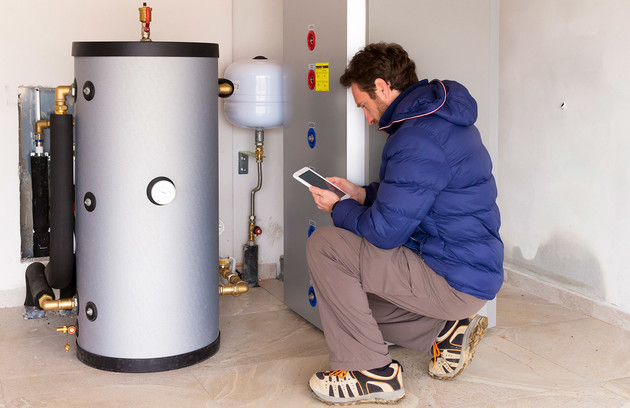
A thermodynamic water heater can be considered for domestic hot water production. Its installation requires a suitable location, compatible connections and sufficient space. In a house or flat, its integration should be considered alongside the rest of the project in order to preserve everyday use and maintain consistency between the different energy systems.
Energy audit
An energy audit makes it possible to compare several scenarios and identify the most relevant works. It examines the building envelope, consumption, heating, ventilation and hot water. For an owner, landlord or co-owners, this stage can make it easier to build a clear pathway, prepare the project file and distinguish between immediate interventions and works that can be scheduled later.
Mechanical ventilation
Ventilation deserves particular attention when windows are replaced or insulation is improved. A more airtight property must retain sufficient air renewal. Mechanical ventilation can contribute to this balance if its sizing matches the rooms and their use. In older houses as well as in co-owned buildings, it must be considered alongside the other works so that thermal comfort and air quality are not treated separately.

Smart thermostat
A smart thermostat makes it possible to adjust heating according to schedules and occupants’ habits. It can complement an existing or recent installation, but it cannot on its own correct a poorly performing building envelope. Its usefulness depends on the type of system, the number of zones to be controlled and the level of renovation already achieved. It therefore forms part of a broader energy management approach.
Typical projects in Mulhouse
Older workers’ house with a poorly performing loft
This type of property may combine older walls, windows from different periods and an ageing gas boiler. The project begins by examining heat losses and ventilation before defining the works. The loft may be an important area, but its treatment must remain consistent with the condition of the walls and windows. The owner-occupier or landlord status may also influence the grants to be examined and the project file to be prepared.
Flat in a co-owned building in the centre
Co-owners must distinguish private interventions from those relating to the building. Controls, certain equipment or internal works can sometimes be decided individually, whereas the façade, roof or communal installations require a collective decision. The plan of works must therefore specify the scope of each type of intervention and how it relates to the renovation of the co-owned building.
Detached house in the urban area with partial insulation
A house that has already been improved may still have old windows, energy-intensive heating or ventilation that needs reviewing. In this situation, renovation does not necessarily mean reworking every area. It is necessary to assess what already performs well and then target the elements still limiting comfort or energy efficiency. This method helps build a budget envelope that reflects the actual content of the works.
Grants for your works in Mulhouse
Several grants can be considered depending on the applicant’s status and the nature of the works: MaPrimeRénov’, the CEE (energy savings certificates) scheme, reduced VAT and the éco-PTZ (zero-interest eco-loan). Anah is also involved in various home renovation schemes. Certain grants require the use of an RGE-certified professional. An owner-occupier, a landlord or co-owners may follow different pathways. Households on modest incomes may also qualify for certain schemes, but their eligibility must be checked according to their situation and project.
Status is therefore an essential point before preparing grant applications. An owner-occupier is not in the same situation as a landlord, while a co-owned building may undertake procedures at building level. For members of a co-ownership, it is also necessary to separate grants linked to collective works from those that may apply directly to the property. This distinction helps prepare a clearer financial plan and avoids mixing schemes applicable to occupants, landlords and common areas.
Anah can be involved in several home renovation pathways, particularly depending on the profile of the owners and the nature of the project. Climaxion, the Grand Est regional programme, and France Rénov’ complement the available information. These schemes can help private individuals understand existing grants and pathways, but they do not replace an assessment of the needs of the house or co-owned building. In Mulhouse, it is therefore preferable to define the content of the works first before organising the financial aspects.
A property tax exemption may also exist depending on applicable local decisions; it must be checked with the relevant local authority without assuming that it applies. In the Haut-Rhin, as elsewhere in the region, the rules may change depending on the scheme and the applicant’s situation. To present your project to GRAM Énergie, use the contact page. You can also consult France Rénov’ to check grants, status-related conditions, Anah and the support pathways corresponding to your energy renovation.
Grants and financing depend in particular on the applicant’s status, the property and the selected works.
How we work

Identification of your status and property
We identify the type of property, how it is occupied, its equipment, works already carried out and the objectives being pursued.

Analysis of priorities
The walls, loft, windows, ventilation and heating are examined in order to understand the main energy requirements.

Building the plan
Solutions are compared according to the house or flat, co-ownership constraints and the different types of work that can be considered.

Preparation of the project file
The selected interventions are put into order and the information useful for grants or financing is identified according to the applicant’s status.

Support during implementation
The stages are followed in order to maintain consistency between the initial approach, the planned tasks and the works actually undertaken.
We also work across Grand Est
GRAM Énergie also supports renovation projects in Colmar, Strasbourg and Nancy. Strasbourg has other types of housing and constraints than Mulhouse, even within the same region. To view the other areas of the département, go to the page dedicated to energy renovation in the Haut-Rhin. The page dedicated to energy renovation in Grand Est makes it possible to explore the regional level.
Frequently asked questions
Why does the applicant’s status matter so much for grants in Mulhouse?
Because an owner-occupier, a landlord and a co-owned building do not necessarily follow the same pathways. Available grants, required documents and the scope of the works may vary. Before any application, it is therefore necessary to identify the applicant’s status, the type of property and the exact nature of the planned renovation.
How should priorities be established in an older workers’ house in Mulhouse?
The loft, windows, walls, ventilation and heating should be examined before deciding the order of the works. Existing insulation may be sufficient in one area and insufficient in another. This assessment makes it possible to build a project suited to the house rather than undertake a complete renovation without distinguishing the actual priorities.
What should co-owners check before renovating the building?
Co-owners must identify the common areas concerned, any private works and the decisions that require collective approval. It is also useful to distinguish grants linked to the co-owned building from those that may apply individually to owners or occupants. This preparation makes monitoring and the creation of a coherent project file easier.
Can households on modest incomes receive specific support?
Households on modest incomes may qualify for certain schemes managed or supported in particular through pathways linked to Anah and France Rénov’. However, the conditions depend on the household’s situation, the property and the planned works. Eligibility must therefore be checked before including a grant in the financing plan.
How should a renovation be organised for a rented property in Mulhouse?
A landlord must take account of the property’s energy condition, works already carried out and the interventions needed to improve it. Insulation, windows, heating or ventilation can be considered together depending on the type of property. The grants and proposed pathway then depend on the owner’s status and the content of the project.
Does Anah only support owner-occupiers?
No, schemes linked to Anah may concern different profiles and different operations depending on the applicable rules. Owner-occupiers, landlords or co-owned buildings must check the pathway corresponding to their situation. A grant should therefore not be assumed to be available or excluded without examining the project file and the nature of the works.
Which documents should you prepare before an energy renovation in Mulhouse?
Gather energy bills, available surveys, information about the heating system, previous works and, in a co-owned building, useful documents concerning the property. Also indicate whether you are an owner-occupier, landlord or member of the co-ownership. These elements make the assessment of the project easier. To send your request to GRAM Énergie, use the contact page.
Let’s talk about your project
Tell us about your home and your goals: we help you prioritise the works and identify the grants worth looking into.