


Energy renovation in the Haut-Rhin (68)
The Haut-Rhin sets very different kinds of housing side by side. Mulhouse and its conurbation still have vast workers’ housing estates, with aligned and often semi-detached houses. Colmar and the neighbouring market towns retain old half-timbered centres, densely built and protected. Between the plain and the foothills of the Vosges there are farmhouses, village houses and more recent detached homes. This older stock has high thermal mass but generally little insulation, in a département with cold winters. GRAM Énergie supports owners from the initial assessment to commissioning, taking account of the heritage constraints that are frequent here.

Tip: have your energy performance certificate (DPE) and energy bills to hand for a more accurate estimate.
The Haut-Rhin building stock and its energy challenges
The workers’ estates of Mulhouse form a consistent whole of terraced or semi-detached houses, built to a repetitive plan. The party walls limit heat loss at the sides, but the roof, the gable ends and the joinery concentrate the losses. This regularity makes it possible to repeat a single technical solution across several homes, provided the coherence of the façades and the street alignment, often governed locally, are preserved.
The old half-timbered centres, very much present in Colmar and in the wine-growing market towns, rest on a timber frame with cob or brick infill. These walls have to remain breathable: vapour-tight insulation causes condensation in them and attacks the timber. External insulation is rarely possible on these façades, which shifts the project to the interior, the lofts and the ground floors.
Between the plain and the foothills, village houses and farmhouses have large volumes and thick walls with high thermal mass. That mass tempers the summers but does not remove the need to insulate, because the heating season remains long. The challenges are the same as those of energy renovation in Grand Est: address the building envelope and the ventilation before resizing the heating.
Our services in the 68
Global energy renovation
Global energy renovation addresses the building envelope, the heating, the hot water and the ventilation within a single project. On an estate house as on a foothill farmhouse, it avoids contradictory works carried out piecemeal. We build a prioritised scenario, which can be carried out in one go or in stages, without losing the technical coherence of the whole.

Heat pump
An air-to-water heat pump connects to the existing circuit once the emitters and the insulation have been checked. In the Haut-Rhin, cold winters call for sizing based on an on-site survey and particular attention to the flow temperature. In a dense urban fabric or on a workers’ estate, the position of the outdoor unit takes account of the immediate neighbours and of noise.

Insulation
Insulation of lofts and sloping ceilings is the first item on most projects. Exposed gable ends and ground floors over cellars follow. On half-timbering or a protected façade, only a breathable internal solution is feasible. The choice of insulation depends on the substrate, its moisture content and its ability to release water vapour.
Thermodynamic water heater
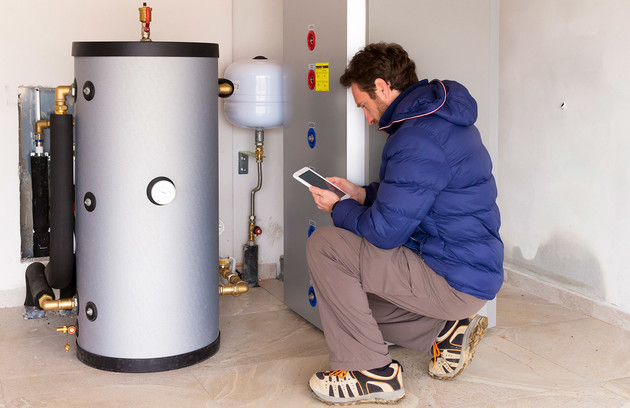
A thermodynamic water heater produces domestic hot water by drawing heat from the air. The cellars, store rooms and utility rooms that are very common in local buildings suit it well. We check the volume of the room, the scope for ducting and the distance to the bedrooms, in order to avoid any noise nuisance after commissioning.
Energy audit
An energy audit establishes the actual condition of the home and proposes costed, prioritised scenarios. With a housing stock as varied as that of the Haut-Rhin, it avoids applying a standard recipe to a building that does not lend itself to it. It also serves as a common reference for the different trades throughout the job.

Mechanical ventilation (VMC)
Ventilation becomes decisive as soon as the home becomes more airtight. In an older building with high thermal mass, moisture that is not removed settles in the walls and damages the materials. We install humidity-controlled single-flow or heat-recovery double-flow VMC systems depending on the configuration, taking care over the duct routing and the air inlets in the main rooms.

Smart thermostat
Controls match the heating to actual use, room by room and according to when the home is occupied. In houses with high thermal mass, well configured control avoids sudden swings and steadies the temperature. We set the system up with you after commissioning and explain the heating curves, because a poorly configured device loses much of its benefit.
The towns we work in across the 68
We work throughout the Haut-Rhin, from the Mulhouse conurbation to the market towns of the plain and the foothill communes.
- Mulhouse: workers’ estates and older buildings, with projects often run at the scale of a whole estate or block of flats.
- Colmar: a historic half-timbered centre with protected buildings, where the works shift to the interior and the lofts.
- Saint-Louis: mixed housing on the plain, with detached homes and blocks of flats whose heating systems are frequently renewed.
- Illzach: estate houses and detached homes, for which the roof and the ground floors deliver the quickest gains.
- Wittenheim: the former potash basin with a consistent building stock, which lends itself to solutions repeatable across several neighbouring homes.
- Rixheim: a market town with a mixed stock, combining older houses of high thermal mass and more recent, poorly insulated construction.
- Guebwiller: a foothill commune with stone houses, where the long heating season justifies addressing the building envelope first.
- Kingersheim: suburban districts and small blocks of flats, with projects combining insulation, ventilation and a change of heat generator.
- Riedisheim: dense residential housing, where the position of a heat pump’s outdoor unit calls for careful study.
- Cernay: a market town in the Vosges foothills, with large village houses often heated by older equipment.
Grants and funding
Several schemes can fund part of the project: MaPrimeRénov’ (the French national home renovation grant), the certificats d’économies d’énergie (CEE, the French energy saving certificate scheme), the reduced rate of TVA (French VAT) and the éco-prêt à taux zéro (éco-PTZ, an interest-free renovation loan). Grants dedicated to blocks of flats also exist, as do schemes run by local authorities in the Haut-Rhin. The conditions depend on the home, the household’s income and the nature of the works undertaken. We prepare the applications with you and point you towards the public service France Rénov’ for official information.
Grant applications are put together before any works are committed to.
How a project runs with GRAM Énergie

An initial discussion, then a site visit
We survey the building, the equipment in service and how you actually use the home.

Thermal study or audit
We prioritise the works and compare several costed scenarios.

Step 3
Detailed quotation and preparation of the grant applications, with the list of supporting documents to gather.

Step 4
Carrying out the works, coordinating the trades and monitoring the site through to handover.

Step 5
Commissioning, adjustments and an explanation of how to use the system, then support in monitoring consumption.
Frequently asked questions
How do you renovate a Mulhouse workers’ estate house?
By addressing the roof and the gable ends first, which carry most of the heat loss in a semi-detached house, then the joinery and the ventilation. The repetitive plan of these estates often makes it possible to repeat the same solution across several houses, while respecting the coherence of the façades and the planning rules.
Can half-timbering take internal insulation?
Yes, with a breathable build-up and continuous workmanship between the infill panels and the frame. Vapour-tight insulation over cob creates condensation and damages the timber. We examine the condition of the infill and the renders before any decision is taken, and we adapt the ventilation accordingly.
Does high thermal mass replace insulation?
No. A thick wall delays changes in temperature and makes summers more bearable, but it does not reduce winter heat loss sufficiently. In a département with cold winters, thermal mass has to be combined with insulation suited to the substrate and with controlled ventilation in order to produce a lasting result.
What can be done about a heritage constraint?
We adapt the project to the rules applying to the façade concerned. When external insulation is refused, the lofts, the ground floors and breathable internal insulation take over. The joinery is replaced in keeping with the original design where that design is governed by the commune.
Do you work across the whole département?
Yes, we work throughout the Haut-Rhin, from Mulhouse and Colmar to the communes of the plain and the Vosges foothills. A site visit is always carried out: it determines the survey, the sizing of the equipment and the real feasibility of the works being considered for your home.
Are you considering works in the Haut-Rhin? Describe your home and your objectives using our contact form: we will arrange a visit and build a works plan suited to your building and to the local constraints.
Let’s talk about your project
Tell us about your home and your goals: we help you prioritise the works and identify the grants worth looking into.