


Energy Renovation in Seine-Saint-Denis (93)
Seine-Saint-Denis brings together very different forms of housing, sometimes in the same street. Brick and millstone houses, garden cities from between the wars, small suburban blocks of flats and large estates from the 1960s all sit side by side. Most were built before any thermal regulations existed: uninsulated solid walls, unconverted lofts, original windows, boilers at the end of their life. GRAM Énergie supports owner-occupiers, landlords and shared-ownership associations across the department, from the initial survey through to handover of the works. Our method does not vary: understand the building, prioritise the heat losses, then undertake the works that are genuinely worthwhile.

Tip: have your energy performance certificate (DPE) and energy bills to hand for a more accurate estimate.
The building stock of Seine-Saint-Denis and its energy challenges
The housing stock of this area was built up in layers. The houses of the 1920s and 1930s still occupy large districts, to the north as well as to the east. Solid walls, lofts rarely treated, original windows: heat losses there are considerable. These houses nevertheless renovate well, provided the envelope is dealt with before the heating is touched.
The garden cities, a social legacy of the inner suburbs, call for a different approach. Their façades carry a heritage value that guides the technical choices: internal insulation, treatment of the lofts, windows replaced in keeping with the original proportions. The large estates built between 1955 and 1975, for their part, combine thermal bridges, remaining single glazing and ageing communal installations.
Many buildings under shared ownership in Seine-Saint-Denis remain fragile: high service charges, deferred works, decisions that are hard to get voted through. Homes rated F or G are over-represented there and need to be dealt with as a priority. A significant share of households also qualifies for the enhanced grant scales. Our work here forms part of a wider presence in energy renovation in Île-de-France.
Our services in the 93
Global energy renovation
Treating a home element by element, over several years, often works out dearer than one coordinated operation. Global energy renovation brings insulation, heating, hot water and ventilation together in a single project, with the order of work defined from the outset. On the houses as much as on the buildings under shared ownership in this area, it avoids technical inconsistencies and makes it possible to aim for a jump of several energy ratings.

Heat pump
Replacing an old gas or oil boiler with a heat pump is often the decisive step. Air-to-water connected to the existing radiators, air-to-air in homes with no wet system: the choice depends on the installation in place and on the quality of the insulation. In the department’s residential streets, we check the sizing, the location of the outdoor unit and the constraints of adjoining properties.
Insulation
Insulation remains the first lever on the older building stock of the inner suburbs. Unconverted or converted lofts, walls from the inside or the outside, ground floors over a cellar or over a covered passageway: each configuration calls for a different answer. On millstone and brick houses, we take particular care over moisture management, so as not to seal up the existing walls.

Thermodynamic water heater
Domestic hot water weighs heavily on the bill in an already insulated home. The thermodynamic water heater is an advantageous replacement for a conventional electric cylinder, provided there is a large enough unheated space available: a garage, a store room or a utility room. In the department’s houses, such spaces almost always exist. We confirm the volume of air available, the condensate drainage and access to the room before any installation.
Energy audit
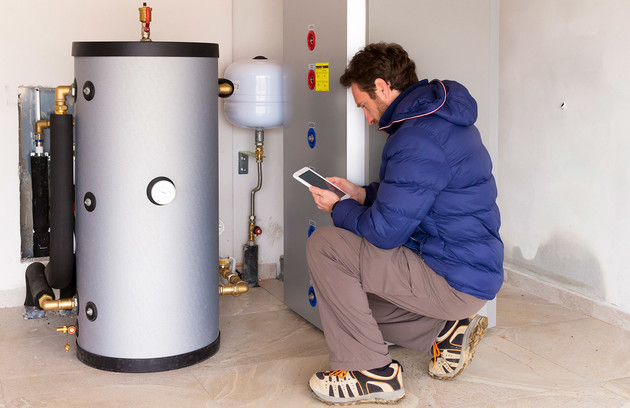
No serious project starts without a survey of the existing situation. The energy audit measures the actual heat losses, identifies the thermal bridges and puts forward prioritised works scenarios. It is also the document expected for large-scale renovation grants. On the least efficient homes in Seine-Saint-Denis, it makes it possible to weigh up the different elements and to avoid investments made in the wrong order.

Mechanical ventilation (VMC)
A well insulated home becomes airtight: without organised air renewal, moisture builds up and mould appears. Humidity-sensitive single-flow or heat-recovery mechanical ventilation therefore goes with every serious insulation project. In the older buildings in this area, often ventilated through obsolete or blocked ducts, this element determines both the health of the occupants and the durability of the works carried out.

Smart thermostat
Precise control completes the installation without major works. A smart thermostat programmes the temperatures according to how the household actually lives and matches the operation of the generator as closely as possible to the need. Paired with a heat pump, it limits short cycling and improves seasonal efficiency. It is a light-touch addition, which we fit at the end of our renovation projects in the 93.
The towns where we work in the 93
Our teams work across all the communes of Seine-Saint-Denis.
- Saint-Denis: older town-centre building stock, blocks of flats and town houses, with façades that are often subject to restrictions.
- Montreuil: town houses, former workshops converted into homes and mixed buildings under shared ownership call for bespoke solutions.
- Aubervilliers: on these older buildings, we favour a global renovation with insulation and ventilation treated together.
- Aulnay-sous-Bois: the residential fabric extends widely and loft insulation there comes before replacing the ageing boilers.
- Drancy: between detached houses and garden cities, our recommendations take account of the architectural constraints specific to each district.
- Noisy-le-Grand: a legacy of the new town, blocks of flats and terraced houses call for renovations coordinated across the whole development.
- Pantin: former industrial buildings turned into homes and recent buildings under shared ownership sit side by side, each type requiring its own preliminary assessment.
- Le Blanc-Mesnil: dense residential streets and blocks of flats share the commune, with marked needs in wall insulation.
- Bondy: older houses predominate and insulation remains the priority before any change of heating system.
- Épinay-sur-Seine: blocks of flats and houses sit side by side, and many households qualify for the enhanced grants that open the way to large-scale renovations.
- Bobigny: flats make up the majority of the housing here, and we mainly carry out large-scale renovations designed at building level.
- Sevran: houses and buildings under shared ownership make up most of the stock, where the old heating systems are the first thing to modernise.
Grants and funding for your works
Several public schemes support the renovation of homes in this area. MaPrimeRénov’ (the French state renovation grant) is aimed at owner-occupiers and landlords, with a strand dedicated to large-scale renovations. The energy savings certificates (CEE) top up the funding depending on the nature of the works. The reduced rate of VAT (TVA) applies to eligible services, and the éco-prêt à taux zéro, the French interest-free renovation loan, makes it possible to spread the remaining cost. The French public service France Rénov’ lists the schemes currently in force.
A tradesperson holding RGE certification is required for most of these grants. The conditions vary according to income, the works and the home: only a personalised assessment will say what you can claim.
The order in which applications are submitted governs whether they can be combined.
How a project runs with GRAM Énergie

First conversation
needs, type of home, consumption and timing constraints.

Technical survey and audit
on-site measurements, analysis of the envelope and the existing equipment, costed scenarios.

Putting the grant application together
preparing the applications and checking the documents before submission.

Carrying out the works
planning, coordination of the trades and site supervision.

Handover and commissioning
checks, adjustments, handing over the documents and explaining how to use the system.
Frequently asked questions
Which works should come first in an older house in the 93?
In most of the brick or millstone houses in the department, loft insulation comes top: it is the element that loses the most heat and the simplest to deal with. Next come the walls, the windows and the ground floor. The heating is decided afterwards.
How do you start a renovation in a building under shared ownership in Seine-Saint-Denis?
It all begins with an energy audit of the building, presented to the residents’ committee and then put to the vote at the general meeting. We cost the scenarios in advance and clarify the packages of work. As many buildings under shared ownership in this area are fragile, the collective grant application is prepared in parallel.
Is a heat pump suitable for homes in the department?
In the majority of cases yes, provided the home is properly insulated and the emitters are suitable. In a renovated house, an air-to-water heat pump can generally be connected to the existing radiators. In a block of flats, feasibility depends on the communal installation.
My home is rated F or G: what can I do?
Such homes remain numerous in the inner suburbs and need to be dealt with as a priority. A large-scale renovation, tackling insulation, heating and ventilation together, makes it possible to leave the category of the least efficient homes. The energy audit sets out the scenario chosen and the ratings being aimed for.
Do you work in every commune in Seine-Saint-Denis?
We cover the whole area, from the communes bordering Paris through to the towns in the east. The pages devoted to Saint-Denis, Montreuil, Aubervilliers and Aulnay-sous-Bois set out the local property types. If your commune is not yet listed, write to us: our working area covers the whole of the 93.
A renovation project is not chosen from a catalogue: every home has its own constraints and its own potential. Tell us about your situation: the type of property, works already carried out, the discomfort you have noticed, your objectives. To start the assessment of your project in Seine-Saint-Denis, fill in the contact form.
Let’s talk about your project
Tell us about your home and your goals: we help you prioritise the works and identify the grants worth looking into.