


Energy Renovation in Val-d’Oise (95)
Val-d’Oise is an outer-suburban department where detached houses very largely predominate. A great many of these houses date from the 1960s to the 1990s, with roofs and lofts that have remained poorly insulated. In the rural communes of the north and the Vexin, oil boilers are still running and weighing on the bills. To the east, the large estates raise insulation and ventilation issues at building level. The historic centres retain an older building stock that calls for suitable techniques. GRAM Énergie works on all these configurations, after analysing the home and how it is used.

Tip: have your energy performance certificate (DPE) and energy bills to hand for a more accurate estimate.
The building stock of Val-d’Oise and its energy challenges
The area’s housing stock rests first and foremost on the detached house. The houses of the 1960s to the 1990s almost always show the same weaknesses: poorly insulated lofts, roofs left as they were, walls with no added insulation and original windows. These heat losses add up and are felt as soon as the cold weather arrives, especially under sloping roofs.
In return, these houses offer real potential: accessible lofts, large roofs and plots big enough to site an outdoor unit. In the rural parts of the 95, poorly served by gas, replacing an oil boiler remains the most far-reaching measure.
To the east, the large estates call for a different logic: the envelope treated, the ventilation brought up to standard, the heating rethought. In the historic centres, notably in Pontoise, thick walls and heritage constraints call for solutions chosen with care. Val-d’Oise thus brings together almost every possible case.
Unconverted lofts remain the first element treated in the outer suburbs.
Our services in the 95
Global energy renovation
Treating the home as a whole gives more solid results than a succession of isolated measures. We coordinate insulation, heating, ventilation and domestic hot water within a single project, following a coherent order of operations. On the houses of Val-d’Oise, this method avoids oversizing new equipment before the heat losses have been dealt with. Discover our approach to global energy renovation and how it works in practice.

Heat pump
An air-to-water heat pump is an effective replacement for an old oil or gas boiler, still common in the rural communes of this area. Houses with a plot, numerous in the outer suburbs, lend themselves well to the installation of an outdoor unit. We first check the condition of the insulation, the type of emitters and the operating temperatures. The possible configurations are set out on our heat pump page.

Insulation
Lofts and roofs account for most of the heat losses in the houses of Val-d’Oise. We treat unconverted lofts, sloping roofs, walls and ground floors according to the layout of the home and its exposure. On the older building stock of the town centres, the techniques are chosen to respect the way the walls behave. Our insulation solutions adapt to every type of construction we encounter.
Thermodynamic water heater
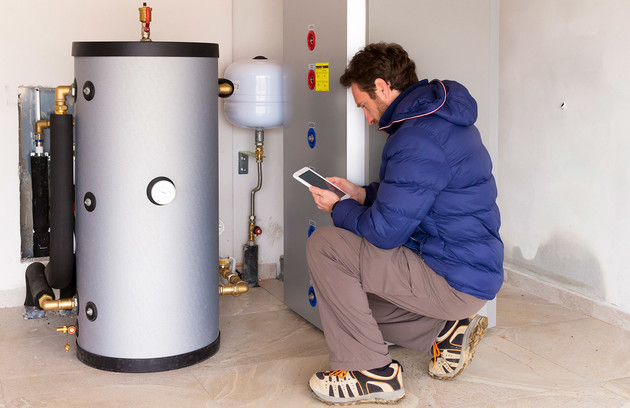
Once the heating has been optimised, domestic hot water becomes a significant element of consumption. A thermodynamic water heater draws heat from the ambient air to warm the water with reduced electricity consumption. It finds its place in a garage, a utility room or a basement, spaces that are common in the houses of this area. Discover how the thermodynamic water heater works and what it needs in order to be installed.
Energy audit
The audit establishes the real condition of the home and costs several prioritised works scenarios. It is valuable in Val-d’Oise, where two neighbouring houses sometimes perform very differently depending on their year of construction and the works already carried out. This document also serves as the basis for putting together the grant applications. All the stages are presented on our energy audit page.

Mechanical ventilation (VMC)
A better insulated home becomes more airtight: without controlled renewal, moisture builds up and damages the building. Mechanical ventilation removes stale air and protects both the building and its occupants. In the blocks of flats in the east of the department, ventilation is often the first weak point noted during the visit. We install single-flow and heat-recovery systems, presented on our mechanical ventilation page.

Smart thermostat
A smart thermostat adjusts the heating according to the hours the home is occupied and the temperature actually measured in the rooms. It is a logical addition once a heat pump has been installed, so as to make the most of its efficiency without overheating. Remote control suits households in this area particularly well, as many work outside the department and come home late. Discover what a smart thermostat can do.
The towns where we work in the 95
We work across the whole department, from the Montmorency valley to the most rural areas.
- Argenteuil: a vast fabric of houses coupled with a substantial stock of flats, where the volume of renovation work remains considerable year after year.
- Cergy: a new town of terraced houses and developments from the 1970s, whose heating systems are reaching the end of their life.
- Sarcelles: large estates and residential districts sit side by side, with enhanced grant schemes that open renovation up to many households.
- Garges-lès-Gonesse: between blocks of flats and detached houses, a global renovation makes sense by treating insulation, heating and ventilation together.
- Franconville: housing set on the hillsides and exposed to the wind, where insulating the lofts and the walls is the first priority.
- Goussainville: detached houses subject to aircraft noise, for which the works combine thermal performance with improved acoustic comfort.
- Ermont: residential houses and small buildings under shared ownership make up the stock, with work often centred on heating and ventilation.
- Pontoise: the older building stock of the historic centre, with thick walls and heritage constraints, which calls for insulation techniques chosen with care.
- Bezons: recent blocks and town houses share the commune, with needs relating mainly to ventilation and hot water.
- Villiers-le-Bel: residential districts and blocks of flats side by side, where projects often start with an audit before the heaviest elements.
- Herblay-sur-Seine: houses with a plot, the ideal configuration for installing a properly sized and well positioned air-to-water heat pump.
- Taverny: a residential commune with a dense fabric of houses, where poorly insulated lofts and ageing boilers come up most often in our assessments.
Grants and funding for your works
Several schemes support the energy renovation of homes in Val-d’Oise. MaPrimeRénov’ (the French state renovation grant) is aimed at owners, for a single measure as much as for a large-scale renovation. The energy savings certificates (CEE) come in addition. The reduced rate of VAT (TVA) applies to many works. The éco-prêt à taux zéro, the French interest-free renovation loan, makes it possible to spread the remaining cost without paying interest. These schemes require the use of a tradesperson holding RGE certification and depend on each individual situation: request a personalised assessment. The French public service France Rénov’ lists the schemes currently in force.
The schemes can be combined under rules that are checked application by application.
How a project runs with GRAM Énergie

First conversation
we establish the nature of your home, your consumption and your objectives.

Technical survey
an on-site record of the insulation, the heating and the ventilation.

Detailed proposal
prioritised works scenarios, quotation and presentation of the grants available.

Completion
coordinated work element by element, keeping day-to-day disruption down.

Handover and follow-up
checking of the installations, handover of the documents and advice on use.
Frequently asked questions
Which works should come first in a 1970s house in Val-d’Oise?
Loft insulation almost always comes top: the element is accessible, quick to deal with and very effective on this type of house. Next come the walls, the windows and then the heating. This order avoids sizing new equipment around a leaky envelope.
Can an oil boiler be replaced by a heat pump in the rural areas?
Yes, and it is a common situation in the north of the department and in the Vexin. We first check the insulation, the type of radiators and the location of the outdoor unit. Where the state of the envelope warrants it, we propose treating insulation and heating within a single project.
Do you work on blocks of flats in the east of the department?
We work on homes in the large estates of that area, in individual flats as well as on communal areas depending on the scope of the project. The priorities often relate to ventilation, hot water and control of the heating. The visit establishes what falls to the home and what falls to the shared-ownership association.
How do you renovate an older home in a historic centre in the 95?
Older buildings call for caution: thick walls regulate moisture and cope badly with insulation that has been poorly fitted. We favour solutions compatible with the way the walls behave, treating the roof and the ventilation first. Heritage constraints are checked before any proposal is made.
Is an energy audit necessary before starting the works?
It is not compulsory in every case, but it becomes useful as soon as a project touches several elements. In the outer suburbs, where houses look alike without sharing the same history, the audit avoids poor decisions. It also gives structure to the file for the grant applications.
Do you live in Val-d’Oise and want to be more comfortable? Tell us about your home, the works already carried out and your priorities. We will come back to you with a proposal suited to your building and to the grants available.Contact GRAM Énergie through our form.
Let’s talk about your project
Tell us about your home and your goals: we help you prioritise the works and identify the grants worth looking into.