


Energy Renovation in Yvelines (78)
The Yvelines bring together very contrasting types of housing: detached houses with gardens, co-owned blocks from the 1960s-1980s, and protected historic centres. Needs therefore differ sharply from one town to the next. An outer-suburb house is not renovated in the same way as a flat in a block, nor as a town house subject to heritage rules. GRAM Énergie supports owners across the area through the whole journey: reading the building, choosing the works, coordinating the site and preparing the grant applications. The objective is the same everywhere: gain in comfort, reduce consumption and protect the value of the property.

Tip: have your energy performance certificate (DPE) and energy bills to hand for a more accurate estimate.
Yvelines buildings and their energy challenges
Detached houses dominate much of the Yvelines. Many were built before the first thermal regulations: lofts with little insulation, solid walls left untreated, original windows. Heat is lost through the roof and through the walls alike. Heating still often relies on an old oil or gas boiler, which is why so many replacement projects come up across the area.
Co-owned blocks from the 1960s to the 1980s form the second large group. Lightly insulated concrete structures, single glazing, ventilation through communal ducts, heating that is sometimes shared: there is real room for improvement, but the decisions go through the general meeting of owners. The timetable for a building-wide project is therefore built well in advance.
Finally, several town centres in the area contain protected older buildings. Heritage constraints are frequent there and steer the technical choices: external wall insulation is often ruled out on visible façades, in favour of internal solutions and materials compatible with walls that must remain breathable.
Our services in the 78
Whole-house energy renovation
Treating a home one item at a time gives limited results when the envelope and the heating do not improve together. Whole-house energy renovation ranks the works in a coherent order: insulation, ventilation, then heat production. In the outer suburbs, this approach suits older houses, where the weaknesses add up. We build a scenario suited to the building, to the budget and to the occupants’ timetable.

Heat pump
Replacing an old oil or gas boiler is among the most frequent requests in the area. An air-to-water heat pump is generally installed on the existing circuit, once the emitters and the level of insulation have been checked. In houses with gardens, the position of the outdoor unit takes account of the neighbours and of local rules. We size the equipment after a survey, never from a catalogue.
Insulation
Insulation remains the first step on the majority of projects in the Yvelines. Cold lofts, sloping ceilings, walls and ground floors account for most of the heat lost from post-war houses. On façades visible from the street, external wall insulation is not always permitted: we then propose an internal solution, with careful treatment of thermal bridges. The choice of materials also depends on the existing wall.

Thermodynamic water heater
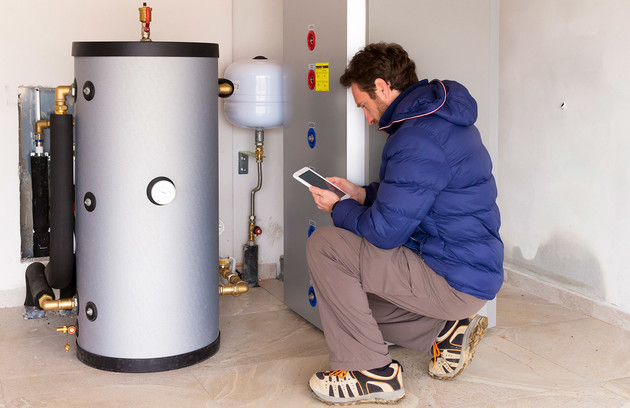
Producing domestic hot water with a thermodynamic water heater means moving away from an energy-hungry electric cylinder. The appliance recovers heat from the surrounding or outside air, which requires a room of sufficient volume or a ducted installation. Many houses in the area have a garage or utility room that suits. We check the volume, the condensate drainage and the acoustic compatibility with the living rooms.
Energy audit
An energy audit provides a complete reading of the home: the condition of the envelope, the performance of the equipment, the ventilation and how the occupants use the property. The report puts forward several works scenarios, ordered and costed. It is a particularly useful tool in the Yvelines, where protected buildings sometimes mean certain techniques have to be ruled out. The audit also serves as a basis for discussion among co-owners or for preparing a funding application.

Mechanical ventilation
Improving insulation without dealing with stale air invites condensation and mould. Suitable mechanical ventilation provides permanent, controlled air renewal, either humidity-controlled single-flow or heat-recovery. In flats in blocks from the 1960s-1980s, the work often depends on the existing communal ducts. In a detached house, the routing of the ductwork is planned before the works begin.

Smart thermostat
A smart thermostat adjusts the temperature according to the room and to the household’s routine. It is a useful addition after a heat pump or a recent boiler has been installed, because it stops an empty home being heated needlessly during the day. Fitting it is straightforward and calls for no major work. We set the time periods with you at commissioning.
The towns we work in across the 78
Our teams travel throughout the Yvelines, from the banks of the Seine to the outer suburbs.
- Versailles: protected older buildings, where we favour discreet work to the façade and carefully executed internal insulation.
- Sartrouville: houses from the 1930s to the 1970s and small blocks of flats, usually tackled through the loft and then the heating.
- Mantes-la-Jolie: blocks of flats and town houses, where projects rest on a funding package prepared in advance.
- Saint-Germain-en-Laye: older houses of character, where heritage constraints steer the choice of materials and of installation methods.
- Poissy: a residential fabric and 1970s developments, where changing the heating equipment often opens the project.
- Conflans-Sainte-Honorine: hillside houses exposed to the wind, which call for particular attention to airtightness.
- Montigny-le-Bretonneux: a new town of terraced houses, where the shared walls mean roofs, ground floors and windows have to be treated.
- Trappes: a substantial stock of flats, well suited to whole-building renovations carried out with the co-owners and the managers.
- Les Mureaux: a mix of blocks and houses, which leads us to propose very different scenarios depending on the address.
- Chatou: houses beside the Seine, where external wall insulation remains a possibility if local planning rules allow it.
- Houilles: a dense residential area with narrow plots, with targeted work on the walls and the lofts.
- Rambouillet: older houses still fitted with oil boilers, for which changing the system opens the project.
Grants and funding for your works
Several national schemes can support a project carried out in the Yvelines: MaPrimeRénov’ (the French state renovation grant), the certificats d’économies d’énergie (CEE) (energy saving certificates funded by energy suppliers), TVA réduite (a reduced rate of VAT) and the éco-prêt à taux zéro (an interest-free renovation loan). Access to them depends on the works, on the home and on the household’s circumstances, and requires the use of an RGE-certified tradesperson, the French quality label for energy renovation professionals. The rules change regularly: we review your eligibility as part of a tailored study. The French public service France Rénov’ lists the schemes currently in force.
The order in which applications are filed is prepared before the quotation is signed.
How a project with GRAM Énergie runs

A first conversation about your enquiry
The home, the works envisaged, the constraints of the building and your priorities.

Step 2
A technical visit on site, with measurements, a check of what is already there and a review of access.

Step 3
A detailed costed proposal, with the chosen works scenario and the funding available.

Carrying out the works
The schedule shared in advance, the trades coordinated, the property protected.

Step 5
Commissioning, an explanation of how to run the equipment and the handover of the follow-up documents.
Frequently asked questions
Can a house in a protected area of the Yvelines be insulated externally?
Not always. In the historic centres of the département, planning rules and the opinion of the heritage authorities can prohibit any change to the appearance of visible façades. We check this point before making any proposal. Internal insulation, combined with the loft and the windows, then delivers a solid result.
Is a heat pump suitable for a 1970s house?
Yes, in most cases, provided the home is looked at as a whole. We check the existing insulation, the flow temperature of the circuit and the condition of the radiators. If the envelope loses a great deal of heat, it is better to insulate first, then size the heat pump to the actual demand.
How do you start a renovation in a co-owned block from the 1960s-1980s?
The starting point is generally an audit of the building, which establishes the objective condition of the envelope and of the communal equipment. It provides the basis for discussions with the managing agent, and then for the vote at the general meeting. We also carry out works within an individual home.
Is an audit needed before replacing an oil boiler?
Not in every case, but it is often useful in this area, where many older houses combine ageing heating with incomplete insulation. The audit avoids oversizing the new equipment and makes it possible to put the works in order. It is also a document required for certain grant pathways.
Do you work in every town in the 78?
We cover the whole of the Yvelines, from the towns in the loop of the Seine to the rural villages of the outer suburbs. The town pages listed above are not exhaustive. If your town does not appear, mention it in your enquiry: we will confirm whether we can work there.
Are you planning an energy renovation in the Yvelines? Describe your home, the works you have in mind and your constraints through our contact form. We then arrange a tailored study and put forward a scenario suited to your building and to your budget.
Let’s talk about your project
Tell us about your home and your goals: we help you prioritise the works and identify the grants worth looking into.