


Thermodynamic water heater in Meurthe-et-Moselle (54)
Installing a thermodynamic water heater in Meurthe-et-Moselle (54) requires looking well beyond the capacity of the tank alone. This domestic hot water system uses calories present in the air and must be installed in an environment compatible with its operation. Available volume, room temperature, airflow, condensate drainage and household usage are all part of the assessment. In the département’s older housing stock, cellars, utility rooms, basements and technical spaces offer a wide range of configurations that need to be checked before selecting the equipment and its location.
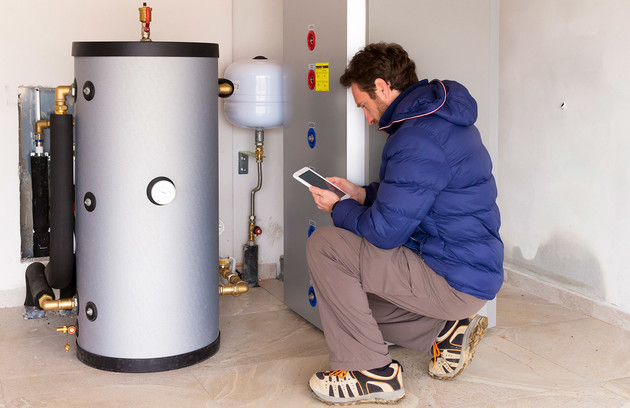
Tip: have your energy performance certificate (DPE) and energy bills to hand for a more accurate estimate.
Why install a thermodynamic water heater in Meurthe-et-Moselle
Town houses and older buildings in the Nancy urban area sometimes have ancillary spaces that were not designed to accommodate thermodynamic equipment: cool cellars, compact utility rooms, enclosed storerooms or basements crossed by various services. The location must therefore be chosen according to the available air volume, temperature conditions and the possibility of properly draining condensate. In a tall, narrow property, the distance between the hot water production system and the main draw-off points must also be taken into account.
In the Longwy area, former workers’ houses may have repetitive layouts, but their ancillary spaces have often been altered over time. A cellar may have been partitioned, a garage converted or a utility room added. The cold climate of Meurthe-et-Moselle also makes it important to avoid an installation that would unnecessarily cool a heated space or place the appliance in an unsuitable area. The method used to draw in and discharge air must therefore be consistent with the actual layout of the property.
What thermodynamic water heater installation includes
Assessment of domestic hot water requirements
The project begins with an assessment of household usage, the number of draw-off points and the existing installation. Our national page dedicated to the thermodynamic water heater presents the main points to consider. Sizing must remain consistent with actual requirements to avoid equipment that is poorly suited to daily consumption or to the configuration of the property.

Choosing the installation room
The water heater may require a sufficient air volume or an external duct connection depending on its configuration. A garage, cellar or utility room is therefore not automatically suitable. We examine the usual temperature of the room, its ventilation, dimensions, accessibility and the possible presence of other equipment before selecting the location.
Managing intake and exhaust air
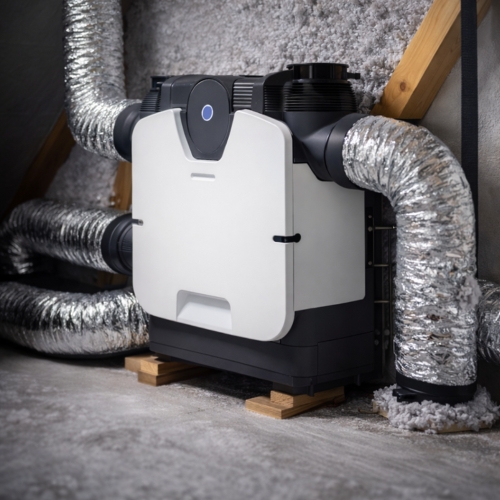
Thermodynamic operation changes the temperature of the air passing through the appliance. The origin of the intake air and the area where cooled air is discharged must therefore be assessed. In a small indoor room, an unsuitable configuration can affect the conditions within the space. Any duct routes must also remain compatible with existing walls, openings and circulation areas.

Hydraulic connections and condensate drainage
The installation includes checking the cold water supply, hot water outlet and available drainage options. The system also produces condensate during operation, which must be directed to a suitable outlet. In an older cellar or basement, differences in level and the position of existing services must be taken into account before installation.
Integration with other energy renovation work
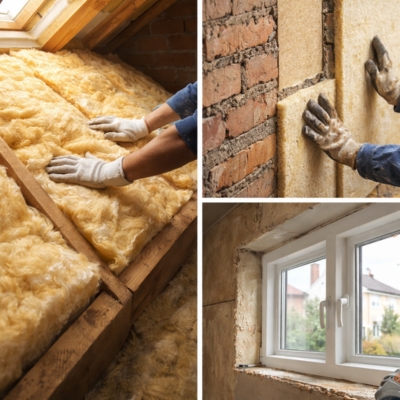
A thermodynamic water heater can be installed independently of the heating system, but its location must remain compatible with future work in the property. Basement insulation, reorganisation of a utility room, boiler replacement or changes to ventilation can alter the conditions within the room. Anticipating these works helps avoid moving the equipment or redoing connections later.

Typical situations in Meurthe-et-Moselle
Town house with a cellar in Nancy
A cellar may seem like a natural location, but its volume, temperature and humidity need to be assessed. If the room is heavily partitioned or the services are far away, another position may be more appropriate. For a broader view of the property, you can also consult our page on energy renovation in Nancy.
Workers’ house with a converted utility room
In the Longwy area, an ancillary room may have changed use several times. Added partitions or insulation can alter the available air volume and thermal conditions. Before installing the equipment there, the actual functioning of the room should therefore be checked rather than relying solely on the property’s original layout.
House with an attached unheated garage
A garage can offer space and simplify some connections, but its exposure to cold, the presence of a frequently opened door and the length of the hot water pipework must be taken into account. In Meurthe-et-Moselle, these conditions can be particularly important during the cold season and may influence the installation location or air connection method.
Grants and funding
Depending on the characteristics of the project and eligibility conditions, a thermodynamic water heater may qualify for MaPrimeRénov’, CEE (energy savings certificates), reduced VAT and the éco-PTZ (zero-interest eco-loan). Some grants require the use of an RGE-certified professional for the relevant work. The conditions must be checked before commitment, as they may vary according to the property, the chosen equipment and how the project fits into a wider renovation.
To tell us about the configuration of your property, the existing system and the proposed installation room, you can use our contact page. The official conditions for public schemes should be checked on the France Rénov’ website. This consultation can help confirm the technical and administrative criteria that apply before the project is finally approved.
How we work

Assessment of usage
We examine domestic hot water requirements, the existing installation and the location of the main draw-off points.

Assessment of the location
We check the room volume, temperature, access, ventilation and available space for the appliance.

Checking the connections
We identify water supplies, the electrical connection, condensate drainage and any required duct routes.

Choosing the configuration
We define a solution suited to the property, the airflow arrangement and any planned energy renovation work.

Preparing the installation
We specify the technical points to confirm and the funding schemes to check before the work is commissioned.
Our other services in Meurthe-et-Moselle
Domestic hot water production can be integrated into a more comprehensive renovation. Consult our pages dedicated to global energy renovation, heat pumps, insulation in Meurthe-et-Moselle and energy audits. You can also find our page on energy renovation in Meurthe-et-Moselle and the one dedicated to energy renovation in Grand Est.
Frequently asked questions
Is a cellar suitable for a thermodynamic water heater?
It can be, but not automatically. Its volume, usual temperature, ventilation and condensate drainage possibilities must be checked. A very cold, narrow or heavily partitioned cellar may require a different configuration or a different air intake arrangement in order to maintain consistent operation of the equipment.
Can the appliance be installed in a heated room?
It is technically possible in some configurations, but the impact of extracting calories and discharging cooled air must be assessed. The aim is to avoid unnecessarily reducing comfort in the room. The choice therefore depends on the type of water heater, the available volume and the way the air is handled.
Can a thermodynamic water heater replace an electric water heater?
Yes, provided the property offers the conditions required for its installation. Available space, hydraulic and electrical connections, condensate drainage and airflow must all be checked. The location of the existing water heater is not always compatible with the requirements of the new equipment.
Should the water heater be planned before insulating the basement?
It is preferable to coordinate both projects. Insulation can alter the temperature, usable volume and airflow within the room. In Meurthe-et-Moselle, this is particularly useful when the water heater is to be installed in a garage, cellar or utility room that may later be renovated.
Let’s talk about your project
Tell us about your home and your goals: we help you prioritise the works and identify the grants worth looking into.