

Thermodynamic water heater in Pas-de-Calais (62)
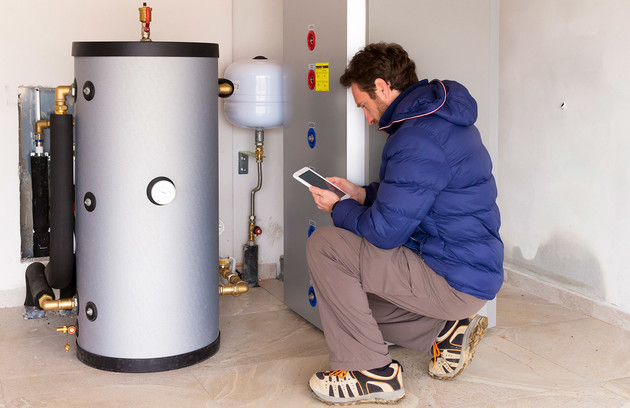
Installing a thermodynamic water heater in Pas-de-Calais (62) requires checking the available location, the volume of usable air and the property’s hot water needs. This equipment is not chosen solely according to its capacity: its surroundings are just as important. In mining-era houses with sometimes limited technical spaces, coastal homes exposed to high humidity or rural properties with a cellar, garage or utility room, installation conditions vary considerably. The project must therefore take into account the air intake, exhaust air, condensate drainage and the organisation of the rooms.
Tip: have your energy performance certificate (DPE) and energy bills to hand for a more accurate estimate.
Why install a thermodynamic water heater in Pas-de-Calais
In many older houses in the department, hot water is still produced by a system separate from the heating or by a boiler serving several functions. A thermodynamic water heater makes it possible to separate hot water production from the main heating system, but a suitable environment is required. A cellar, garage or utility room may be appropriate depending on its volume, temperature and ventilation, while a small enclosed cupboard requires a different assessment.
The climate in Pas-de-Calais also means that humidity must be taken into account. On the coast, a room that is already cold or damp should not automatically be chosen simply because it is available. Air intake and discharge can affect the conditions in the room. In rural houses or older buildings with ancillary spaces, there are often more options, but the distances involved in water and electrical connections still need to be assessed.
What thermodynamic water heater installation includes
Assessment of the installation room
The first step is to check where the thermodynamic water heater can be installed. The volume of the room, its usual temperature, humidity level and use are taken into account. A garage, cellar, utility room or plant room does not provide the same conditions, particularly when the system draws air directly from the room.

Choosing the air intake and exhaust method
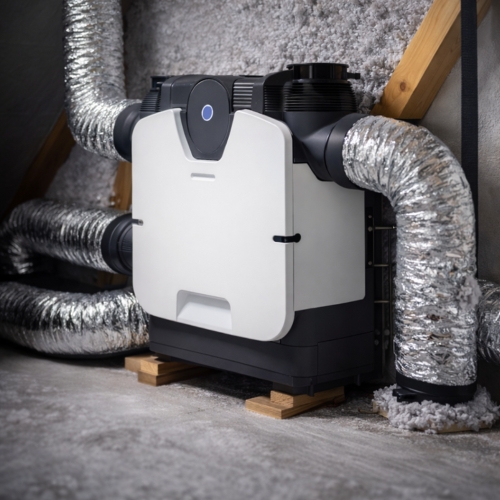
Depending on the appliance and the layout of the property, air can be drawn from the room or circulated through ducts. This decision affects the position of the water heater and the thermal behaviour of the room. Wall penetrations, duct lengths and possible discharge routes must therefore be anticipated before installation.
Sizing according to household use
The cylinder capacity must match the household’s needs without being selected solely according to the floor area of the property. The number of occupants, usage habits and the presence of several bathrooms all contribute to the assessment. Suitable equipment must be able to meet normal demand while remaining compatible with the space available for installation.
Managing condensate and connections
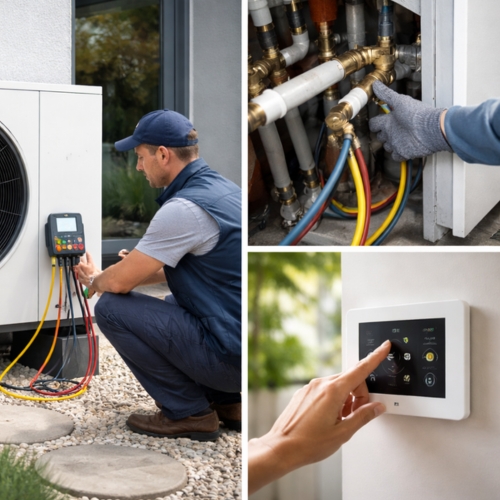
Operation produces condensate that must be drained correctly. Having a suitable drain nearby simplifies installation, while a more distant outlet may require a specific solution. Water supplies, hot water distribution, the electrical connection and accessibility of technical components are also checked to avoid unnecessarily complex connections.
Integration with other equipment
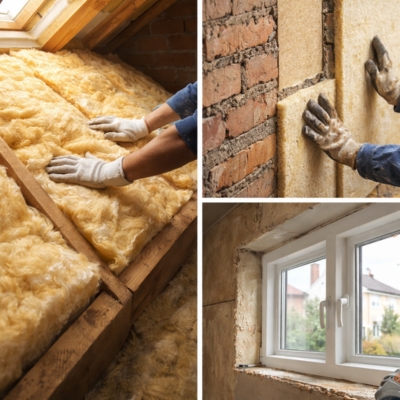
When the property is also undergoing a heating system replacement or insulation work, hot water production must be integrated into the overall scenario. Removing an older combination boiler, for example, can change the organisation of the networks. The new appliance must then be positioned without obstructing other installations or compromising the access required for their maintenance.
Typical situations in Pas-de-Calais
Mining-era house with a small utility room
In a terraced property, available space may be limited. A thermodynamic water heater should not be installed in a confined space without checking the operating conditions. The room, any possible duct routes and proximity to the networks are assessed together to determine whether the location is genuinely suitable.
Coastal house with a damp garage
In Calais, Boulogne-sur-Mer or a town exposed to comparable maritime conditions, a garage may seem practical but may have significant humidity. The condition of the room, its air renewal and the way the equipment exchanges air must be assessed before selecting this area for installation.
Rural property with a cellar or outbuilding
In inland parts of the department, a house may have more ancillary spaces available. This configuration provides more installation options, but a room located far from the draw-off points may increase hot water distribution lengths. The choice must therefore balance the suitability of the location with the organisation of the pipework.
Grants and funding
Depending on the characteristics of the property, the type of equipment selected and the conditions applying to the application, installing a thermodynamic water heater may qualify for MaPrimeRénov’, CEE (energy savings certificates), reduced VAT or the éco-PTZ (zero-interest eco-loan). Some grants may require the use of an RGE-certified professional. The criteria should be checked before committing to the work and not after ordering the appliance.
You can contact GRAM Énergie to describe your current installation, available spaces and hot water needs. To find out the official criteria for grant schemes and any requirements relating to the use of an RGE-certified professional, you can also consult the public France Rénov’ website before finalising your project.
How we work

Assessment of needs
We examine hot water use, the existing installation and the general layout of the property.

Identifying suitable locations
Available rooms are compared according to their volume, temperature, humidity and proximity to the networks.

Airflow assessment
The intake and discharge method is defined according to the selected appliance and the available duct routes.
Preparing the connections
Water, electricity and condensate drainage are organised while taking future access to the equipment into account.

Installation and settings
The water heater is connected, configured and integrated into the daily operation of the property according to the selected solution.
Our other services in Pas-de-Calais
To complement your project, consult our pages on global energy renovation, heat pumps, insulation and energy audits. You can also find the energy renovation in Pas-de-Calais page, the regional Hauts-de-France page, as well as local content for Calais and Boulogne-sur-Mer.
Frequently asked questions
Can a thermodynamic water heater be installed in a small room?
It depends on the model and how it operates. An appliance that uses air directly from the room requires suitable conditions, while a ducted configuration may address different constraints. The available volume, duct routes and maintenance access must be checked before selecting a small room.
Is a garage always a suitable location?
No. A garage may provide the necessary space, but its temperature, humidity, ventilation and use must be assessed. On the coast, high humidity makes this check particularly important. The distance from water outlets and the possibility of draining condensate correctly must also be considered.
Can a thermodynamic water heater operate alongside a heat pump?
The two systems can coexist because they meet different needs. The heat pump can provide space heating while the water heater produces domestic hot water. Their positions, electrical connections and the organisation of the rooms must nevertheless be considered together to keep the installation accessible and coherent.
Is a drain required near the water heater?
Condensate drainage is required for the appliance to operate. Having a suitable outlet nearby makes installation easier, but other configurations can be considered where this is not possible. This point must be anticipated before installation to avoid an improvised drainage arrangement or one that is difficult to maintain.
Let’s talk about your project
Tell us about your home and your goals: we help you prioritise the works and identify the grants worth looking into.