

Energy Renovation in Pas-de-Calais (62)
Pas-de-Calais brings together three built realities: the mining villages and their terraced houses, the rural communes inland, and a coastline exposed to wind as much as to damp. Brick dominates everywhere, with solid walls that were rarely insulated and lofts that have received only cursory treatment. Outside the areas served by gas, oil-fired heating remains present and weighs heavily on running costs. GRAM Énergie supports owners in the département from the technical survey to the handover: reading the building, prioritising the works, coordinating the site and preparing the grant applications.

Tip: have your energy performance certificate (DPE) and energy bills to hand for a more accurate estimate.
The building stock of Pas-de-Calais and its energy challenges
The mining heritage marks the département lastingly. Workers’ villages, corons (miners’ terraced cottages) and terraced houses line up repetitive homes, modest in floor area, built in solid brick with no original insulation. Party walls limit lateral heat loss, but the roof, the gable ends and the windows remain the weak points. Lofts have often received only a thin layer laid a long time ago, now compressed. On this kind of building, insulating from the top produces rapid and perceptible effects.
The coast imposes its own rules. On the shoreline, wind, driving rain and sea spray place constant strain on façades, windows and any equipment installed outdoors. Materials and fixings have to be chosen accordingly. Damp air encourages condensation as soon as a home becomes airtight without organised air renewal. Ventilation is therefore not optional in Pas-de-Calais: it determines how durable the works carried out on the building envelope will be.
Inland, the département shows a more rural face. Old market towns, farms and isolated houses are frequently located away from the gas network, and oil-fired heating persists there. Replacing it with a heat pump is then the most common solution, provided the building envelope has first been treated and the emitters are suitable. Distances and site access also call for a different organisation from that of urban centres.
Our services in the 62
Whole-house energy renovation
Treating the home as a whole gives the best results on the local building stock. A whole-house energy renovation combines insulation, heating and ventilation in a coherent order, rather than stacking up isolated measures. On a mining-village house, this approach avoids replacing a boiler before the roof and the walls have been dealt with.
See the page: Global energy renovation in Pas-de-Calais (62)

Heat pump
Replacing an oil or gas boiler with a heat pump calls for rigorous sizing. We check the existing insulation, the emitters in place and the location of the outdoor unit, taking account of exposure to wind on the coast. A correctly calibrated unit limits the use of back-up heating through the winter.
Insulation
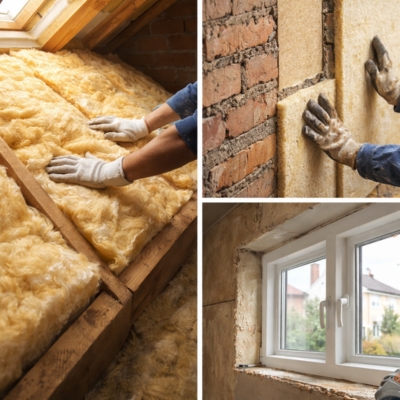
Insulation remains the first lever on this older housing stock. The loft is treated as a priority, then the walls and the windows. On solid brick walls, the choice between internal and external insulation depends on whether the house is terraced, on the appearance of the façade and on the planning rules of the commune concerned.
Thermodynamic water heater
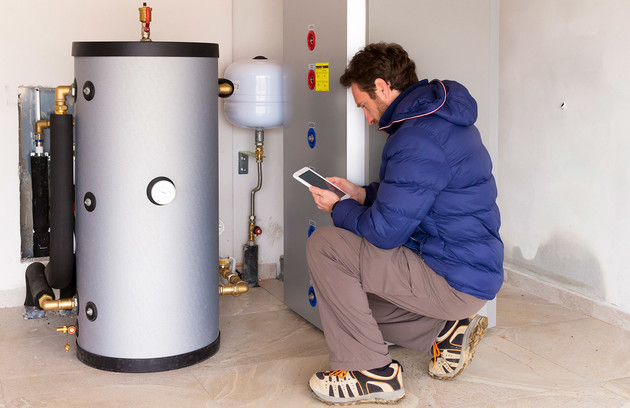
Domestic hot water weighs heavily on the annual bill. The thermodynamic water heater draws its energy from the ambient air and uses markedly less than an electric cylinder. Its installation calls for a sufficient volume of air and a condensate drain: a store room, garage or utility room is often suitable in the houses of the département.
See the page: Thermodynamic water heater in Pas-de-Calais (62)
Energy audit
An energy audit sets an objective starting point. It describes the heat losses, the condition of the heating and the ventilation, then proposes scenarios of works in order of priority. On an older home in Pas-de-Calais, this reading avoids decisions taken at random and secures the grant applications.

Mechanical ventilation (VMC)
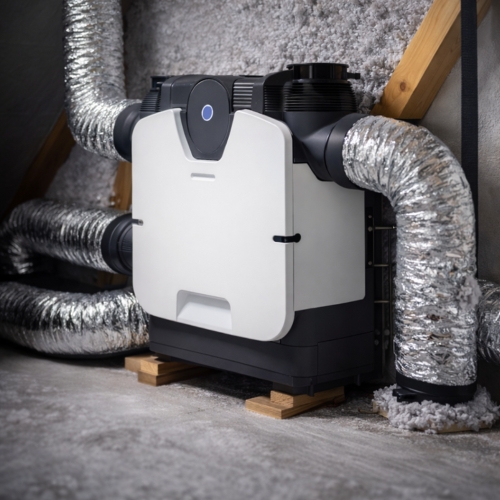
Ventilation cannot be handled as an afterthought. A home made airtight by new windows must expel the moisture produced day to day, otherwise condensation appears on the cold surfaces. We install and upgrade controlled mechanical ventilation systems, in step with the other works undertaken.
Smart thermostat
Controlling the temperature precisely avoids heating unoccupied rooms. The smart thermostat adjusts the settings to the household’s actual timetable and makes it possible to follow consumption through the heating season. On an existing central heating system, this fine-tuning extends the effect of the insulation works.
The towns we work in across the 62
We work across the whole département, from the communes of the mining basin to the rural market towns inland and the coastal towns. You can also visit our energy renovation in Hauts-de-France page.
- Calais: façades subject to wind and sea spray, windows under strain and older homes best tackled through the roof first.
- Arras: an old centre and brick faubourgs, where internal insulation is often the only option given local heritage rules.
- Boulogne-sur-Mer: coastal housing exposed to damp, where ventilation must accompany any work on the airtightness of the envelope.
- Liévin: former mining villages and terraced houses, with poorly insulated lofts and boilers that are often ageing.
- Lens: repetitive homes of the mining basin, candidates for a whole-house renovation that treats the envelope before the heating.
- Béthune: housing that mixes an old centre and suburban districts, where the energy audit helps to set the priorities clearly.
- Saint-Omer: older brick houses and nearby rural areas, many of which are still heated by oil.
- Hénin-Beaumont: mining villages and terraced houses whose solid walls and roofs account for most of the heat loss.
- Bruay-la-Buissière: extensive mining housing, where loft insulation produces rapid effects on perceived comfort.
- Berck: coastal building stock subject to wind, with windows and façades exposed to constant damp.
Grants and financing for your works
Several public schemes support home renovation in Pas-de-Calais: MaPrimeRénov’, the main French state renovation grant, the certificats d’économies d’énergie (CEE), energy saving certificates financed by energy suppliers, the reduced rate of TVA (French VAT) on energy improvement works and the éco-prêt à taux zéro (éco-PTZ), an interest-free renovation loan. Low-income households receive enhanced support. The conditions depend on the home, on the works and on the household’s situation.
We prepare the technical documents required and point you towards the right contacts. The public service France Rénov’ lists the schemes in force and their conditions.
Applications are prepared before the works begin.
How a project runs with GRAM Énergie

First conversation
You describe the home, the discomfort you experience and your objectives. We frame the need and the feasibility.

Technical survey on site
A record of the building, the walls, the loft, the windows, the heating and the ventilation.

Costed, prioritised proposal
We set out the works, their logical order and the comfort gains to expect.
Administrative preparation
Assembling the grant applications and checking the documents before work starts.

Delivery and follow-up
Coordinating the trades, checking the critical points, handing over the completed works and explaining the settings.
Frequently asked questions
How do you renovate a mining-village house?
By treating the building envelope first. These terraced houses share party walls and lose heat mainly through the roof, the gable ends and the windows. Loft insulation has a rapid effect. The heating is then reworked, sized for reduced demand. Each home nevertheless keeps its own particularities, to be checked on site.
Can oil-fired heating be replaced everywhere in the 62?
In most cases, yes. The heat pump is the most frequent solution outside the areas served by gas. It presupposes a properly insulated envelope and suitable emitters. We check these two points before proposing a replacement, rather than installing an oversized unit.
Does the coastal climate change the technical choices?
It steers them. Wind, driving rain and sea spray place strain on façades, windows and outdoor equipment. Materials and fixings are chosen accordingly. Ventilation also takes on more importance, because the damp coastal air encourages condensation in homes that have been made airtight.
Should the loft be insulated before the walls?
Most often, yes. Heat loss through the top of the home is significant and the operation remains simple to carry out on the houses of Pas-de-Calais. The walls come next, with a trade-off between internal and external insulation depending on whether the house is terraced and on the appearance of the façade.
Do you work in the rural communes of the département?
Yes. We work in the towns of the mining basin as much as in the rural market towns and on the coast. The organisation of the project adapts to the distance and the access conditions. A first conversation makes it possible to clarify the conditions at your address.
Do you have an energy renovation project in Pas-de-Calais? Describe your home and your objectives through our contact form: we reply with an initial reading of your situation and the steps to consider.
Let’s talk about your project
Tell us about your home and your goals: we help you prioritise the works and identify the grants worth looking into.