

Thermodynamic water heater in Oise (60)
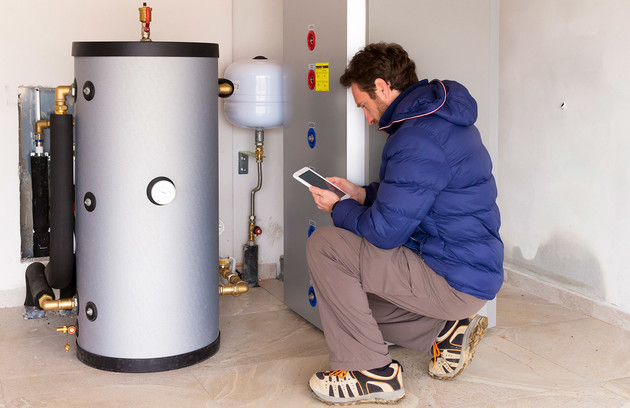
Installing a thermodynamic water heater in Oise (60) makes it possible to separate hot water production from the main heating system, provided that the location and sizing are suited to the property. In the department, configurations range from detached houses with a garage, utility room or basement to older homes where technical spaces are more constrained. The choice therefore does not depend solely on the number of occupants: the temperature of the room, the available air volume, connection possibilities and condensate drainage must also be checked.
Tip: have your energy performance certificate (DPE) and energy bills to hand for a more accurate estimate.
Why install a thermodynamic water heater in Oise
In the detached housing areas in the south of the department, many homes have a garage, utility room or technical room that may accommodate the appliance. These spaces must nevertheless be assessed before installation: a room that is too cold, too small or poorly ventilated may not suit certain models. When the water heater draws heat from the surrounding air, its position should also avoid excessively cooling an occupied room or disrupting the operation of other equipment.
In older homes in Oise, the location sometimes requires more preparation. A damp cellar, an unheated room or a highly compartmentalised space should not be selected without checking its suitability. Duct routes, access to the water supply, the electrical connection and condensate drainage all influence the decision. When insulation or ventilation work is planned, this should also be taken into account so that the operating conditions are not altered afterwards.
What a thermodynamic water heater installation includes
Choosing the type of appliance
A thermodynamic water heater can operate using room air, ducted air or a configuration suited to the available space. The choice depends on the room where it will be installed, the possibilities for air intake and exhaust and the general layout of the property. The aim is to avoid an installation that is theoretically compatible but unsuited to the actual conditions on site.

Sizing the hot water volume
The cylinder volume should match household use without being selected excessively. The number of occupants, consumption habits, the possible presence of a bath and periods of high demand are taken into account. A unit that is too small may be called upon constantly, while an oversized model takes up more space and heats an unnecessarily large quantity of water.

Assessment of the installation location
The support, clearances around the appliance and the access required for maintenance are checked before installation. The room must also allow the planned hydraulic and electrical connections. In a garage or basement, the ambient temperature and air circulation must remain compatible with the operation of the system, particularly during colder periods.
Air management and condensate drainage
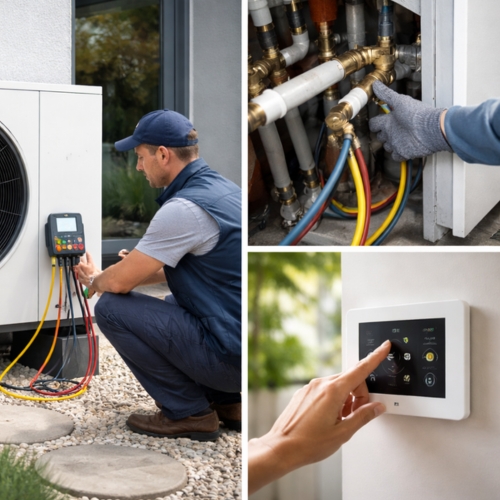
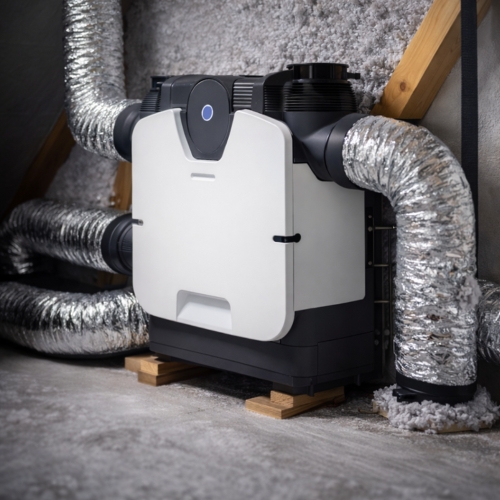
Thermodynamic operation produces condensate that must be drained correctly. Depending on the model, air may be taken from and discharged into the same space or routed through ducts. These airflows should not create an undesirable imbalance in the property. Their arrangement is assessed together with the existing ventilation and the characteristics of the technical room.
Connections and controls
Installation includes connections to the water supply, electrical power and the required safety components. The settings are adapted to expected use and the organisation of the household. Where the property already has a boiler, heat pump or another production system, the relationship between the different appliances should be clarified to avoid overlapping functions.

Typical situations in Oise
Detached house with an adjoining garage
The garage may provide enough space for the water heater, but its volume, temperature and use should be checked. If the room becomes very cold in winter or contains other sensitive equipment, a ducted-air configuration may be considered instead of continuously drawing air from the room.
House with an old boiler that also produces hot water
Replacing the heating system may lead to separating the two functions. In Oise, a thermodynamic water heater can then be considered independently from the future heat generator. However, the connections, the space freed or retained in the boiler room and the layout of the existing domestic water system should be anticipated.
Older property with a basement or cellar
The presence of available space on a lower level does not automatically make it suitable. Damp, ventilation, headroom, access and temperature must be assessed. A difficult-to-reach room may also make installation or maintenance more complicated. The choice of location therefore depends on several technical constraints rather than simply on the presence of free space.
Grants and funding
Depending on the type of equipment installed and the conditions applying to the property, the project may qualify for MaPrimeRénov’, CEE (energy savings certificates), reduced VAT or éco-PTZ (zero-interest eco-loan). Eligibility depends in particular on the characteristics of the equipment and the framework in which the work is carried out. Some grants require the use of an RGE-certified professional. The rules should be checked before any order or final commitment.
You can contact us to assess the property layout, available installation space and connection constraints. To check the official conditions for MaPrimeRénov’, CEE and other public schemes, also consult France Rénov’ before starting the funding procedures.
How we work

Assessment of requirements
We examine hot water use, the household composition and the equipment already in place.

Assessment of the room
We check the available space, temperature, access, support and possibilities for air circulation.

Choice of configuration
We define the type of appliance and air intake arrangement that are compatible with the property.

Preparation of the connections
We organise the water supply, condensate drainage, electrical connection and any required ductwork.

Operating settings
We check the hot water production parameters and their consistency with the other technical equipment.
Our other services in Oise
Depending on the organisation of the project, you can also consult our pages on global energy renovation in Oise, heat pumps in Oise, insulation in Oise and energy audits in Oise. You can also find the page dedicated to energy renovation in Oise, our regional Hauts-de-France page and local information for Beauvais.
Frequently asked questions
Can a thermodynamic water heater be installed in a garage?
Yes, if the volume, temperature and air circulation are compatible with the selected model. Access for maintenance, the connections and condensate drainage must also be provided. A very cold or heavily partitioned garage may lead to choosing a different configuration, particularly one using ducts.
Can the appliance be placed in a damp cellar?
The presence of a cellar is not enough to confirm that installation is suitable. Damp, temperature, ventilation, the condition of the support and access must be assessed. If the room presents unfavourable conditions, it may be preferable to consider another location or another way of organising the air intake and exhaust.
Does the water heater need to be replaced if the heating system is changed?
Not necessarily. Hot water production and heating can be treated separately. When replacing a boiler, however, it is useful to check whether the old appliance also provided domestic hot water. The new arrangement should then clearly divide the functions between the future heat generator and the selected water heater.
Should the thermodynamic water heater be planned before insulation work?
It is preferable to take planned work into account, especially if the technical room, ventilation or air volumes are going to change. A room made more airtight or later incorporated into the heated area may no longer offer the same conditions. Anticipating these changes helps avoid choosing a location that later becomes less suitable.
Let’s talk about your project
Tell us about your home and your goals: we help you prioritise the works and identify the grants worth looking into.