


Energy renovation in the Oise (60)
The Oise has two faces. In the south, the peri-urban communes that look towards Île-de-France line up recent housing estates, with gardens and accessible lofts. In the north, older rural stock dominates, often in stone, with thick walls and generous volumes. Between the two, many detached houses share the same feature: a boiler that has reached the end of its life and dated insulation. GRAM Énergie supports owners through the whole process: reading the building fabric, ranking the works, coordinating the site and preparing the grant files.

Tip: have your energy performance certificate (DPE) and energy bills to hand for a more accurate estimate.
The Oise building stock and its energy challenges
In the south of the department, the housing estates built since the 1980s offer a sound base: regular masonry, accessible lofts, roofs in good condition. Their weakness lies elsewhere. The insulation laid originally has often lost thickness, airtightness lets infiltration through at hatches and service runs, and the ventilation works poorly. On these houses, a full overhaul of the loft and a ventilation adjustment transform comfort without structural work.
To the north and east, the older stone stock changes the method. Thick walls have high thermal inertia and remain sensitive to damp. Rising damp is common in village houses, and a render that is too impermeable makes the phenomenon worse. Renovation then favours materials that let water vapour migrate, once the cause of the damp has been dealt with. The look of the façades also points towards internal insulation in protected market towns.
Heating is the third challenge. Many homes in the Oise still run on an old gas or oil boiler whose efficiency has fallen away. Detached houses with a garden lend themselves well to an air-to-water heat pump, provided demand has been reduced beforehand and the emitters checked. Changing the generator before the envelope almost always leads to oversizing the unit.
Our services in the 60
Global energy renovation
A global energy renovation handles insulation, ventilation and heating in a coherent order, rather than as isolated jobs. On the houses of the Oise as on the older rural properties, this approach first reduces demand, which then makes it possible to install a better-sized generator. We set out with you the priority work packages and how they follow one another over time.

Heat pump
The air-to-water heat pump replaces a gas or oil boiler and fits onto an existing radiator circuit where that circuit allows it. Detached houses with a garden offer an easy position for the outdoor unit. We check the emitters, the flow temperature and the envelope before sizing the unit, so as to avoid short-cycling.

Insulation
Loft insulation remains the first job, all the more worthwhile because lofts are accessible across much of the estate housing stock. We also treat sloping ceilings, ground floors and walls, internally or externally depending on the look of the façade and on local planning rules. On older stone stock, the choice of material counts for more than the thickness.

Thermodynamic water heater
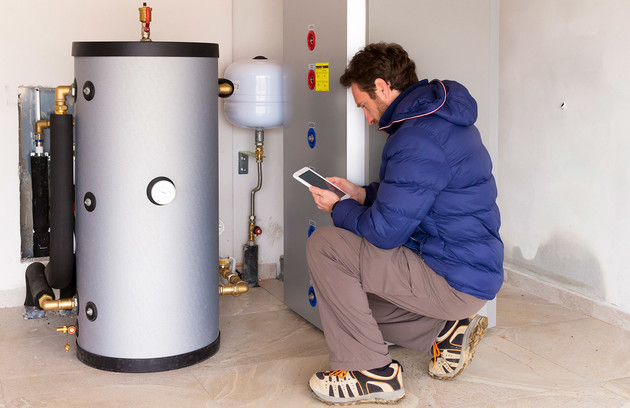
The thermodynamic water heater produces domestic hot water from the heat in the air. It is a sound replacement for an old electric cylinder, above all in households where hot water weighs heavily on the bill. The appliance needs a sufficient volume of air: a garage, a store room or a utility room. We check the position and the condensate drain before installation.
Energy audit
An energy audit describes the home as it stands: walls, roof, heating, ventilation and points of heat loss. It then proposes work scenarios in order of priority. In the Oise, where the stock mixes recent estate houses and older, much-altered properties, this stage avoids errors of sequence and serves as the basis for the grant files.
VMC
A well-insulated house must be ventilated. A VMC (French mechanical ventilation system) renews the air continuously, removes the moisture from wet rooms and limits condensation on cold surfaces. In houses made more airtight by new windows, failing ventilation is quickly spotted: persistent misting, odours, marks in the corners. We adapt the system to the number of wet rooms.

Smart thermostat
The smart thermostat matches the temperature to the real hours of occupation, and room by room where the installation allows it. In the communes of the southern Oise, where daily journeys to Île-de-France leave the home empty for much of the day, this control avoids heating for nothing. We configure it with you after commissioning.
The towns where we work in the 60
We work from the peri-urban south to the rural market towns of the north of the department.
- Beauvais: town houses, older apartment buildings and houses on the outskirts, with lofts and boilers to tackle as a priority.
- Compiègne: older stock in the centre and recent estates around it, with very different needs in insulation and heating.
- Creil: apartment blocks and detached houses, where ventilation and joinery weigh heavily on perceived comfort.
- Senlis: a protected old centre in stone, where internal insulation is the obvious route for preserving the look of the façades.
- Chantilly: older houses of character and peri-urban homes, with projects combining loft insulation and a heat pump.
- Noyon: market-town stock and rural stone houses, often sensitive to damp in the walls before any insulation.
- Méru: estate houses and older properties, with accessible lofts that allow insulation to be overhauled quickly.
- Nogent-sur-Oise: detached houses and small blocks, where replacing old boilers comes up most often.
- Clermont: hillside housing mixing stone and recent construction, with heat losses concentrated in the roof.
- Pont-Sainte-Maxence: market-town houses and homes with a garden, suited to a heat pump once the envelope has been treated.
This department belongs to the Hauts-de-France region: see our page on energy renovation in Hauts-de-France.
Grants and funding
Several national schemes support this work: MaPrimeRénov’ (the main French state renovation grant), the certificats d’économies d’énergie (CEE, the French energy saving certificate scheme), the reduced rate of TVA (French VAT) on energy improvement works and the éco-prêt à taux zéro (the interest-free eco-loan). The conditions depend on the home, on the household’s income and on the nature of the works undertaken. Local grants may be added depending on the authority. We prepare the technical documents the files require and we point you to the public information service France Rénov’, which advises owners in the Oise free of charge.
Grant files rest on technical documents that we prepare with you.
How a project runs with GRAM Énergie

First conversation
You describe the home, your consumption and where you feel uncomfortable. We frame the need.

Technical visit
Survey of the walls, the roof, the heating and the ventilation, with damp identified.

Costed proposal
Scenarios in order of priority, materials and equipment described, the order of the work packages and the expected impact.

Delivery
Coordination of the trades, site supervision, checks during the works and protection of the home.

Commissioning and follow-up
Settings, guidance on use and handover of the documents useful for the grant files.
Frequently asked questions
Where should you start in a 1980s house in the Oise?
With the loft. In this type of house it is accessible, and the original insulation has often lost performance. Overhauling the insulation, together with treating the hatches and the service penetrations, clearly reduces heat losses. Then come the ventilation, the joinery, and finally the replacement of the heating generator.
Is a heat pump suitable for the department’s detached houses?
Often yes. Houses with a garden offer a suitable position for the outdoor unit. We first check the insulation, the flow temperature required and the condition of the radiators. If the emitters call for water that is too hot, some of them must be replaced. The sizing then rests on real demand, not on the output of the old boiler.
Can external insulation be used in the old centres of the Oise?
Not everywhere. In protected market towns and near listed monuments, planning rules may forbid any change to the appearance of the façades. We check this point before making any proposal. Internal insulation, combined with the loft and the joinery, then gives a solid result without touching the outside of the building.
Is ventilation needed after replacing the windows?
Yes. New joinery makes the home far more airtight. Without mechanical ventilation set up correctly, the moisture produced day to day stays inside and settles on cold surfaces. We check the existing ventilation and its flow rate as a matter of course whenever the windows are replaced.
How is damp in old stone walls dealt with?
By looking for the cause before insulating. Rising damp, poor drainage, an impermeable cement render or absent ventilation: the origin is diagnosed during the technical visit. Fitting insulation on a damp wall degrades it. Once the damp is under control, we select materials that let water vapour migrate.
Planning an energy renovation in the Oise? Tell us about your home through our contact form and we will come back to you with an initial reading of the building fabric and of the works to consider.
Let’s talk about your project
Tell us about your home and your goals: we help you prioritise the works and identify the grants worth looking into.