


Energy Renovation in Combs-la-Ville
In Combs-la-Ville, many energy projects concern detached houses built on the estates developed between the 1970s and the 2000s. These properties often have fairly open plots, accessible unconverted lofts and heating systems that have sometimes changed little since construction. GRAM Énergie helps you determine how to improve the home without separating each decision from the rest of the building. The condition of the roof, the walls, the heating, the ventilation and the hot water production is examined within a single line of reasoning, so that the works suit the actual layout of the house.

Tip: have your energy performance certificate (DPE) and energy bills to hand for a more accurate estimate.
Why renovate your home in Combs-la-Ville
Not every house in the town has the same requirements. A house built in the early 1970s may have received several improvements since it was constructed, while a more recent home may still have insulation or equipment that is now poorly suited to the way it is used. Accessible unconverted lofts are an advantage when it comes to a precise assessment: the condition of the insulation, its continuity and any less well treated areas can be examined before deciding whether this item needs to be upgraded.
Relatively open plots also give more scope to study the installation of an outdoor unit. That can make a heat pump project easier where old electric heating has to be replaced, but the size of the plot is not enough on its own to confirm the solution. In Combs-la-Ville, the heating requirements after the works, the position of the rooms, the heat distribution and the siting conditions around the house also have to be taken into account.
The outdoor space available can make it easier to site equipment, provided its sizing matches the home.
Our services in Combs-la-Ville
Whole-home energy renovation
A whole-home energy renovation brings several sets of works together within a shared strategy. Insulation, heating, ventilation, hot water and controls are studied together in order to avoid contradictory choices. In a house that has already seen various improvements, this approach helps identify what genuinely remains to be dealt with and organise the works according to their influence on the home’s future requirements.

Heat pump
A heat pump can be considered to replace old heating where the layout of the house lends itself to it. Open plots sometimes make it easier to find a position outside, but the power requirements, the existing emitters and the connection to the internal circuit must also be checked. The equipment is therefore chosen after the building has been studied, and not on the basis of the existing heating alone.
Insulation
Insulation can concern unconverted lofts, walls, floors or the various junctions in the building envelope. Access to the loft often makes it possible to check the condition of the top-floor ceiling more directly. It nevertheless remains necessary to examine the other walls, so as not to concentrate all the works on the roof when several areas contribute to the heat losses.

Thermodynamic water heater
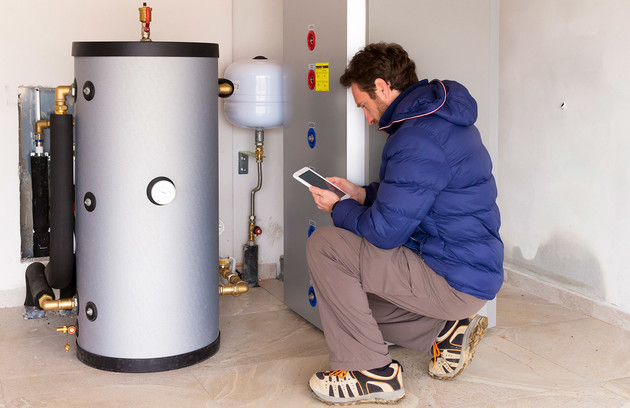
A thermodynamic water heater can be included in a renovation when hot water production needs to change. Installing it means having a space compatible with the way it works and with its dimensions. A garage, a store room or another plant space can be considered depending on how the home is arranged. This solution must be coordinated with the ventilation and with the other equipment planned in the project.
Energy audit
An energy audit makes it possible to compare several scenarios before the works are undertaken. It helps you understand the share of the losses linked to the roof, the walls, the windows or the heating, and prioritise the different items. In a house that has been renovated on several occasions, the audit also checks whether the existing improvements remain consistent with the rest of the building.

Mechanical ventilation (VMC)
Mechanical ventilation contributes to the balance of the home as the building envelope becomes more airtight. After loft insulation or a change of windows, the way the air inlets and extraction points work may need to be reviewed. The analysis covers the wet rooms, the possible routes for ductwork and the system already in place, so that ventilation remains appropriate.

Smart thermostat
A smart thermostat can complement a heating installation by allowing more precise programming. In a house occupied to regular timetables or with several living zones, it can make temperatures easier to manage. Its value nevertheless depends on the heating installed, on its compatibility and on the performance of the building envelope once the chosen works are complete.
Typical projects in Combs-la-Ville
House with an unconverted loft and electric heating
the project can begin with an inspection of the top-floor ceiling and the other walls before comparing the options for replacing the heating. Working this way avoids sizing the future equipment for a house that still has to be insulated.
House on an open plot with a garage
the outdoor space and the volume of the garage can offer several options for installing an outdoor unit or hot water equipment. Feasibility then depends on the existing services and on the internal layout.
A 1990s home already partly renovated
the windows or part of the insulation may have been improved while the heating remains old. The challenge is to identify the items that are still weak rather than systematically redoing works already carried out.
Financial support for your works in Combs-la-Ville
Depending on the project chosen, MaPrimeRénov’ (the French state renovation grant), CEE (energy saving certificates), reduced TVA (VAT) and the éco-PTZ (interest-free renovation loan) may be among the schemes to examine. Whether they apply depends on the nature of the works, on the home and on the conditions attached to each mechanism. It is therefore better to define the technical scenario before organising the paperwork. You can describe your house and the improvements you are considering through the contact form. The French public service France Rénov’ lists the schemes currently in force.
Support schemes should be matched against the programme of works actually chosen.
How we work

Analysing the house
we record its year of construction, its heating, its insulation and the works already carried out.

Examining the walls
loft, walls, floors and windows are studied in order to understand how the heat losses are distributed.

Studying the technical options
the outdoor space, the available rooms and the existing services are taken into account.

Prioritising the works
the programme is organised so that the improvement of the building envelope and the new equipment remain consistent.

Delivering the project
the works defined are carried out within the scope established for the home.
We also work throughout the rest of Seine-et-Marne
You can also visit our pages devoted to Fontainebleau, Provins and Champs-sur-Marne. For our approach across the department, go to the energy renovation in Seine-et-Marne page.
Frequently asked questions
Should an easily accessible loft be the starting point for the renovation?
Accessibility mainly makes it easier to establish its actual condition. If the insulation is insufficient or discontinuous, this item can become a priority. If the loft has already been properly treated, the study can direct the works towards the walls, the windows, the ventilation or the heating.
Is an open plot enough to install an outdoor unit?
No. The space available is a favourable point, but you also need to examine the routing of the services, the power required, the siting constraints and the position in relation to the rooms of the home. The outdoor unit must form part of a complete technical project, and not be chosen on the size of the garden alone.
How do you modernise a house still fitted with old electric heating?
The first step is to establish the home’s requirements and the insulation work that could reduce them. Several heating solutions can then be compared according to the internal layout, the spaces available and the installation options. Replacing the existing appliances must form part of that overall analysis.
Can improvements made during previous works be kept?
Yes, if they are still suitable and properly integrated into the building. An energy renovation does not necessarily mean replacing every element. The purpose of the study is precisely to separate the items that are satisfactory from those that remain inadequate, so that the works are concentrated where they are genuinely useful.
Why check the ventilation after improving the insulation of a house?
Because the behaviour of the indoor air changes as the walls and the openings become more airtight. An older system may then no longer match the new conditions in the home. Checking the air inlets and the extraction points brings ventilation into the project on the same footing as the heating and the insulation.
To prepare an energy renovation in Combs-la-Ville, tell us the type of house, its current heating, the known condition of the loft and the equipment you would like to change through the contact form. GRAM Énergie can then organise the different solutions around the characteristics of your house and your plot.
Let’s talk about your project
Tell us about your home and your goals: we help you prioritise the works and identify the grants worth looking into.