

Energy Renovation in Seine-et-Marne (77)
Seine-et-Marne is the largest département in Île-de-France, and also one of the most dominated by detached housing. From the edges of the Paris conurbation to the rural villages of the Brie, individual homes make up the great majority of the stock. Many of these houses were built between 1960 and 1990, with insulation levels a long way from today’s standards. Add to that ageing oil or gas boilers, heavy on energy and costly to maintain. GRAM Énergie supports owners across the area on every kind of energy renovation work: insulation, heating, ventilation, domestic hot water and controls. Every project begins with a technical visit to the property, never with a standard quotation.

Tip: have your energy performance certificate (DPE) and energy bills to hand for a more accurate estimate.
Seine-et-Marne buildings and their energy challenges
The residential stock of Seine-et-Marne is characterised by a high proportion of detached houses. Properties built between the 1960s and the 1990s almost always show the same weaknesses: lofts with little or no insulation, walls with no added insulation, original windows and ground floors over an unheated void left untreated. These sources of heat loss add up and bear directly on heating consumption.
These houses do, on the other hand, offer a real advantage: large roof and loft areas, often easy to reach. Insulating a cold loft is quick to carry out and has an immediate effect on comfort. The space available also makes it easier to site technical equipment, whether a thermodynamic water heater or the indoor unit of a heat pump.
Finally, some towns and villages remain a long way from the gas network. Heating there still relies on oil, propane or old electric convector heaters. Such situations call for a whole-house approach rather than simply swapping an appliance: insulate first, size the system next, then add controls. That is the logic we apply in the outer suburbs as much as in rural areas.
The works are organised item by item to keep disruption down in an occupied home.
Our services in the 77
Whole-house energy renovation
Treating a home as a whole avoids works that pull against each other. Insulation, heating, ventilation and hot water are thought of as one coherent system, with the order of the works set out from the start. This approach suits the detached houses of Seine-et-Marne particularly well, since their sources of heat loss are numerous. Discover our whole-house energy renovation offer and the method behind it.

Heat pump
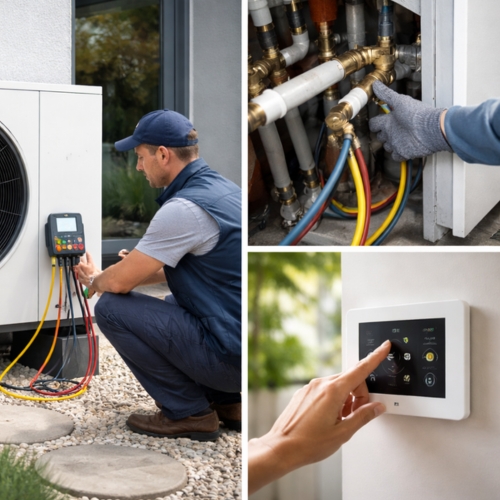
Replacing an old oil or gas boiler with a heat pump is often the main lever. The plots around detached houses make it easier to site an outdoor unit. Sizing follows an analysis of heat loss, never the habitable floor area alone. We set out the possible configurations on our heat pump page.
Insulation
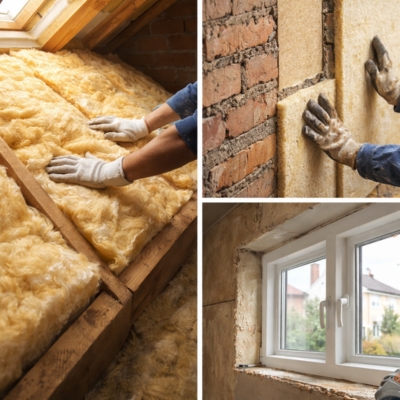
Cold lofts, sloping ceilings, walls, ground floors: insulation remains the first item to tackle. On the large roofs of houses in the area, the gain in comfort is noticeable from the following winter. The choice of materials and thickness depends on the layout and on how the spaces are used. All the solutions are set out on our insulation page.
Thermodynamic water heater
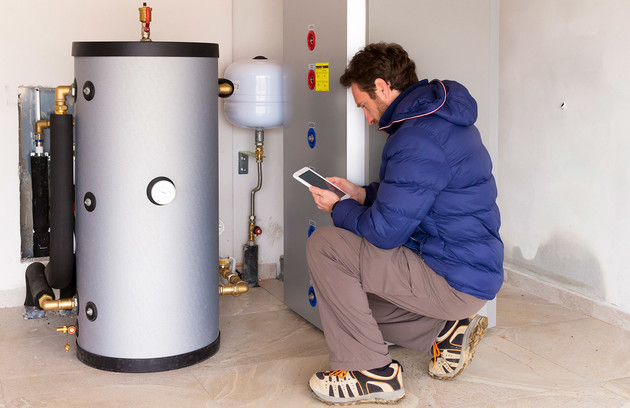
Domestic hot water accounts for a significant share of the bill, especially with an old electric cylinder. A thermodynamic water heater draws heat from the surrounding air and markedly reduces the consumption tied to this item. It is installed in a garage, a utility room or a larder, spaces commonly found in houses in Seine-et-Marne. See our thermodynamic water heater page.
Energy audit
The audit sets out the real condition of the home and compares several works scenarios. It ranks the priorities and avoids investing in oversized equipment in a poorly insulated house. It is a useful step before any substantial project, particularly on older buildings. Our energy audit page explains how it runs and what it delivers.
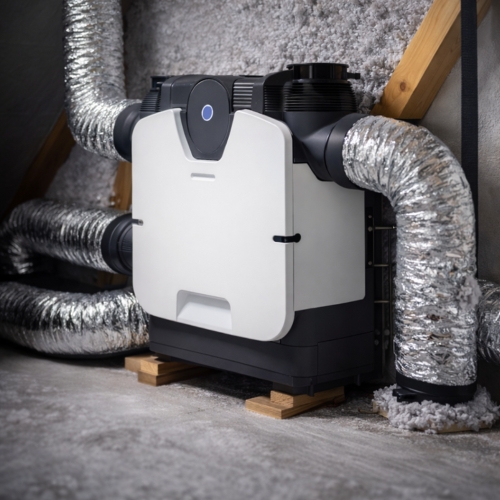
Mechanical ventilation
A renovated home becomes airtight. Without suitable ventilation, moisture stagnates and damages both the materials and the quality of the indoor air. Mechanical ventilation, single-flow or heat-recovery, is chosen according to the layout and the level of insulation achieved. This point is central on older stone buildings. See our ventilation page.
Smart thermostat
Controls complete the installation. A smart thermostat adjusts temperatures room by room and according to the hours the home is occupied, with no daily intervention. In a family house lived in on an irregular pattern, the gain in comfort and restraint is immediate. It is fitted at the end of the works, once the heating system has been commissioned. Details on our smart thermostat page.
The towns we work in across the 77
- Meaux: we work both in the historic centre and in the outlying residential districts, which are often fitted with ageing boilers.
- Chelles: the post-war houses, mostly owner-occupied, lend themselves well to a whole-house renovation carried out in stages.
- Melun: the older town-centre buildings and the blocks of flats call for distinct solutions, between internal insulation and replacing the systems.
- Pontault-Combault: the estates built between 1970 and 1980 have cold lofts that are easy to insulate, for a quick gain.
- Savigny-le-Temple: a new town with terraced houses from the 1980s, it offers favourable ground for replacing electric convector heaters.
- Torcy: town houses and small blocks of flats dominate, with ventilation and wall insulation generally coming top of the list of priorities.
- Villeparisis: this dense residential fabric renovates well through coordinated packages of works, rather than a succession of separate jobs on the home.
- Lagny-sur-Marne: its historic centre holds older buildings that call for materials kind to the walls and for a careful preliminary study.
- Combs-la-Ville: the detached houses there almost always have the clearance needed to install an air-to-water heat pump.
- Fontainebleau: the older buildings of character require thermal performance and respect for heritage to be reconciled, particularly on the windows and façades.
- Provins: the older stone buildings demand carefully controlled ventilation to avoid any build-up of moisture after insulation work.
- Champs-sur-Marne: the town mixes small blocks of flats and detached houses, a mix that calls for differentiated surveys before any works are committed to.
Grants and funding for your works
Several public schemes support the energy renovation of homes in Seine-et-Marne. MaPrimeRénov’ (the French state renovation grant) covers insulation, heating and ventilation works. Certificats d’économies d’énergie (CEE) (energy saving certificates funded by energy suppliers) can be added on top, depending on the nature of the work. TVA réduite (a reduced rate of VAT) applies to works that improve energy performance, and the éco-prêt à taux zéro (éco-PTZ) (an interest-free renovation loan) makes it possible to spread the cost. The French public service France Rénov’ lists the schemes currently in force.
These schemes assume the use of an RGE-certified tradesperson, the French quality label for energy renovation professionals, for the works concerned. The conditions of access vary according to the home, its date of construction and the household’s circumstances. We assess your eligibility case by case, then support you in putting the applications together.
Applications are prepared before the quotation is signed, never after the works.
How a project with GRAM Énergie runs

First conversation
you describe your home, your current equipment and your priorities.

Technical visit
an on-site survey of the areas involved, the access, the state of the loft and the heating system.

Costed proposal
ranked works scenarios, with the detail of the funding available.
Installation
our teams work item by item, keeping disruption down in an occupied home.

Handover and follow-up
checks on the installations, adjustments, an explanation of how everything works and of the servicing to plan for.
Frequently asked questions
Which works should come first in a 1970s house?
Insulating the cold loft almost always comes first. It is quick to carry out, barely invasive and deals with the main source of heat loss in these houses. Replacing the heating system comes next, once the envelope has been improved, which allows for more accurate sizing and better-controlled consumption.
Is a heat pump suitable in rural parts of the 77?
Yes, provided the home is properly insulated and the location of the outdoor unit has been studied. In villages far from the gas network, a heat pump frequently replaces an oil boiler or old convector heaters. The preliminary audit confirms the feasibility and the right sizing.
Can an older stone home be renovated without damaging it?
It can, but it takes method. Older walls have to remain permeable to water vapour: the materials and the way they are installed are chosen accordingly. Ventilation then becomes a key point, because insulation fitted without enough air renewal encourages moisture problems.
Is an audit needed before starting the works?
An audit is not compulsory in every case, but it is strongly recommended for a substantial project. It avoids errors in the sequence of works and oversized equipment. It also provides a structured document, useful for choosing between several scenarios and for preparing applications for financial support.
Do you work across the whole of Seine-et-Marne?
We cover the entire département, from the towns close to the inner suburbs through to the rural areas of the east and the south. The constraints differ from one area to the next: access, type of building, energy available. Every project is therefore preceded by a technical visit before any costed proposal.
Are you considering works in your house or flat in Seine-et-Marne? Tell us about your home, your current equipment and your objectives: we will come back to you with an analysis of your situation and the most relevant options. To start the study of your project, fill in our contact form.
Let’s talk about your project
Tell us about your home and your goals: we help you prioritise the works and identify the grants worth looking into.