

Energy renovation in the Meuse (55)
The Meuse is a rural département where housing is spread between villages, small market towns and a handful of larger towns. The building stock is predominantly old: stone village houses with thick walls, Lorraine farmhouses, and also communes rebuilt entirely after the First World War. Winters are cold, the heating season is long, and both oil and wood remain very common as soon as you move away from the town centres. Renovating here therefore means reading the building before choosing the works. GRAM Énergie supports owners through the whole process: assessment, prioritising the works, coordinating the trades and preparing grant applications.
Tip: have your energy performance certificate (DPE) and energy bills to hand for a more accurate estimate.
The Meuse building stock and its energy challenges
Meuse villages are built around terraced limestone houses, often with very thick walls and large loft spaces. This mass provides good thermal inertia in summer, but it is no substitute for insulation. These old masonry walls need to breathe: a poorly designed airtight lining traps moisture and damages the wall. We therefore favour materials and installation methods that are compatible with stone, combined with controlled ventilation.
Part of the département was rebuilt in the 1920s after the destruction of the front line. These houses and market towns show a regular layout, simple volumes and materials of their period, rarely insulated at the outset. Lofts, ground floors and joinery account for most of the heat loss. Treating them in the right order often brings more comfort than replacing a boiler on its own.
Heating is still dominated by oil and wood across much of the area, because the gas network does not serve every commune. Before replacing a heat generator, we check the condition of the building envelope, the size of the emitters and the quality of the ventilation. This approach applies across energy renovation in Grand Est, where heating requirements are high.
Our services in the 55
Global energy renovation
Global energy renovation means addressing the building envelope, the heating, the hot water and the ventilation within a single coherent project. On a village house in the Meuse, it is often the only way to achieve a genuine step change in comfort. We draw up a prioritised works scenario, which can be carried out in one go or in stages, without losing the technical coherence of the whole.

Heat pump
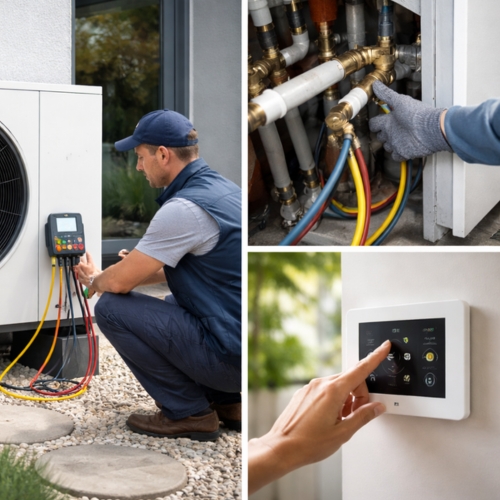
An air-to-water heat pump frequently replaces an oil boiler at the end of its life. It connects to the existing circuit once the emitters and the level of insulation have been checked. In a département with cold winters, sizing is based on an on-site survey, with particular attention paid to the flow temperature. We also study the position of the outdoor unit and its noise impact.
Insulation
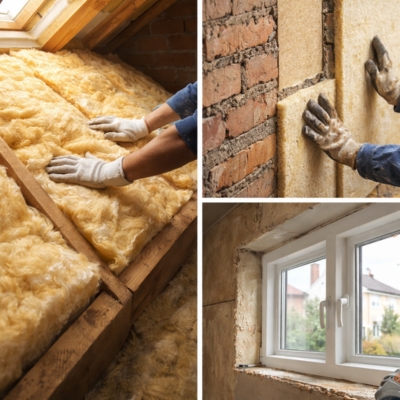
Insulation of unconverted lofts is almost always the first step on rural buildings. Next come sloping ceilings, ground floors over cellars or bare earth, then the walls. On a stone façade, external insulation changes the appearance of the building and is not always desirable: we then propose a breathable internal solution, with careful treatment of junctions and details.
Thermodynamic water heater
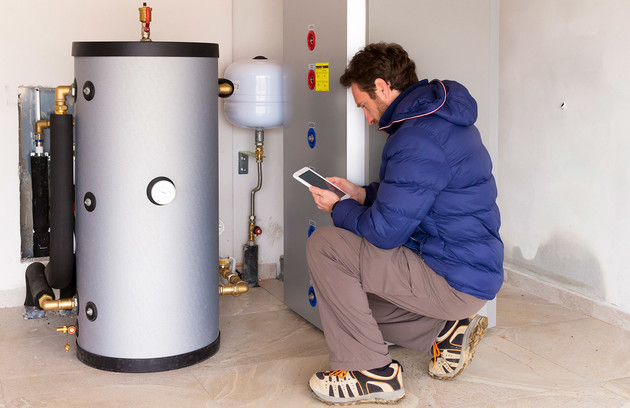
A thermodynamic water heater produces domestic hot water by drawing heat from the air. It suits houses with a store room, a utility room or an attached garage, spaces that are common in rural housing. We check the volume of the room, the scope for ducting and the position relative to living areas, so as to avoid any noise nuisance.
Energy audit
An energy audit describes the actual condition of the home and proposes costed, prioritised works scenarios. On an older building it avoids expensive mistakes: insulating a damp wall, oversizing a heat generator, forgetting the ventilation. It is also the document that structures a major renovation project and acts as the thread running through the whole job.

Mechanical ventilation (VMC)
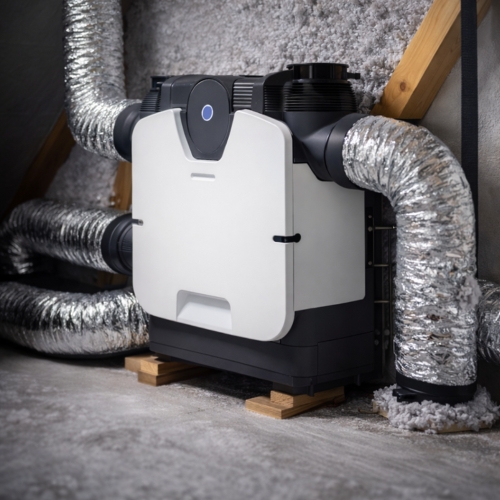
Ventilation becomes decisive as soon as a home is made more airtight. Without controlled air renewal, moisture builds up and damages both old walls and indoor air quality. We install humidity-controlled single-flow or heat-recovery double-flow VMC systems depending on the configuration, taking care over the duct routing and the air inlets in the main rooms.
Smart thermostat
Controlling the temperature makes it possible to match the heating to actual use, room by room and hour by hour. In houses with large volumes, often only partly occupied, this control avoids heating unnecessarily. We set the system up with you after commissioning and explain the settings, because poorly adjusted equipment loses part of its benefit.
The towns we work in across the 55
We work throughout the Meuse, from the most populated market towns to villages far from the main routes.
- Bar-le-Duc: the prefecture, with a dense building stock and an old upper town where heritage constraints often steer insulation towards the interior.
- Verdun: a centre rebuilt after 1918 and more recent suburban districts, two renovation logics that have to be handled separately.
- Commercy: town houses and detached homes, with many oil boilers still to be replaced by an air-to-water heat pump.
- Saint-Mihiel: older stone buildings beside the river, where ventilation and the treatment of damp come first.
- Ligny-en-Barrois: market town housing and terraced homes, for which the lofts and the joinery remain the priority items.
- Étain: a commune rebuilt between the wars, with poorly insulated walls and lofts that are easy to treat as a first step.
- Stenay: village houses with large volumes, where wood heating usefully complements a properly sized heat pump.
- Revigny-sur-Ornain: a market town with a mixed building stock, between old stone and 1970s houses of limited thermal performance.
- Vaucouleurs: a small rural town where the absence of a gas network puts electricity and wood at the centre of projects.
- Dun-sur-Meuse: a valley village, with older houses exposed to the wind whose airtightness deserves close examination.
Grants and funding
Several schemes can fund part of the works: MaPrimeRénov’ (the French national home renovation grant), the certificats d’économies d’énergie (CEE, the French energy saving certificate scheme), the reduced rate of TVA (French VAT) and the éco-prêt à taux zéro (éco-PTZ, an interest-free renovation loan). The conditions depend on the home, the household’s income and the nature of the works undertaken. Local grants may also exist in the Meuse depending on the authority. We prepare the applications with you and point you towards the public service France Rénov’ for official information and impartial advice.
Grant applications are prepared in advance, before any works are committed to.
How a project runs with GRAM Énergie

An initial discussion, then a site visit
We survey the building, the equipment in service and how you actually use the home.

Thermal study or audit
We prioritise the works and compare several costed scenarios.

Step 3
Detailed quotation and preparation of the grant applications, with the list of supporting documents to gather.
Step 4
Carrying out the works, coordinating the trades and monitoring the site through to handover.

Step 5
Commissioning, adjustments and an explanation of how to use the system, then support in monitoring consumption.
Frequently asked questions
Which works should you start with in a village house?
In most cases, the lofts and the ventilation. These are the items that bring the most comfort for the effort involved, and they determine the correct sizing of the heating. The walls and the joinery come next, once the behaviour of the building is better understood thanks to the survey.
Is a heat pump suitable for cold winters?
Yes, provided the unit is correctly sized and the emitters are checked. In a poorly insulated home the flow temperature required remains too high and efficiency drops. We therefore address the building envelope first, then choose a model suited to the low temperatures of the département.
Can you keep a wood-burning stove after renovation?
Absolutely. Wood remains a widely used resource in the area and can complement a heat pump as a back-up on the coldest days. We check the condition of the flue, the combustion air supply to the appliance and its compatibility with the ventilation system installed.
Do you work in isolated rural communes?
Yes, we work throughout the Meuse, including villages far from the main routes. A site visit is always carried out: it determines the survey, the sizing and the real feasibility of the works being considered, whether the home is in a market town or deep in the countryside.
How can you insulate a thick stone wall without damaging it?
By using a breathable build-up, which lets water vapour pass through the wall, and by treating the junctions with the floors. We first check that there is no rising damp and assess the condition of the external renders. The ventilation is adjusted at the same time, otherwise the wall remains exposed.
Are you planning a renovation project in the Meuse? Describe your home and your objectives using our contact form: we will come back to you to arrange a visit and build a works plan suited to your building.
Let’s talk about your project
Tell us about your home and your goals: we help you prioritise the works and identify the grants worth looking into.