

Thermodynamic water heater in Meuse (55)
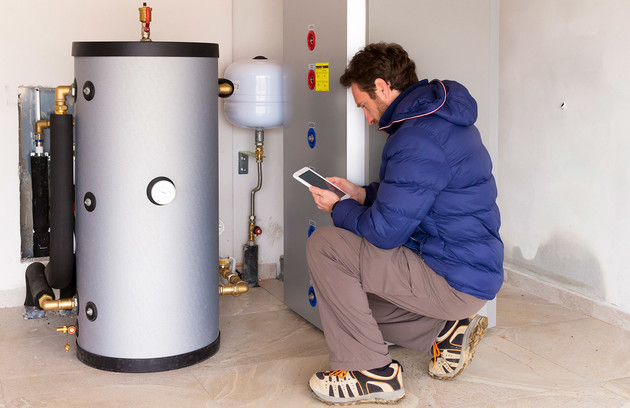
Installing a thermodynamic water heater in Meuse (55) requires an assessment of both hot-water needs and the characteristics of the room intended for the equipment. In old stone houses, homes rebuilt in the early 20th century or rural properties, available space, ventilation and the temperature of technical rooms can vary considerably. The choice therefore does not depend solely on the tank capacity. The air source used, condensate drainage, existing services and coordination with other energy renovation work must also be considered.
Tip: have your energy performance certificate (DPE) and energy bills to hand for a more accurate estimate.
Why install a thermodynamic water heater in Meuse
In many homes across the department, hot-water production is still linked to an oil boiler, wood-burning system or independent electric water heater. When a heating generator is replaced, it becomes relevant to consider this area separately. A thermodynamic water heater can provide a dedicated solution, provided its location and operating method are compatible with the building, particularly in homes with a cellar, utility room or unheated technical space.
The climate of Meuse also means particular attention should be paid to the temperature of the air available around the appliance. A room that becomes very cold in winter does not offer the same conditions as a temperate indoor space. The choice between ambient air, outdoor air or a ducted configuration therefore depends on the home. Existing ventilation must also be distinguished from the operation of the water heater so that air renewal in living spaces is not disrupted.
What a thermodynamic water heater installation includes
Assessment of hot-water needs
The project begins with an assessment of household use and the existing installation. Our national page dedicated to the thermodynamic water heater explains how this type of equipment works. On site, the household’s needs, the layout of draw-off points and the characteristics of the network must be identified before choosing the capacity and configuration of the appliance.

Choosing the location
A cellar, utility room, storeroom or other technical space can accommodate the equipment if its characteristics are suitable. The available height, accessibility, stability of the support, water and electrical connections, and the possibility of draining condensate must be checked. In an old house, doorways, narrow staircases and changes in floor level can also influence the choice of model.
Assessment of the air source
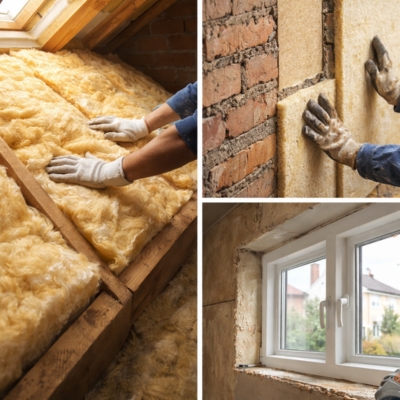
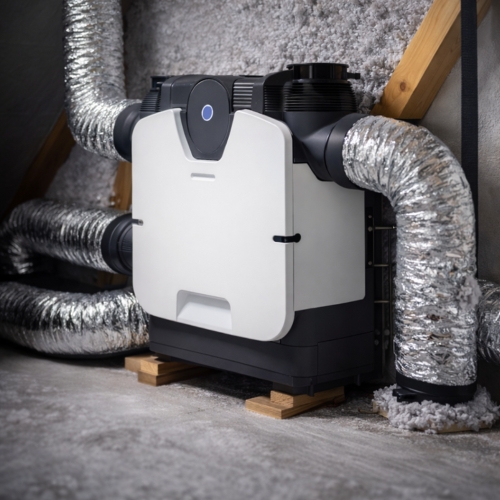
The water heater operates by using a heat pump to extract energy from the air. Depending on the installation, this air may come from the room or be supplied through ducts. The volume of the room, its temperature and its use must all be taken into account. A solution that significantly cools a small useful room or disrupts its thermal balance may require a different configuration.
Hydraulic connections and drainage
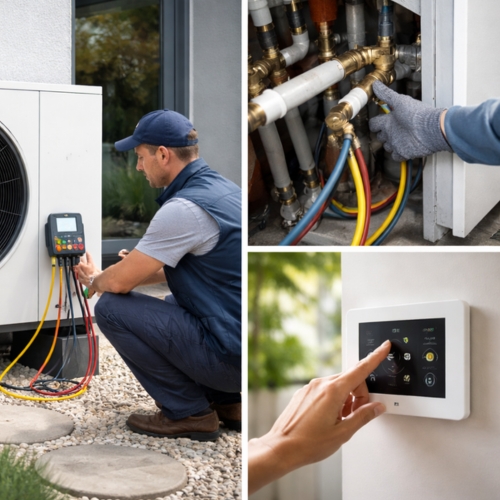
Replacing a water heater requires checks on the cold-water supply, hot-water distribution and the associated components of the installation. Drainage for condensate produced during operation must be planned from the design stage. The distance to draw-off points and the layout of pipework can also influence the project, particularly when the new location differs from that of the previous water heater.
Coordination with heating and ventilation
A thermodynamic water heater should be integrated into the home’s overall energy project. When the boiler is removed, it can take over the hot-water production previously provided by the same generator. If insulation or ventilation work is planned, its impact on technical spaces and air circulation should be anticipated to avoid incompatible choices between the different systems.

Typical cases in Meuse
Stone house with a cellar
a basement space may appear suitable for installation, but its temperature, humidity, volume and drainage possibilities must be checked. A very cold or poorly ventilated cellar cannot be treated in the same way as an indoor utility room. The route of the pipework to the living areas also forms part of the assessment.
House rebuilt in the 1920s
a former boiler location or storeroom may provide a usable technical space. The project then involves checking the available dimensions, connections and thermal behaviour of the room. If the heating system is also being changed, hot-water production can be reconsidered separately so that an installation is not retained solely for this need.
Rural home with an oil boiler
when the generator is removed, domestic hot-water production must be anticipated. A thermodynamic water heater can be considered as an independent appliance, but its installation depends on the space freed up, the temperature of the room and the existing services. The choice should be coordinated with the new heating system rather than decided after it has been installed.
Grants and funding
Depending on the home, the household and the characteristics of the equipment, installation of a thermodynamic water heater may be eligible for MaPrimeRénov’, CEE (energy savings certificates), reduced VAT or éco-PTZ (zero-interest eco-loan) under the conditions of each scheme. Some forms of support may require the use of an RGE-certified professional for the relevant work. Eligibility conditions should be checked before any quotation is signed or work begins.
You can contact GRAM Énergie to consider the role of hot-water production within your project and gather the necessary technical information. To check public support schemes, their conditions and any requirements relating to RGE-certified professionals, also consult France Rénov’. This check should be carried out before any steps that commit the project where the support scheme requires it.
How we work

Assessment of the existing installation
we examine current hot-water production, usage, connections and the constraints of the home.

Assessment of the room
we check the available volume, temperature, accessibility, ventilation and options for condensate drainage.

Defining the air intake
we assess the appropriate configuration depending on whether the appliance uses air from the room or a ducted installation.
Coordinating the systems
we integrate the water heater into the heating, insulation and ventilation project where these areas are also being changed.

Preparing the installation
we identify the connections and adaptations required before consulting professionals and checking available support.
Our other services in Meuse
Hot-water production can form part of a global energy renovation in Meuse, accompany the installation of a heat pump in Meuse or be assessed alongside insulation in Meuse and an energy audit in Meuse. To place these solutions in their local context, consult the Meuse energy renovation page as well as our page dedicated to energy renovation in Grand Est.
Frequently asked questions
Can a thermodynamic water heater be installed in a cellar?
A cellar can be suitable if its volume, temperature, accessibility and humidity level are compatible with the equipment selected. Condensate drainage must also be provided and the air source checked. A very cold or confined cellar may require a different configuration or another location to be considered.
Can a thermodynamic water heater replace hot water produced by an oil boiler?
Yes, hot-water production can be separated from heating when the boiler is replaced. The water heater must, however, be sized according to household use and installed in a suitable location. This change should be planned at the same time as the new heating system so that the services and technical spaces are organised correctly.
Does a thermodynamic water heater cool the room where it is installed?
When it extracts energy directly from the air in the room, its operation can affect the temperature of that space. The effect depends in particular on the available volume, the configuration of the appliance and air exchange. This is why a utility room, cellar and small technical cupboard cannot be considered in the same way.
Does the home’s ventilation need to be modified to install this equipment?
Not necessarily, but the two systems should be assessed separately and then made compatible. The water heater should not be considered a substitute for the home’s ventilation. Where insulation or air renewal is also being changed, the appliance’s air intake should be checked so that it does not disrupt the intended operation of the rooms.
Let’s talk about your project
Tell us about your home and your goals: we help you prioritise the works and identify the grants worth looking into.