

Energy Renovation in Somme (80)
Somme combines an older Picardy building stock, brick houses and a largely scattered rural settlement pattern. Several town centres, destroyed during the wars, were rebuilt in successive waves, with construction quality that varies from one street to the next. Damp and ventilation call for particular attention, and oil-fired heating remains common in communes far from the gas network. GRAM Énergie supports owners in the département across the whole journey: reading the building, ordering the works, coordinating the trades and preparing the grant applications. The diagnosis always comes before the technical proposal.

Tip: have your energy performance certificate (DPE) and energy bills to hand for a more accurate estimate.
The Picardy building stock and its energy challenges
Brick structures the built landscape of the département. Terraced village houses, longères (long, low farmhouses) and isolated farms all share solid walls built without insulation, which let heat escape as soon as the heating stops. Scattered rural settlement complicates matters: homes are more exposed to the wind, often larger to heat, and rarely connected to the gas network. Lofts, where they have been insulated at all, were treated with thin thicknesses that are now compressed and barely effective.
Post-war reconstruction adds a particular layer in Somme. Several town centres were rebuilt quickly, with materials and workmanship that varied according to the period and the site. The original insulation is weak or absent, and the external appearance tells you little about what the walls are actually made of. The diagnosis must therefore look at what was genuinely used, rather than at the construction year on record.
Damp is the main point of vigilance. Rising damp, water ingress through exposed façades and internal condensation do not call for the same responses, but all of them degrade insulation if they are not dealt with beforehand. Air renewal must follow every measure that affects the airtightness of the home. In the valley bottoms of the Somme in particular, this point determines how well the works hold up over time and the comfort obtained.
Our services in the 80
Whole-house energy renovation
Treating the home as a whole gives the best results on the Picardy building stock. A whole-house energy renovation combines insulation, heating and ventilation in a coherent order, rather than stacking up isolated measures. On a brick house, this approach avoids the most common mistake: replacing the boiler before the building envelope has been dealt with.
Heat pump
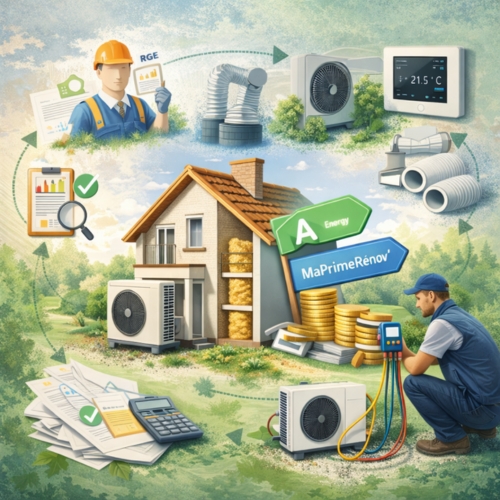
Replacing an oil-fired boiler with a heat pump is the most frequent solution in the rural communes of the département. We check the existing insulation, the emitters in place and the location of the outdoor unit. A correctly sized unit limits the use of back-up heating through the coldest months.
Insulation
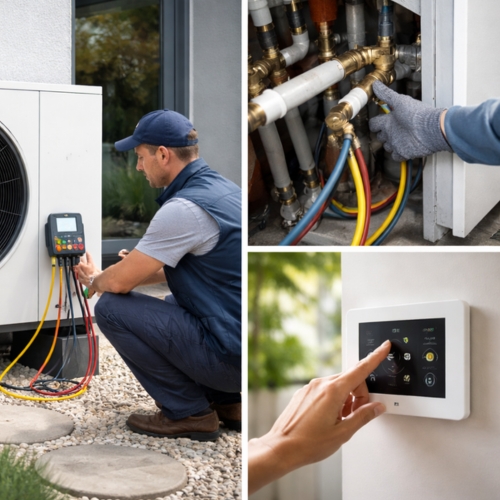
Insulation remains the first lever on this older housing stock. The loft is treated as a priority, then the walls and the windows. On solid brick walls, the choice between internal and external insulation depends on the appearance of the façade, on whether the house is terraced, and on the moisture readings taken during the technical survey.
Thermodynamic water heater
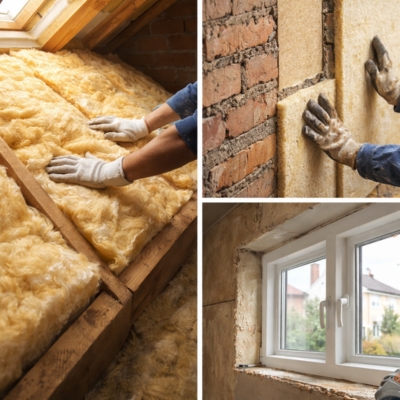
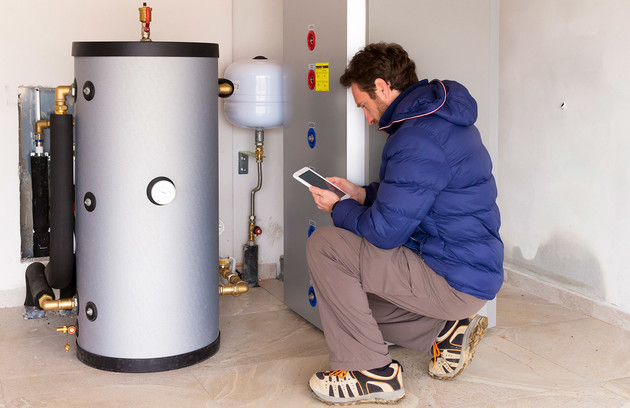
Domestic hot water weighs heavily on the annual bill. The thermodynamic water heater draws its energy from the ambient air and uses markedly less than an electric cylinder. Its installation calls for a sufficient volume of air and a condensate drain: a store room, garage or utility room is often suitable in rural houses.
Energy audit
An energy audit sets an objective starting point. It describes the heat losses, the condition of the heating and the ventilation, then proposes scenarios of works in order of priority. On a rebuilt or heavily altered home, this reading avoids generalising from the external appearance of the building.
Mechanical ventilation (VMC)
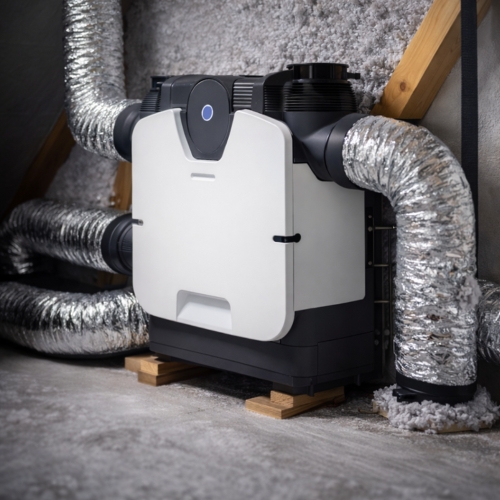
Ventilation cannot be handled as an afterthought. A home made airtight by new windows must expel the moisture produced day to day, otherwise condensation appears on the cold surfaces. We install and upgrade controlled mechanical ventilation systems, in step with the other works undertaken.
Smart thermostat
Controlling the temperature precisely avoids heating unoccupied rooms, which is useful in large rural houses. The smart thermostat adjusts the settings to the household’s actual timetable and makes it possible to follow consumption through the heating season, without altering the existing installation.
The towns we work in across the 80
We work across the whole département, from Amiens to the Picardy market towns and villages, as far as the Vimeu and the coast. You can also visit our energy renovation in Hauts-de-France page.
- Amiens: brick town houses, often terraced, where the roof and the windows deliver the first savings.
- Abbeville: a rebuilt centre and older faubourgs, with homes whose original insulation remains very limited.
- Albert: reconstruction-era building stock of uneven performance, best tackled through the loft, then the walls and the windows.
- Montdidier: market-town housing and brick houses, frequently heated by oil in the outlying areas.
- Péronne: a rebuilt centre and nearby rural communes, where ventilation must follow every airtightness measure.
- Doullens: older houses in brick and stone, whose walls call for a damp survey beforehand.
- Corbie: valley building stock sensitive to damp, where insulation is prepared carefully before any major works.
- Ham: scattered rural housing, often far from the gas network and a candidate for replacing oil-fired heating.
- Roye: brick houses and more recent suburban homes, for which the energy audit usefully clarifies the priorities.
- Friville-Escarbotin: housing in the Vimeu exposed to winds off the coast, with windows often in need of replacement.
Grants and financing for your works
Several public schemes support home renovation in Somme: MaPrimeRénov’, the main French state renovation grant, the certificats d’économies d’énergie (CEE), energy saving certificates financed by energy suppliers, the reduced rate of TVA (French VAT) on energy improvement works and the éco-prêt à taux zéro (éco-PTZ), an interest-free renovation loan. Low-income households receive enhanced support. The conditions depend on the home, on the works and on the household’s situation.
We prepare the technical documents required and point you towards the right contacts. The public service France Rénov’ lists the schemes in force and their conditions.
Applications are prepared before the works begin.
How a project runs with GRAM Énergie

First conversation
You describe the home, the discomfort you experience and your objectives. We frame the need and the feasibility.
Technical survey on site
A record of the building, the walls, the loft, the windows, the heating and the ventilation.

Costed, prioritised proposal
We set out the works, their logical order and the comfort gains to expect.
Administrative preparation
Assembling the grant applications and checking the documents before work starts.

Delivery and follow-up
Coordinating the trades, checking the critical points, handing over the completed works and explaining the settings.
Frequently asked questions
How should damp be dealt with before insulating in Somme?
Through a diagnosis. Rising damp, water ingress and condensation do not call for the same responses. Insulating a damp wall amounts to trapping water inside it and degrading the fabric. We identify the source of the problem, treat it, and then begin the insulation with ventilation suited to the home.
Is a reconstruction-era house renovated like an older building?
Not quite. Homes rebuilt after the war show variable construction quality and original insulation that is weak or absent. The diagnosis focuses on the materials genuinely used, which often differ from one street to the next. Here the energy audit prevents generalising from the external appearance.
Can an oil-fired boiler be replaced in a rural area?
Yes. The heat pump is the most common solution in communes far from the gas network. It presupposes an insulated envelope and compatible emitters. We check these conditions before making any proposal, so as to avoid equipment that is oversized and disappointing in daily use.
Where should you start on a Picardy brick house?
With the loft, then the walls and the windows. Heat loss through the top of the house is significant and the work remains simple to carry out. The heating is dealt with next, sized for reduced demand. This order limits the cost of the equipment and improves comfort from the very first works.
Do you work in the small communes of the 80?
Yes. Because housing in Somme is scattered, we work in Amiens as much as in the market towns and villages of the département. The organisation of the project takes account of the distance and the access conditions. A first conversation makes it possible to clarify the arrangements at your address.
Do you have an energy renovation project in Somme? Describe your home and your objectives through our contact form: we reply with an initial reading of your situation and the steps to consider.
Let’s talk about your project
Tell us about your home and your goals: we help you prioritise the works and identify the grants worth looking into.