


Energy renovation in the Vosges (88)
The Vosges is a mountain département where the climate governs any renovation project. The cold sets in early, snow lies on the higher ground and the heating season stretches well beyond the regional average. The buildings follow the same logic: stone houses, traditional farmhouses with large volumes, wide and very steep roofs, and often enormous lofts. Wood heating remains widespread here, both as the main source and as a back-up. GRAM Énergie supports owners from the initial survey to commissioning, addressing the roofs and the building envelope first.

Tip: have your energy performance certificate (DPE) and energy bills to hand for a more accurate estimate.
The Vosges building stock and its energy challenges
The Vosges farmhouse brings the living quarters and the original farm spaces together under one roof. These buildings present large areas to heat, considerable ceiling heights and very large lofts. The thick stone walls provide thermal mass but very little thermal resistance. Working on them calls for breathable materials and careful treatment of the junctions between floors, internal load-bearing walls and roof structure.
In the mountains, the roof is the priority item. The steep pitches and the volume of the lofts make insulating the sloping ceilings and the loft floors immediately cost-effective, while limiting the risks associated with snow and with thermal bridges at the eaves. The joinery, often old and covering a large area, comes next in the order of works, along with the ground floors over cellars or on the ground slab.
Firewood is an abundant local resource and heats a large share of the homes here. It can stay within the project, as a back-up or as the main source, provided the flue, the combustion air supply and the ventilation are reviewed. As everywhere in energy renovation in Grand Est, the building envelope is addressed before the heat generator, otherwise the installation ends up oversized.
Our services in the 88
Global energy renovation
Global energy renovation addresses the building envelope, the heating, the hot water and the ventilation within a single project. On a mountain farmhouse with large volumes, this coherence avoids heating poorly insulated areas with brand new equipment. We draw up a prioritised scenario, which can be carried out in one go or in stages, without breaking the technical logic of the building.

Heat pump
An air-to-water heat pump connects to the existing circuit once the emitters and the level of insulation have been checked. In the Vosges, low temperatures call for sizing based on an on-site survey and equipment chosen for the cold. The position of the outdoor unit takes account of snow, run-off and exposure to the prevailing wind.

Insulation
Insulation of roofs and lofts comes first on almost every mountain project. The sloping ceilings, the loft floors and the eaves are treated continuously in order to avoid thermal bridges. The ground floors and the walls come next, with breathable build-ups where the stone masonry requires them.
Thermodynamic water heater
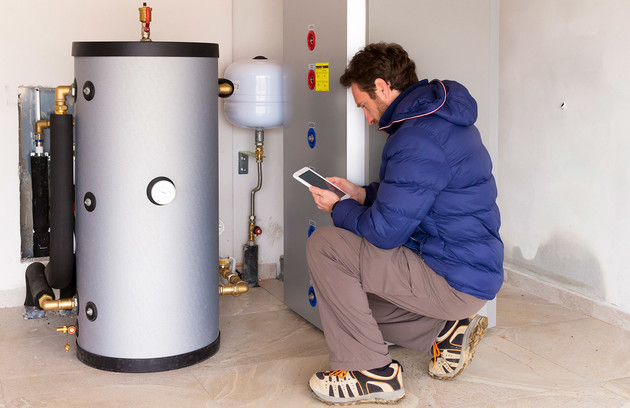
A thermodynamic water heater produces domestic hot water by recovering heat from the air. Cellars, store rooms and former farm spaces often provide the volume required. We check the temperature of the room, its volume and the scope for ducting, because an appliance placed in a space that is too cold loses efficiency.
Energy audit
An energy audit describes the actual condition of the home and proposes costed, prioritised scenarios. On a mountain building with large volumes, it makes it possible to target the areas that are genuinely occupied and to avoid disproportionate works. It then serves as a common reference for the different trades working on the site.

Mechanical ventilation (VMC)
Ventilation is essential as soon as the home becomes more airtight. During a long cold season, the moisture produced day to day quickly condenses on the walls if it is not removed. We install humidity-controlled single-flow or heat-recovery double-flow VMC systems depending on the configuration, taking care over the duct routing and the air inlets in the main rooms.

Smart thermostat
Controls make it possible to adapt the heating to actual use, room by room and according to when the home is occupied. In large volumes that are only partly occupied, this avoids heating unnecessarily through a long heating season. We set the system up with you after commissioning and explain the heating curves and the away modes.
The towns we work in across the 88
We work throughout the Vosges département, from the mountain valleys to the market towns on the plain in the west of the area.
- Épinal: the prefecture, with a varied building stock spanning a dense old centre, blocks of flats and more recent suburban districts.
- Saint-Dié-des-Vosges: a town largely rebuilt after the war, with a stock in which the lofts and the joinery remain the priority.
- Gérardmer: a high-altitude commune with a harsh climate, where roof insulation determines winter comfort.
- Remiremont: older valley buildings, with stone houses of high thermal mass and a particularly long heating season.
- Golbey: residential housing and small blocks of flats, with older boilers frequently replaced by a heat pump.
- Rambervillers: a market town with a mixed stock, combining older stone houses and poorly insulated 1970s homes.
- Neufchâteau: an old centre in the west of the département, where heritage constraints often point towards internal insulation.
- Thaon-les-Vosges: former workers’ estates and semi-detached houses, whose roofs and gable ends account for most of the heat loss.
- Mirecourt: a market town on the plain with older buildings, for which ventilation and the treatment of damp come before wall insulation.
- Vittel: mixed housing, between large holiday houses and more recent homes with very different needs.
Grants and funding
Several schemes can fund part of the works: MaPrimeRénov’ (the French national home renovation grant), the certificats d’économies d’énergie (CEE, the French energy saving certificate scheme), the reduced rate of TVA (French VAT) and the éco-prêt à taux zéro (éco-PTZ, an interest-free renovation loan). Local grants may also exist in the Vosges depending on the authority concerned. The conditions depend on the home, the household’s income and the nature of the works undertaken. We put the applications together with you and point you towards the public service France Rénov’ for official information and impartial advice.
Grant applications are prepared before any quotation is signed.
How a project runs with GRAM Énergie

An initial discussion, then a site visit
We survey the building, the equipment in service and how you actually use the home.

Thermal study or audit
We prioritise the works and compare several costed scenarios.

Step 3
Detailed quotation and preparation of the grant applications, with the list of supporting documents to gather.

Step 4
Carrying out the works, coordinating the trades and monitoring the site through to handover.

Step 5
Commissioning, adjustments and an explanation of how to use the system, then support in monitoring consumption.
Frequently asked questions
Which item should you start with in a mountain house?
The roof. The steep pitches and the volume of the lofts make this the most accessible source of savings, and addressing it determines the correct sizing of the heating. The ventilation is reviewed at the same time, then come the joinery and the ground floors over cellars.
Does a heat pump work in severe cold?
Yes, if the equipment is chosen for low temperatures and the building envelope has been addressed beforehand. In a home that has remained poorly insulated, the flow temperature required stays too high and efficiency drops. Sizing is done after a survey, never on floor area alone.
Can you keep wood heating?
Absolutely. Wood is a very widespread local resource and it can remain as the main source or as a back-up after renovation. We check the condition of the flue, the combustion air supply to the appliance and its compatibility with the ventilation installed, so that the draught remains correct in a home that has become more airtight.
Does a whole farmhouse need insulating?
Not necessarily. On these large-volume buildings it is often more sensible to define a coherent heated volume and insulate its walls, rather than treating spaces that are little used or not used at all. The audit exists precisely to define that perimeter before the works are costed.
Do you work at altitude and in the valleys?
Yes, we work throughout the Vosges, from the high-altitude communes to the valleys and the market towns on the plain in the west of the département. A site visit is always carried out: aspect, altitude and the layout of the building bear directly on the sizing of the equipment.
Are you preparing a renovation in the Vosges? Describe your home and your objectives using our contact form: we will arrange a visit and build a works plan suited to the mountain climate and to your building.
Let’s talk about your project
Tell us about your home and your goals: we help you prioritise the works and identify the grants worth looking into.