

Thermodynamic water heater in Vosges (88)
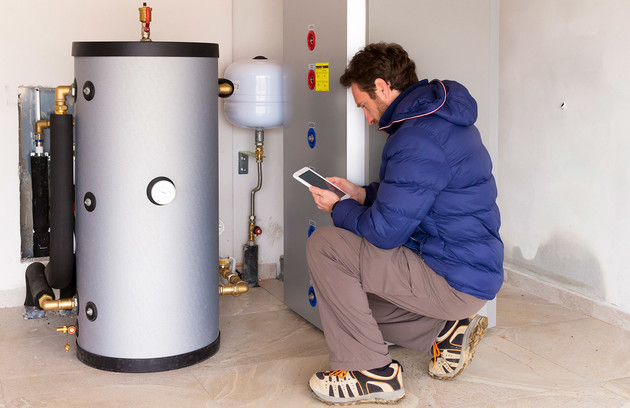
A thermodynamic water heater produces domestic hot water by recovering heat from the surrounding air. In Vosges (88), its suitability depends as much on the property as on where it is installed: available space, room temperature, airflow, noise levels and household needs must all be considered together. In an older house or a farm with large volumes, the choice of installation room can significantly influence how the system operates. The project must therefore be assessed as technical equipment integrated into the building rather than as a simple replacement for a water heater.
Tip: have your energy performance certificate (DPE) and energy bills to hand for a more accurate estimate.
Why a thermodynamic water heater in Vosges
Buildings in Vosges sometimes offer useful ancillary spaces for installing this type of equipment: cellars, utility rooms, storerooms or former agricultural areas. However, not all of them are automatically suitable. A room that is too cold, too small or poorly ventilated can alter operating conditions. Other uses of the room, pipe routes and proximity to points of use must also be considered to avoid unnecessarily long pipe runs.
In Vosges, winter temperatures make the choice of air source particularly important. A unit drawing air directly from an indoor space does not behave in the same way as a model connected to outdoor air or dedicated ducting. In a house heated with wood or renovated in stages, it is also important to avoid the water heater disrupting the thermal balance of a room. Its installation must therefore be coordinated with insulation, ventilation and the existing heating system.
What a thermodynamic water heater includes
Assessment of domestic hot water needs
Choosing a thermodynamic water heater begins with an assessment of how hot water is used in the property. The number of occupants, usage habits, sanitary fittings and periods of peak demand help determine an appropriate cylinder volume. The aim is not to select an oversized tank, but to match its capacity to actual needs while taking the available installation options into account.

Choosing the air source
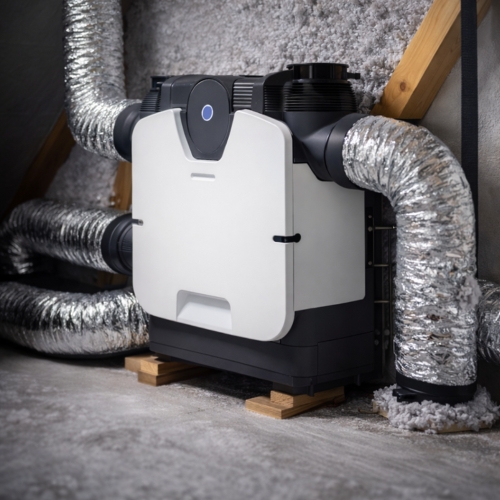
Depending on the model and the building, the unit may extract heat from the air in a room or through ducting. This decision must take account of the available temperature, air renewal and room volume. In a cellar or ancillary space, it is particularly important to check that the installation will not cool the room excessively and that it will not interfere with other equipment.

Installation location and room constraints
The water heater must remain accessible for inspection and maintenance. Ceiling height, the strength of the supporting surface, condensate drainage options and hydraulic connections are therefore assessed before installation. In an older building, some plant rooms may have narrow access routes or uneven floors; these constraints must be identified before the final location is chosen.

Hydraulic connection and drainage
The project includes an assessment of the water inlet, the outlet to the domestic hot water network and the drainage required for condensate. The distance between the cylinder and the main points of use also influences the layout of the pipework. When the installation replaces an older water heater, the existing connections are checked to determine what can be retained and what needs to be adapted.
Settings and everyday operation
Programming must reflect the household’s pattern of use. Settings include heating periods, target temperature and, depending on the appliance, the different operating modes. The aim is to provide the required hot water without running the system unnecessarily. These parameters are adjusted according to household needs and the technical characteristics of the installation.

Typical situations in Vosges
Farm with a former agricultural room
A space adjoining the living area may appear suitable because of the available room, but its winter temperature, ventilation level and distance from bathrooms must be checked. The project therefore involves determining whether this room genuinely provides suitable conditions or whether pipe losses and low temperatures point to another location.
House with a cellar below the living areas
A cellar may provide enough room for the equipment and make certain connections easier. However, its humidity, temperature, available air volume and condensate drainage must be examined. In this generic situation, the suitability of the basement depends less on its size alone than on its actual operating conditions.
Renovated home with wood heating
In a house where wood is the main source of heating, domestic hot water production can be treated separately. A thermodynamic water heater may then be a solution to consider, provided that its air intake does not cool a heated area and that its operation remains compatible with the overall ventilation of the property.
Grants and funding
Depending on the property, the equipment selected and the eligibility conditions, installing a thermodynamic water heater may qualify for MaPrimeRénov’, CEE (energy savings certificates), reduced VAT or an éco-PTZ (zero-interest eco-loan). Some grants may require the use of an RGE-certified professional as well as compliance with specific technical criteria. These conditions must be checked before commissioning the work so that an application is not started too late.
You can contact GRAM Énergie to assess the installation location, domestic hot water requirements and technical constraints of the project. For official rules concerning grants, procedures and eligibility criteria, you can also consult France Rénov’. This check helps distinguish the technical suitability of the equipment from its potential eligibility under a public funding scheme.
How we work

Assessment of usage
We examine domestic hot water requirements, sanitary fittings and the household’s general usage patterns.

Assessment of possible locations
We check available volumes, temperatures, accessibility and connection options.

Selection of the configuration
We assess the air source, storage volume and installation method suited to the building.
Verification of connections
Water inlets, domestic hot water outlets, electrical supply and condensate drainage are incorporated into the project.

Preparation for operation
We define the main settings and how the water heater will work alongside the property’s other equipment.
Our other services in Vosges
Domestic hot water production can be incorporated into a global energy renovation in Vosges, combined with a heat pump in Vosges, insulation in Vosges or an energy audit in Vosges. You can also view our page dedicated to energy renovation in Vosges and our overview of energy renovation in Grand Est.
Frequently asked questions
Can a thermodynamic water heater be installed in a cold cellar?
This depends on the actual temperature of the room, its volume and the model being considered. A very cold cellar in winter does not necessarily provide suitable operating conditions. Humidity, ventilation and condensate drainage must also be checked. The installation location should therefore be assessed before the equipment is selected definitively.
Can the unit be installed in a heated room?
This is possible in some configurations, but extracting heat can cool the room. The volume of the space, how it is used and the proposed air connection must therefore be assessed. In a property where every heated room matters, a plant room or a ducted configuration may sometimes be more coherent.
Does a thermodynamic water heater replace a heat pump used for heating?
No. It is mainly designed to produce domestic hot water, whereas a heating heat pump supplies the home’s emitters. Both systems can form part of the same renovation project, but their functions and sizing are different. They must be assessed according to their respective requirements.
Does the home’s ventilation need to be modified when it is installed?
Not necessarily, but its interaction with airflow should be checked. A unit drawing air from a room can alter the air movement within that space. In an older or recently insulated house, it is therefore advisable to assess the existing ventilation to avoid disrupting the overall balance of the building.
Let’s talk about your project
Tell us about your home and your goals: we help you prioritise the works and identify the grants worth looking into.