

Heat pump in Bas-Rhin (67)
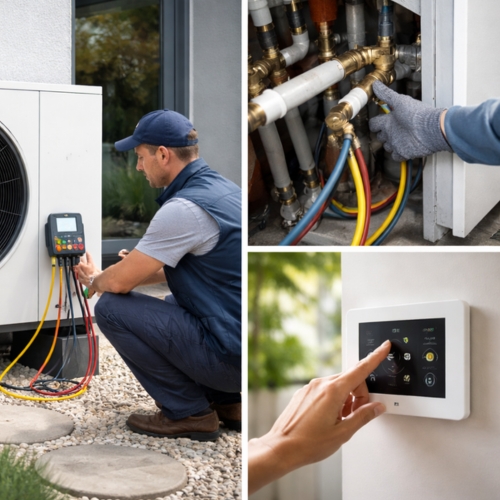
Installing a heat pump in Bas-Rhin (67) requires looking at much more than the equipment alone. The level of insulation, existing emitters, required water temperature, location of the outdoor unit and characteristics of the property all directly influence the project. Between timber-framed houses, older buildings, detached houses and post-war buildings, configurations vary considerably. The assessment must therefore relate the heating system to the building’s actual thermal behaviour, while taking account of cold winters, summer comfort and architectural constraints that may restrict certain installation options.
Tip: have your energy performance certificate (DPE) and energy bills to hand for a more accurate estimate.
Why install a heat pump in Bas-Rhin
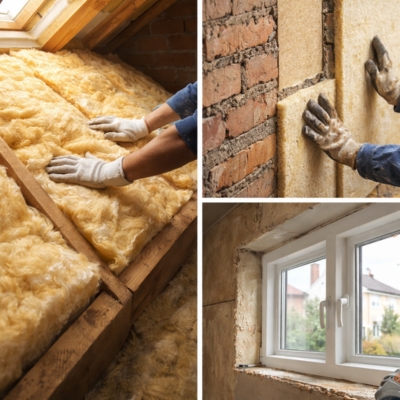
Heating requirements are closely linked to the building envelope. In an older, poorly insulated house, simply replacing a heat generator without examining the walls, loft or windows can result in a system that is poorly suited to the temperatures required by the emitters. Conversely, where insulation work is planned, its effect must be taken into account before defining the output and configuration of the new equipment.
The continental climate makes correct sizing and technology selection particularly important. Cold periods require an assessment of how the installation performs when outdoor temperatures fall, while hot spells call for summer comfort to be considered separately. In historic centres and villages with heritage character, the location of an outdoor unit must also take account of the façade, neighbouring properties and any applicable rules.
What a heat pump installation includes
Choosing the appropriate technology
The national page dedicated to heat pumps explains the main principles of these systems. For a local project, it is then necessary to determine which solution suits the property, its heating network and site constraints. An air-to-water installation, for example, is not approached in the same way as equipment designed primarily to heat indoor air.

Assessment of existing emitters
Radiators and underfloor heating systems do not all operate with the same water temperatures. Their sizing, number and condition must be examined before changing the heat generator. In some older properties, the system was designed to operate at high temperatures. It is therefore necessary to check whether the existing emitters can remain in place or whether the circuit needs to be adapted.
Sizing according to the building
Output should not be selected solely on the basis of floor area. Insulation, heated volumes, external walls, occupancy habits and the local climate all contribute to the assessment. Where other energy renovation work is planned, the calculation must consider the future condition of the property so that the installation is not sized for a situation that is due to change.
Positioning the outdoor unit
The location must allow adequate airflow, maintenance and normal operation of the equipment. The distance from certain windows, terraces or neighbouring properties should also be considered in order to address acoustic issues. In a heritage area or condominium, any required permissions must be checked before the final position of the equipment is confirmed.
Heating controls and distribution
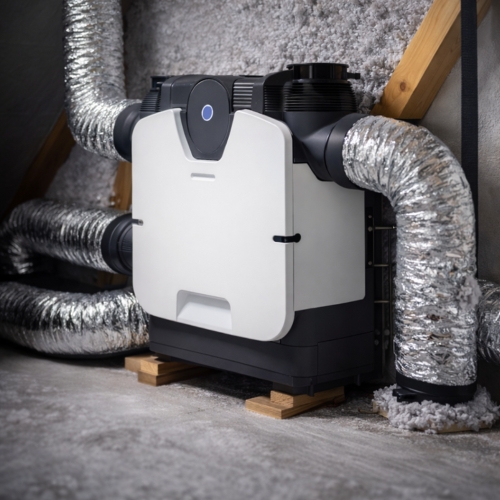
A coherent installation also includes controls, settings and distribution. The circuits, thermostats, any heating zones and balance between rooms must be checked. Replacing the heat generator does not remove faults in an existing network; these must be identified so that the system operates in line with the needs of the property.

Typical situations in Bas-Rhin
Timber-framed house with existing radiators
The priority is to consider the heating system alongside the walls. If internal insulation is planned, its compatibility with the timber and infill materials must be examined before the system is sized. The radiator network is then checked to determine the temperatures required to heat the rooms properly.
Flat in a building in Strasbourg
The project may be restricted by available space, the condominium layout and rules concerning façades or common areas. Installation of an outdoor unit should therefore never be assumed to be possible. Technical and administrative checks must precede the choice of system and its location.
Detached house with insulation work planned
Where the loft, walls or windows are due to be improved, the heating system is assessed on the basis of the post-work scenario. This approach makes it possible to take account of reduced heating needs before selecting the equipment and to examine compatibility with the existing radiators or underfloor heating.
Grants and funding
Depending on the equipment selected, the property and eligibility conditions, a project may qualify for MaPrimeRénov’, CEE (energy savings certificates), reduced VAT or the éco-PTZ (zero-interest eco-loan). Some grants require the work to be carried out by an RGE-certified professional. The criteria depend in particular on the technology installed and the renovation pathway, which is why the conditions should be checked before any commitments are signed.
You can contact GRAM Énergie to describe your property, the current system and the work being considered. To check the applicable public schemes and their current conditions, the official France Rénov’ portal is also a source to consult before making any funding decision.
How we work

Assessment of the existing system
We examine the property, its insulation, current heat generator, emitters, controls and installation constraints.

Evaluation of requirements
The thermal characteristics of the building and any future work are incorporated into the heating assessment.

Choice of configuration
The technology, output and expected operation are matched to the existing network and household use.
Installation check
We assess the conditions for installing the outdoor unit, access, useful clearances and any specific site constraints.

Project preparation
Network adaptations, settings, any necessary procedures and points requiring validation before work are organised into a coherent plan.
Our other services in Bas-Rhin
Your project may also include a global energy renovation, insulation work, installation of a thermodynamic water heater or an energy audit. You can also consult our page dedicated to energy renovation in Bas-Rhin, our approach in Grand Est and the information dedicated to Strasbourg.
Frequently asked questions
Is a heat pump suitable for an older house?
It can be, but the answer depends on the insulation, emitters and the temperature required to heat the rooms properly. In an older house, it is particularly important to assess the building envelope before choosing the output or automatically retaining the existing radiators.
Do all radiators need to be replaced with a heat pump?
Not necessarily. Some existing networks may be compatible, while others require adaptations. The assessment considers their size, operation and required water temperature. The aim is to check the overall consistency of the system before deciding which components can be retained.
Can an outdoor unit be installed in a historic centre?
That depends on the building and the applicable rules. In some heritage areas, visible changes to a façade or the installation of external equipment may be regulated. In a condominium, other permissions may also be required. The location must therefore be checked from both a technical and administrative perspective before the project proceeds.
Should insulation be completed before changing the heating system?
Where insulation work is planned, it is preferable to take it into account before sizing the new system. It changes the heating needs of the property and may affect the required output, emitter temperatures and settings. The two projects therefore benefit from being assessed within the same energy renovation scenario.
Let’s talk about your project
Tell us about your home and your goals: we help you prioritise the works and identify the grants worth looking into.