

Heat pump in Moselle (57)
Installing a heat pump in Moselle (57) requires an assessment of the home before the equipment is selected. The winter climate, insulation level, existing emitters and available space for the units directly influence the design of the project. In this département, where terraced workers’ houses, older stone or brick buildings and apartment blocks coexist, a heat pump should not be considered as a simple boiler replacement. Its sizing must be consistent with the building’s needs and with any planned improvements to the envelope.

Tip: have your energy performance certificate (DPE) and energy bills to hand for a more accurate estimate.
Why install a heat pump in Moselle
Heating periods can be long in the north of Grand Est. Before installing a heat pump, it is therefore necessary to assess the home’s heat loss and the temperature required by the existing emitters. In a former mining or steelworkers’ house, party walls limit some losses, but the roof, gable walls and windows may remain significant. Improvements to these areas can change the heating demand that needs to be covered.
Older houses found in Moselle raise other questions. Thick walls, a vaulted cellar or large loft spaces influence both thermal behaviour and the positioning of equipment. In some buildings in Metz or Thionville, communal heating or connection to a district heating network may also make an individual project unsuitable or subject to co-ownership rules. The existing system must therefore be assessed before a solution is chosen.
What heat pump installation includes
Assessment of the existing heating system
A heat pump project begins with an assessment of the existing installation: heat generator, hydraulic network, radiators or underfloor heating, controls and any domestic hot-water production. This analysis helps determine what can be retained and what adaptations are required before replacement of the heating system is considered.

Assessment of the home’s requirements
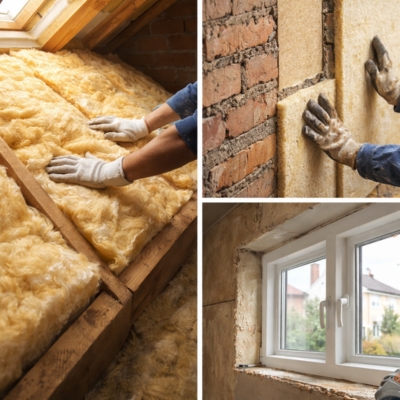
Sizing must take account of the building’s actual characteristics rather than its floor area alone. Roof insulation, external walls, glazing, party walls, ventilation and heated volumes all influence requirements. If insulation work is planned, its impact must be incorporated so that the equipment is not selected on the basis of a condition that is due to change.
Compatibility with heat emitters
Existing radiators do not all operate with the same water temperatures. Their type, size and the network supplying them must therefore be assessed. Underfloor heating has different characteristics again. The aim is to check the compatibility between the heat pump, the required operating temperatures and the ability of the emitters to heat the different rooms.
Positioning of the units
The outdoor unit requires a location compatible with the home’s technical constraints and its immediate surroundings. Access, airflow, condensate drainage, distance from the indoor unit and acoustic impact are assessed. In a terraced house or on a narrow plot, the location requires particular attention because of the proximity of façades and neighbouring properties.
Controls and connections
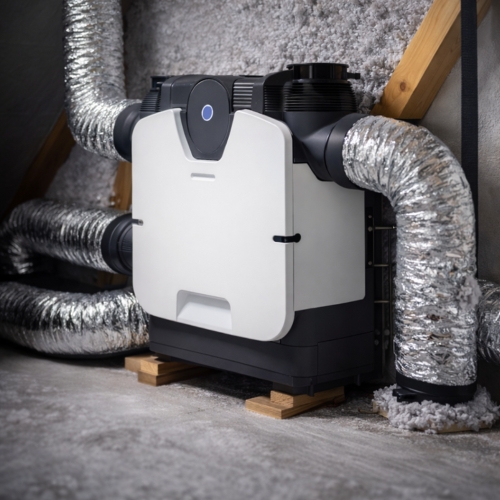
The installation also includes the integration of controls, the necessary hydraulic and electrical connections and coordination with any retained equipment. Depending on the configuration, hot-water production may be independent or associated with the system. The intended operation should remain easy for the user to understand and consistent with the thermal characteristics of the home.

Typical situations in Moselle
Terraced house in a former workers’ district
Party walls can limit heat demand on the sides, while an exposed gable wall and poorly insulated loft may remain sources of heat loss. In this generic situation, a heat pump assessment takes these differences into account before determining the required capacity and the value of complementary works.
Older house with wet radiators
In a property with thick stone or brick walls, both the insulation level and the operating temperature of the radiators must be checked. The project may require emitter adaptations or prior improvements to the envelope rather than direct replacement of the heat generator without a thermal assessment.
Apartment or home in a co-owned building
In some buildings in Metz, the presence of communal heating completely changes the logic of the project. An individual heat pump may conflict with shared equipment, façade rules or the possibilities for installing an outdoor unit. Private and communal elements must therefore be distinguished before any decision is made.
Grants and funding
Depending on the type of heat pump, the home and the eligibility conditions, the project may qualify for MaPrimeRénov’, CEE (energy savings certificates), reduced VAT or éco-PTZ (zero-interest eco-loan). Access to certain schemes depends in particular on the technical characteristics of the installation and the use of an RGE-certified professional where required. The rules must be checked according to the selected project.
You can contact GRAM Énergie to assess the technical consistency of a heat pump project in Moselle and any work that may accompany it. To check the official grant criteria, applicable routes and requirements relating to professionals, also consult the public France Rénov’ portal before starting your procedures.
How we work

Home assessment
We examine the building, insulation level, existing heating system, emitters and installation constraints for the future system.

Assessment of requirements
The thermal characteristics and use of the home are used to determine the needs to be covered and to include any planned envelope improvements.

Compatibility study
We check the hydraulic network, radiators or underfloor heating and the adaptations required for the new equipment to operate correctly.
Definition of the installation
The type of system, positioning of the units, controls and connections are organised according to the available configuration.

Consistency check
The project as a whole is reviewed to check the coordination between the heat generator, emitters, any hot-water production and the building envelope.
Our other services in Moselle
A heat pump can form part of a global energy renovation in Moselle or be combined with insulation, a thermodynamic water heater or an energy audit. You can also view our page dedicated to energy renovation in the département, our Grand Est page and information dedicated to energy renovation in Metz.
Frequently asked questions
Is a heat pump suitable for a poorly insulated house?
It may be technically possible, but its sizing and operation depend heavily on the building’s heat loss. If the envelope has significant weaknesses, it may be appropriate to address some insulation areas before or at the same time as the heating system. The assessment must therefore cover the home as a whole.
Can the old radiators be retained?
That depends on their sizing and the water temperature they require to heat the home correctly. Some networks may be compatible, while others require adaptations or replacement of certain emitters. Checking each room avoids assuming automatically that all existing radiators will be suitable.
Where should the outdoor unit be installed in a terraced house?
The location is assessed according to airflow, accessibility, connections, condensate drainage and the acoustic environment. In terraced housing, the proximity of neighbouring homes and property boundaries must also be taken into account. A technically possible location is therefore not necessarily the most suitable one for the building.
Should insulation be completed before installing a heat pump?
There is no single answer. Where insulation work is necessary and already planned, it is useful to include it in the assessment before sizing the heating system. In a home where the envelope is already satisfactory, replacement of the system can be assessed directly from the existing requirements.
Let’s talk about your project
Tell us about your home and your goals: we help you prioritise the works and identify the grants worth looking into.