

Thermodynamic water heater in Moselle (57)
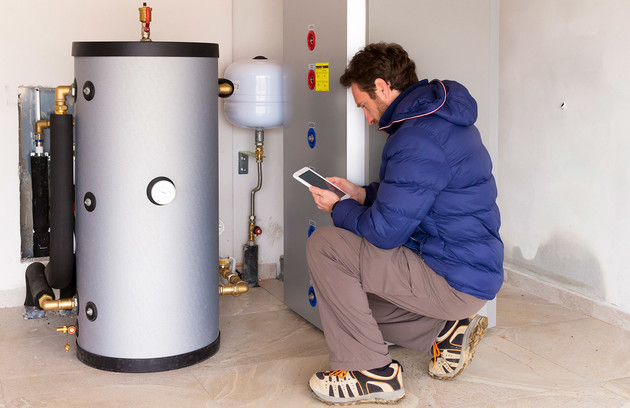
Installing a thermodynamic water heater in Moselle (57) makes it possible to produce domestic hot water using equipment that combines a storage cylinder with a small heat pump. Its suitability nevertheless depends on the layout of the home, the available volume, the temperature of the room and the occupants’ needs. In a département characterised by terraced workers’ houses, older properties with cellars and apartment buildings, the location should not be chosen by default. The project must also take account of ventilation, possible duct routes and the equipment already in place.
Tip: have your energy performance certificate (DPE) and energy bills to hand for a more accurate estimate.
Why install a thermodynamic water heater in Moselle
The climate in Grand Est makes it particularly important to distinguish between equipment using air from the room and an installation supplied in another way. Installing a unit that draws on ambient air in a space that is too cold can affect its operation and cool the room further. A cellar, utility room or ancillary space must therefore be assessed according to its temperature, ventilation and relationship with the heated areas.
The housing stock found in Moselle offers a wide range of configurations. A house in a former mining community may have a cellar or back room, while an older stone house may include damp areas or vaulted cellars. In an apartment in Metz, available space and possible duct routes are often more constrained. These characteristics influence both the choice of model and its location.
What thermodynamic water heater installation includes
Assessment of domestic hot-water needs
A thermodynamic water heater project begins with an assessment of usage: number of occupants, consumption habits, sanitary fittings and the organisation of the home. The storage volume should not be selected solely on the basis of floor area. It must match actual needs to avoid equipment that is either oversized or insufficient.

Choice of location
The room housing the equipment must allow for installation, maintenance and connection to the services. Available height, access, condensate drainage and proximity to technical points are assessed. A cellar or utility room may be suitable in some cases, but its humidity, temperature and ventilation must be checked before that location is selected.
Air management
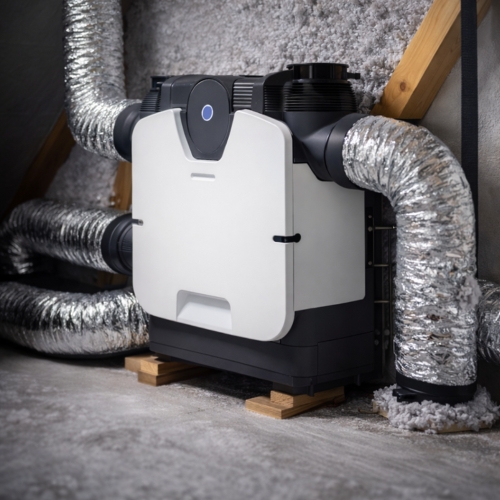
Depending on the model, the water heater may draw in and discharge air within the room or use ducts. This airflow affects the temperature of the space and must be compatible with its use. A heated room should not be cooled without prior assessment. Where ducts are required, they must also be capable of being integrated into the building without creating an excessively restrictive route.

Hydraulic and electrical connections
The installation involves connection to the cold-water supply, the hot-water circuit and the electrical supply. Condensate drainage must also be provided. The position of the old water heater may sometimes simplify the project, but it is not automatically suitable for thermodynamic equipment, which has different requirements in terms of air and space.
Controls and integration into the home
The appliance settings must be adapted to the occupants’ habits and the overall operation of the home. Operating periods, the set temperature and any available modes are configured without multiplying unnecessary settings. The aim is to integrate hot-water production into the building’s energy project rather than treating it as an isolated element.

Typical situations in Moselle
Terraced house with a cellar
In a house located in a former mining or steelmaking district, the cellar may seem like an obvious location. However, its volume, humidity, temperature and access to a drainage point must be checked. A very cold or poorly ventilated space does not provide the same conditions as an internal utility room.
Older house with a vaulted cellar
In a stone or brick building, a cellar may retain significant moisture and have a particular geometry. The appliance, its connections and any ducts must remain accessible. The project must also avoid disturbing the behaviour of older walls or using a space already affected by moisture without prior assessment.
Apartment with limited technical space
In Metz, in an apartment building, replacement of a water heater may be constrained by the available area and existing service ducts. A thermodynamic water heater requires more than a water supply and electrical connection. Air circulation, condensate drainage and any visible alterations must be checked before the solution is selected.
Grants and funding
Depending on the home, the type of appliance and the applicable conditions, the installation may qualify for MaPrimeRénov’, CEE (energy savings certificates), reduced VAT or éco-PTZ (zero-interest eco-loan) when it forms part of a project meeting the relevant criteria. Some schemes impose specific technical characteristics and the use of an RGE-certified professional. Eligibility should therefore be checked before the work is commissioned.
To assess a thermodynamic water heater project in Moselle, you can contact GRAM Énergie to review the location, requirements and technical constraints of the home. To check the rules governing public schemes, equipment criteria and the procedures to follow, also consult the official France Rénov’ portal.
How we work

Assessment of usage
We examine domestic hot-water needs, the number of occupants and sanitary fittings in order to define the characteristics to be assessed.

Technical survey
Available spaces, access, room temperatures, services and drainage possibilities are checked.

Choice of location
The position is selected with regard to airflow, future maintenance and the constraints specific to the building.
Preparation of connections
Hydraulic and electrical connections, condensate drainage and any air ducts are organised according to the selected configuration.

System settings
Operation is configured according to household usage and integrated with the other energy equipment present in the home.
Our other services in Moselle
Hot-water production can be integrated into a global energy renovation in Moselle or assessed alongside a heat pump, insulation work or an energy audit. You can also view our page dedicated to energy renovation in the département, our approach across Grand Est and information concerning energy renovation in Metz.
Frequently asked questions
Can a thermodynamic water heater be installed in a cellar?
Yes, in some configurations, but a cellar is not automatically a suitable location. Its volume, temperature, humidity level, ventilation and the possibility of draining condensate must be assessed. A very cold or difficult-to-access cellar may lead to another location or a different air intake arrangement being considered.
Does a thermodynamic water heater cool the room where it is installed?
A model using air from the room draws heat from that air and can therefore lower the room temperature. The effect depends on the available volume, air renewal and operation of the appliance. This is why installation in a heated room or a small space requires specific assessment.
Can it directly replace an electric water heater?
The replacement is not always direct. The new equipment requires space, condensate drainage and suitable conditions for airflow. The position of the old cylinder may be retained if it meets these constraints, but relocation may be necessary where the room is unsuitable.
Is a thermodynamic water heater suitable for an older house?
It can be if a compatible location is available. In an older house, cellars, humidity, unheated spaces and possible duct routes must be assessed in particular. The choice therefore depends more on the technical configuration and domestic hot-water requirements than on the age of the building itself.
Let’s talk about your project
Tell us about your home and your goals: we help you prioritise the works and identify the grants worth looking into.