

Energy Renovation in Lille
In Lille, an energy renovation project must take account of a particularly varied housing stock: brick townhouses, courtyard housing, older buildings, flats in co-owned properties and buildings with very different construction characteristics. A coherent approach therefore begins with an assessment of the property, its heat loss and its equipment before choosing the works. The thermal envelope, heating system, ventilation, hot water production or controls can then be combined according to requirements. GRAM Énergie supports you in defining priorities so that the different measures can be organised in a logical order suited to your property.
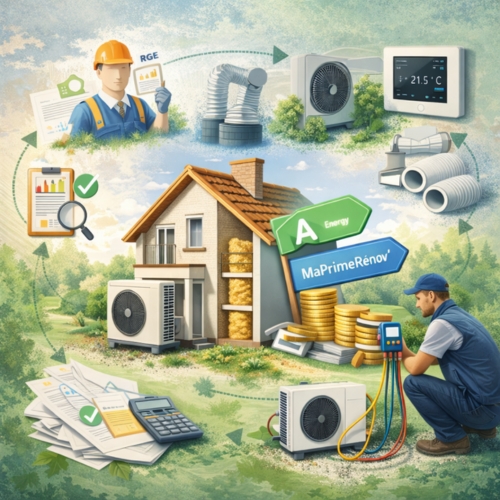
Tip: have your energy performance certificate (DPE) and energy bills to hand for a more accurate estimate.
Why renovate your home in Lille
A large part of Lille’s housing stock consists of narrow, deep terraced houses, particularly the so-called “1930” houses, alongside courtyard housing. Solid brick walls may have no insulation, while roofs and lofts are often important areas to examine as part of an energy improvement project. Party walls also affect the distribution of heat loss: front and rear façades, upper floors, windows and doors, and connections with unheated spaces do not present the same issues. Insulation must therefore be considered according to the actual configuration of the house, its condition and the movement of moisture.
In Vieux-Lille and in some older buildings, façades and windows may also be subject to appearance or conservation constraints. Work on the building envelope therefore cannot be considered solely in terms of the desired thermal performance. The many flats in co-owned buildings also require a distinction between private works and those affecting common areas or the building envelope. Finally, replacing an old gas appliance is best considered after assessing the insulation and energy requirements. The Métropole européenne de Lille area also has public information schemes such as Amélio and the Maison de l’Habitat Durable.
Treatment of walls, lofts and openings must be adapted to the characteristics of Lille’s buildings.
Our services in Lille
Global energy renovation
A global energy renovation makes it possible to examine several areas within the same project: insulation, heating, hot water, ventilation and controls. This approach is particularly relevant when an older property has several sources of heat loss. It helps prioritise the works, avoid conflicting measures and build a coherent project rather than a succession of separate interventions.
Heat pump
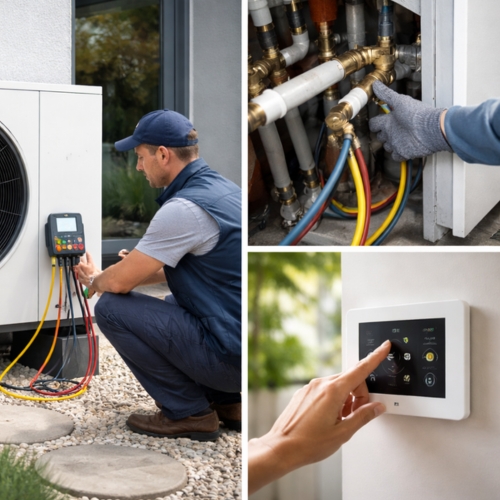
Replacing an old boiler may lead to consideration of installing a heat pump. The choice depends in particular on heating requirements, existing insulation, the heat emitters already in place and the technical possibilities of the building. In both a townhouse and a co-owned building, the location of the units and the specific constraints of the premises must be checked before selecting a solution.
Insulation
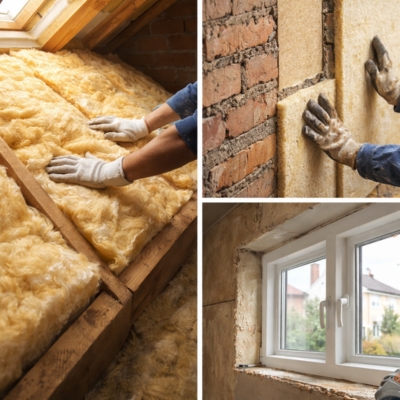
Insulation works may concern the loft, roof, walls or certain floors. In a brick house, the choice of technique must take account of the wall construction and the behaviour of moisture. Work on walls is not decided in the same way depending on whether an internal, external or targeted solution is technically feasible.
Thermodynamic water heater
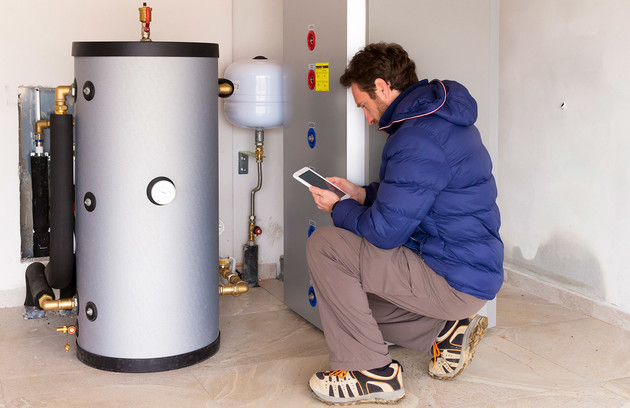
A thermodynamic water heater is a solution that can be considered for domestic hot water production. Its installation requires a location compatible with its operation, size and the constraints of the property. In Lille houses where every square metre matters, the position of the appliance and its interaction with heated or unheated areas should be anticipated from the design stage of the works.
Energy audit
An energy audit provides a structured assessment of the property and allows different renovation scenarios to be compared. It considers the building envelope, heating system, ventilation, hot water and energy consumption. This stage can help determine which works should be addressed first and build a clearer pathway before arranging finance or applying for certain grants.

Mechanical ventilation
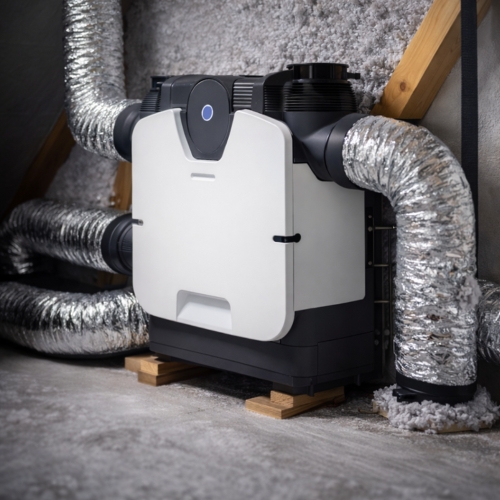
Ventilation must remain consistent with insulation works. When walls and windows become more airtight, air renewal becomes particularly important. Mechanical ventilation can help organise this airflow, provided that its sizing and air inlets are suited to the spaces concerned. This point deserves particular attention in deep houses and older flats.
Smart thermostat
A smart thermostat makes it possible to control certain heating installations more effectively according to schedules and usage. It replaces neither insulation nor a suitable heating system, but it can complement a renovation by improving control. Its relevance depends on the installed heat generator, the type of emitters and how the different rooms are occupied.
Typical projects in Lille
Brick townhouse with a loft
In this situation, the assessment may begin by examining the roof, loft, exposed façades and windows and doors. If the heating system is old, its replacement can be considered once requirements have been defined more clearly. The depth of the house also makes it necessary to check ventilation in rooms located in the centre of the property.
Flat in an older co-owned building
Works that can be carried out inside the flat must be distinguished from interventions that fall under the responsibility of the co-ownership. Internal insulation, heating improvements or new controls may be considered at private-property level, while certain façade, roof or communal ventilation elements require a building-wide approach.
Older property with a gas boiler and uninsulated walls
Replacing only the heating system without examining heat loss may result in sizing new equipment for a property that still has very high energy requirements. A preliminary assessment makes it possible to compare several measures: treatment of accessible walls, loft improvements, windows, ventilation and changes to the heating system.
Grants for your works in Lille
Depending on the nature of the works, the situation of the property and the rules applicable to the application, several mechanisms may be available: MaPrimeRénov’, the CEE (energy savings certificates) scheme, reduced VAT and the éco-PTZ (zero-interest eco-loan). Some grants require the use of an RGE-certified professional for the relevant works. Anah is also involved in several public housing renovation schemes. Across the Métropole européenne de Lille, Amélio, the public renovation service, and the Maison de l’Habitat Durable are also information resources for residents in Hauts-de-France.
Financing should not be separated from the technical content: it is preferable to define the relevant interventions before building the grant and loan plan. To assess your situation and organise the next steps, you can contact GRAM Énergie. You can also consult the public France Rénov’ service to check the available schemes and the conditions applicable to your situation.
Grants must be checked according to the project, the property and the works being considered.
How we work

Assessment of your request
We examine the type of property, existing equipment, your objectives and the main issues encountered in order to define the scope of the renovation.
Building assessment
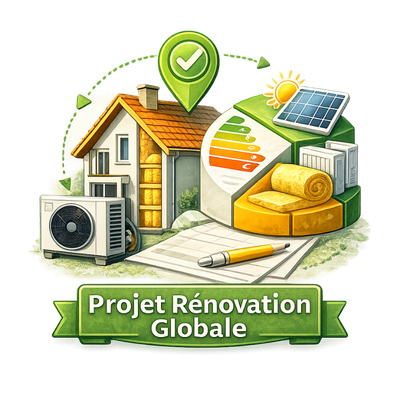
The envelope, insulation, heating, ventilation, hot water and controls are considered together to identify the areas requiring particular attention.

Definition of the works
The different possible solutions are organised according to the characteristics of the property and the interactions between the renovation measures.
Project organisation
The selected works are ordered coherently, taking account of technical constraints, co-ownership where applicable and the necessary procedures.

Monitoring the stages
The project is followed through to implementation of the planned solutions in order to maintain continuity between the initial assessment and the scheduled interventions.
We also work across the rest of the Nord
GRAM Énergie also works on renovation projects in Roubaix, Tourcoing and Villeneuve-d’Ascq. You can view the page dedicated to energy renovation in the Nord as well as the regional page on energy renovation in Hauts-de-France to browse the rest of the area and the other towns covered.
Frequently asked questions
Which works should be examined first in a brick house in Lille?
The priority depends on the actual condition of the property. In an older house, it is generally useful to examine the loft, roof, walls, windows, ventilation and heating before making a decision. An audit or global assessment helps avoid choosing an isolated measure without considering its consequences for the rest of the property.
Can the walls of a Lille house be insulated internally?
Internal insulation may be considered in certain buildings, particularly where the external appearance must be preserved. However, it requires an assessment of the wall construction, moisture, thermal bridges and available floor area. The system chosen must therefore be adapted to each wall rather than applied systematically.
How should renovation be approached in a co-owned building in Lille?
The first step is to separate works relating to the private property from those affecting common areas or the building envelope. Individual heating, certain internal solutions or controls can sometimes be considered separately, whereas the roof, façade or communal equipment require decisions at co-ownership level.
Should an old boiler be replaced before insulating?
Not necessarily. When a property still has significant heat loss, it may be appropriate to assess the envelope first in order to understand future energy requirements. This then makes it possible to choose equipment better suited to the power actually required and to avoid basing the decision solely on the old installation.
How do you start an energy renovation project in Lille?
Start by gathering the available information about your property, its heating, its consumption and any works already carried out. An initial assessment can then determine whether certain areas need to be examined in greater depth through an audit and organise the measures in a coherent order. To present your project, use the contact page.
Let’s talk about your project
Tell us about your home and your goals: we help you prioritise the works and identify the grants worth looking into.