


Energy Renovation in Lagny-sur-Marne
In Lagny-sur-Marne, energy renovation often has to work with older buildings whose qualities and constraints differ markedly from those of a recent suburban house. Terraced townhouses, stone walls, older buildings divided into flats and façades onto narrow streets all call for a careful reading before any work begins. GRAM Énergie helps you define the works while taking account of the way the building handles heat, air and moisture. Insulation, ventilation and heating have to be considered together, so that correcting one thermal problem does not create an imbalance elsewhere in the home.

Tip: have your energy performance certificate (DPE) and energy bills to hand for a more accurate estimate.
Why renovate your home in Lagny-sur-Marne
In the historic centre, old stone walls do not behave like a recently built wall. Their thickness, their exposure, the existing renders and their ability to handle moisture must be taken into account before insulation is added. In a terraced house, only certain façades are directly exposed to the outside, while the party walls shared with neighbouring homes follow a different thermal logic. The aim is therefore to target the walls that are genuinely concerned rather than applying the same solution everywhere.
The narrow streets of the centre can also limit certain works on façades and complicate the organisation of an external project. In older buildings converted into several flats, ventilation is another sensitive point: internal layouts have sometimes changed while the airflows have not been rethought. In Lagny-sur-Marne, watching for signs of damp, poorly ventilated rooms and cold walls is therefore an integral part of the energy assessment, even before a new heating system is chosen.
Analysing an older building has to take account of the walls, the ventilation and any signs of damp alike.
Our services in Lagny-sur-Marne
Whole-home energy renovation
A whole-home energy renovation makes it possible to link the works together rather than dealing with walls, heating and ventilation separately. In an older building, that coordination matters in order to preserve the way the walls function while improving thermal comfort. It allows the different elements to be studied in a logical order and prevents work on airtightness or insulation from being decided without air renewal being examined.

Heat pump
A heat pump can be considered when the heating system has to be replaced, but it must be sized for the home once its envelope has been analysed. In a townhouse, the options for siting the outdoor unit may be limited by the layout of the plot or of the façades. The existing radiators and the heating requirements must also be examined before this solution is adopted.

Insulation
Insulating an old wall means identifying its make-up and how it behaves in the face of moisture. A solution suited to a recent building cannot automatically be transferred to stone masonry. The roof, the floors and exposed façades can also be significant items. The study must therefore select the surfaces that are worth treating while maintaining a consistent management of water vapour and air exchange.

Thermodynamic water heater
A thermodynamic water heater can be considered for hot water production where a suitable space is available. In townhouses and older flats, its position must be examined carefully because the volumes are sometimes small. The conditions for drawing in and expelling air, the proximity of occupied rooms and the layout of the plant space are among the points to check.
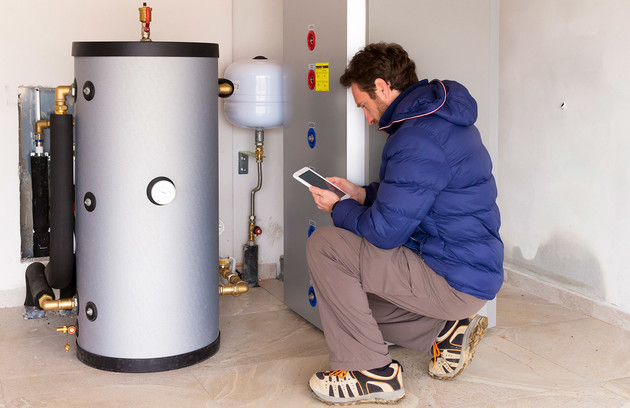
Energy audit
An energy audit makes it possible to understand how a home performs before work is carried out on its walls or its equipment. It helps distinguish the losses linked to the roof, the façades, the windows or the heating. For a flat created by dividing an older building, it also places the home back in the context of the building as a whole.
Mechanical ventilation (VMC)
Mechanical ventilation takes on particular importance where damp or air renewal is already an issue. Added insulation or new windows can change the natural air exchange of the home. You then need to examine the wet rooms, the air inlets, the available ducts and, in an apartment block, any communal ductwork before choosing a solution.

Smart thermostat
A smart thermostat allows the heating to be programmed according to the times and the spaces actually in use. In a townhouse arranged over several storeys, temperatures can vary between the ground floor and the upper floors. Suitable controls can help manage those differences, provided they are compatible with the heating system and form part of a wider energy strategy.
Typical projects in Lagny-sur-Marne
Older stone townhouse
the project can begin with a study of the roof, the exposed façades and the ventilation. The choice between internal insulation and another solution must take account of how the existing walls behave and of the space available.
Flat in a divided older building
rooms created through successive alterations may not have the same air renewal. Privately owned equipment must be distinguished from the ducts or walls that belong to the building.
Older home with signs of damp
before adding insulation or replacing the windows, it is worth identifying the role of the ventilation, the cold walls and the airflows, so as not to mask the cause of the problem.
Financial support for your works in Lagny-sur-Marne
MaPrimeRénov’ (the French state renovation grant), CEE (energy saving certificates), reduced TVA (VAT) and the éco-PTZ (interest-free renovation loan) can be looked at according to the renovation programme chosen, the situation of the home and the conditions specific to each scheme. For an older building, it is useful to define a technically suitable solution first, before organising the steps relating to funding. The contact form lets you set out your project and the characteristics of the property. The French public service France Rénov’ lists the schemes currently in force.
How we work

Observing the building
we identify the materials, the exposed walls, the roof, the openings and the alterations made to the home.

Checking the balances
ventilation, visible damp and the operation of the heating are examined alongside the building envelope.

Studying the constraints
access to the façades, narrow streets, party walls and the organisation of the building are built into the project.

Choosing the scenario
the works are prioritised so as to keep insulation and equipment consistent with each other.

Delivery
the chosen works are carried out in line with the technical characteristics identified beforehand.
We also work throughout the rest of Seine-et-Marne
You can also visit our pages devoted to Combs-la-Ville, Fontainebleau and Provins. For our approach across the department as a whole, see the energy renovation in Seine-et-Marne page.
Frequently asked questions
Can a stone wall be insulated without taking moisture into account?
That is not advisable. An old wall can handle moisture transfer differently from a modern wall. Before choosing the insulation and how it is fitted, you need to understand the make-up of the wall, its exposure and any signs of damp, in order to select a solution compatible with the way it works.
What difference does a narrow street make to a façade renovation?
It can complicate access, the movement of equipment and the organisation of external works. These practical constraints must be studied before an insulation or renovation method is chosen. They do not determine the solution on their own, but they can influence its feasibility and the preparation of the site.
How do you renovate a flat created by dividing an older house?
You need to understand what genuinely belongs to the home and what remains common to the building. External walls, the roof, ventilation or services may fall within different scopes. The energy analysis must therefore place the flat back within the building, rather than looking only at its internal finishes.
Can more airtight windows make a condensation problem worse?
They can change the natural air renewal if the ventilation is not suited to them. Where the old windows let more air through, replacing them changes the balance of the home. It is therefore worth checking the air inlets, the extraction points and the rooms where moisture builds up at the same time.
Which items should be looked at first in a terraced house in the old centre?
The roof, the genuinely exposed façades, the floors, the windows and the ventilation deserve particular attention. Party walls do not present the same losses as walls facing outside. That difference makes it possible to focus the works more closely on the areas that really affect heating requirements.
To prepare an energy renovation in Lagny-sur-Marne, describe the type of building, the materials you know of, any damp problems and your current heating through the contact form. GRAM Énergie can then build an approach compatible with the characteristics of the older home and the constraints of its surroundings.
Let’s talk about your project
Tell us about your home and your goals: we help you prioritise the works and identify the grants worth looking into.